 LeCoqRoti

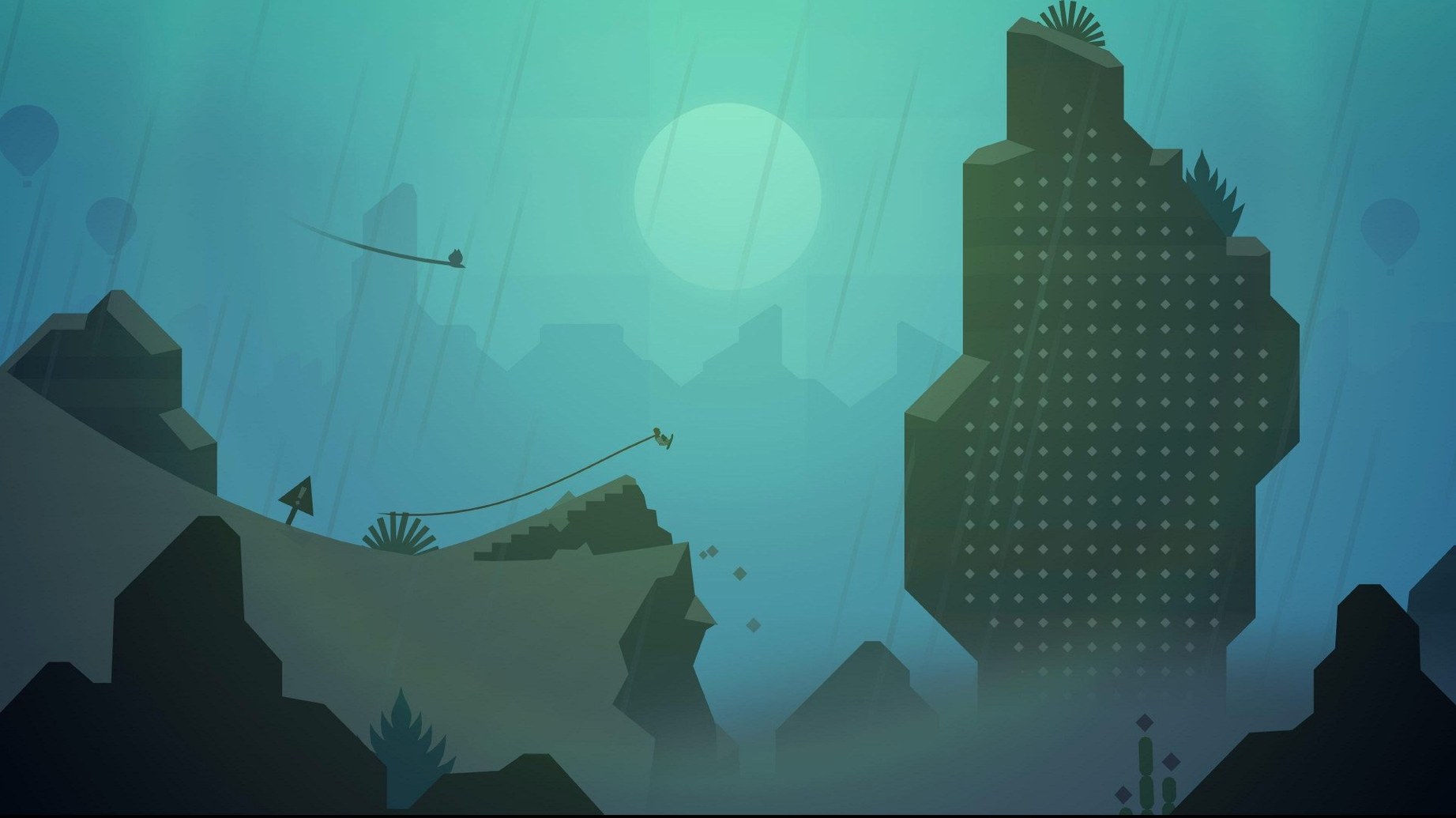
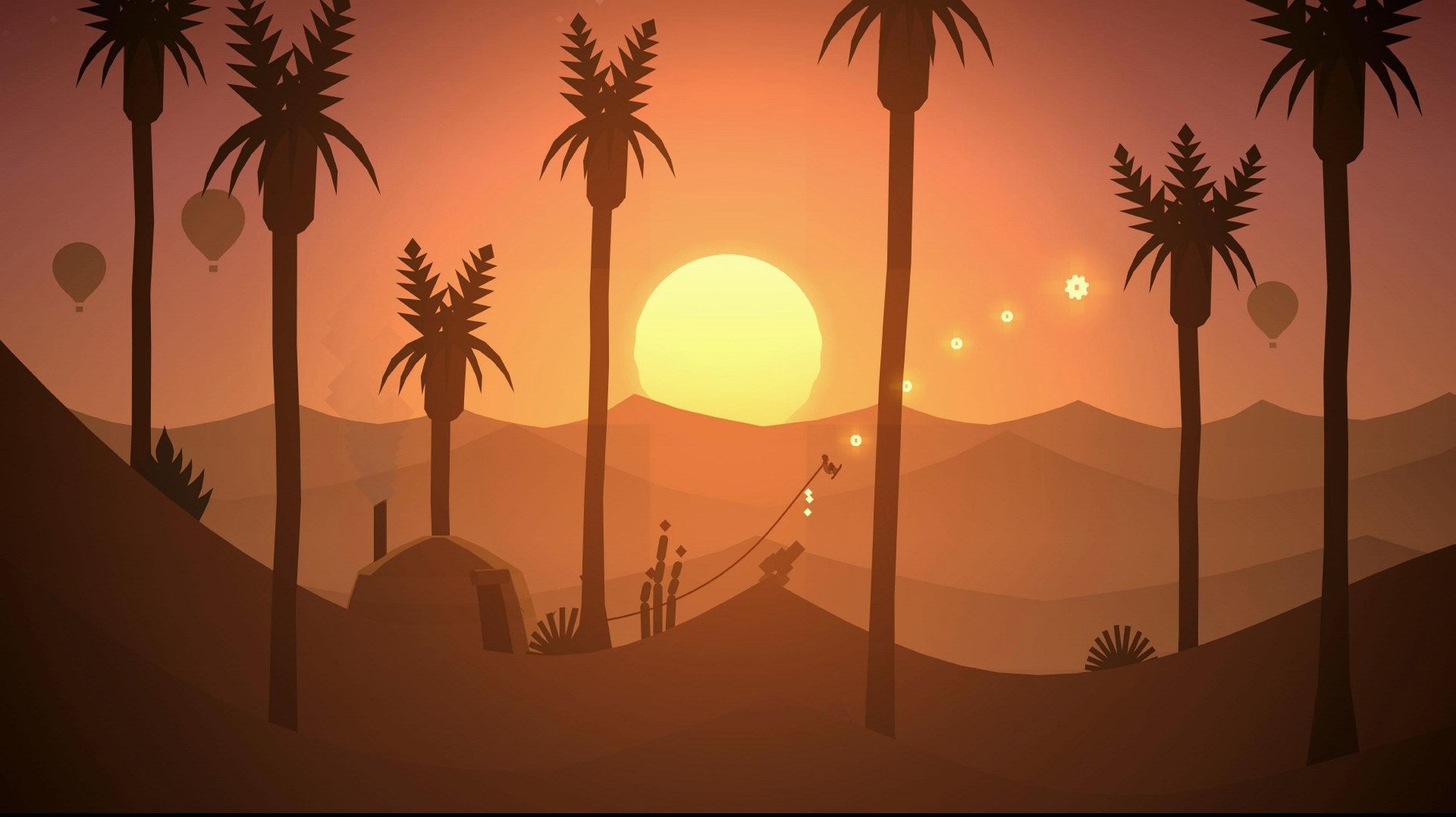

Alto's Odyssey is an endless sandboarding journey across a vast, ever-changing desert. There is no finish line, only the next dune, the next ruined temple, the next gust of wind to carry you further into the unknown. You play as Alto and his friends, following a thread of exploration toward the fabled Lost City.
The remastered edition brings a new biome into the fold, layered with hidden challenges that reward close attention. Movement is the heart of the experience: you grind across sun-bleached vines, bounce from hot-air balloons, slide down sheer stone walls, and unfurl a wingsuit to ride thermal currents when the ground drops away. Each element chains into the next with a quiet, almost meditative flow.
Visually, the desert feels alive. Light shifts across the screen, sand ripples under your board, and a dynamic weather system can turn a calm run into a sandstorm without warning. The sound design matches this restraint — wind, the hiss of sand, a distant chime when you nail a trick. No timers, no aggressive prompts. Just the run.
Mistakes: what trips up new sandboarders
Most beginners treat the desert like a race. They hold the screen tight, jabbing at jumps the moment a dune appears. The result is a staccato run: short arcs, missed grind rails, and a wingsuit that deploys at the wrong moment and stalls immediately. Alto’s Odyssey rewards patience. A jump held a fraction longer covers twice the distance and lines you up for the next surface.
Another common misstep is ignoring the terrain behind you. The camera pans forward, so new players fixate on what is ahead and forget that a backflip off a rock outcrop can drop them neatly onto a vine they already passed. The game remembers; the landscape is a loop of opportunity, not a corridor.
The wingsuit, in particular, invites misuse. Deploying it too early — before the peak of a jump — kills all momentum. The correct moment is the apex, when gravity begins its pull. Then the fabric catches and you float, gathering speed for the landing. Beginners also overlook the balloon bounce: tapping at the moment of contact launches you higher than a simple collision would, a detail the tutorial mentions only in passing.
Finally, many new players chase coins at the expense of flow. A sharp turn to grab three coins often breaks a combo that would have yielded more points and a longer run. The scoring system favours smooth, connected movement over frantic collection.
A session: twenty minutes in the desert
You open the game in the early evening, the Mac’s screen the only light in the room. The title screen fades and Alto stands at the crest of a dune, board underfoot, the wind already tugging at his scarf.
You tap. He drops in.
The first run is a warm-up: a few gentle slopes, a grind across a wooden roof, a mistimed backflip that plants him face-first in the sand. You laugh under your breath and start again. The second run finds a rhythm. You chain a grind into a wall ride, leap off a rock, and open the wingsuit just as the ground falls away into a canyon. For twelve seconds you are airborne, the camera pulling back to show the gorge below, the distant glint of ruins. The landing is soft, and the combo counter ticks past thirty.
A sandstorm rolls in on the fourth run, turning the world ochre. Visibility drops; you navigate by instinct, using the faint outline of a banner to judge your next jump. The storm passes as suddenly as it arrived, revealing a hot-air balloon drifting low. You bounce, then bounce again, and the second launch carries you over a rock arch you had not seen before.
By the twentieth minute you are no longer thinking about controls. Your fingers know when to tap and when to hold. The run ends when Alto misjudges a chasm — no frustration, just a quiet reset. You close the game. The desert will be there tomorrow.
Workflow: chasing the high-score challenge
Suppose the goal is a specific challenge: score 5,000 points in a single run without using the wingsuit. This constraint changes everything.
You begin by selecting the standard desert biome — no distractions from the new remastered zone. The first few runs are reconnaissance. You note the placement of grind surfaces and the rhythm of rock formations. A pattern emerges: the canyon section, about forty seconds in, offers three consecutive wall rides that chain naturally into a balloon bounce. That segment alone can yield 1,200 points if you hold each trick to completion.
With the route mapped, you settle into execution. The opening is conservative: short jumps, one grind, no risk. As the canyon approaches you position Alto to the left, catching the first wall ride at speed. The trick animation plays fully — no early release. You hop to the second wall, then the third, and the combo counter glows. The balloon appears on cue; you bounce once, deliberately avoiding the second tap that would send you airborne and tempt a wingsuit deployment. The landing triggers a proximity bonus for a passing lemur, and the score ticks past 3,800.
The final stretch requires discipline. A set of low dunes offers easy backflip opportunities, but each flip carries the risk of over-rotation. You take two, land cleanly, and grind a temple roof to seal the run. The score reads 5,240. The challenge unlocks. The whole attempt — from scouting to success — took under ten minutes, and the constraint taught you more about the desert’s geometry than a dozen unrestricted runs ever would.








Correspondence 0
Take a chair or join the table to send a letter.
No correspondence on this note yet. Letters are read before they appear.