 LeCoqRoti
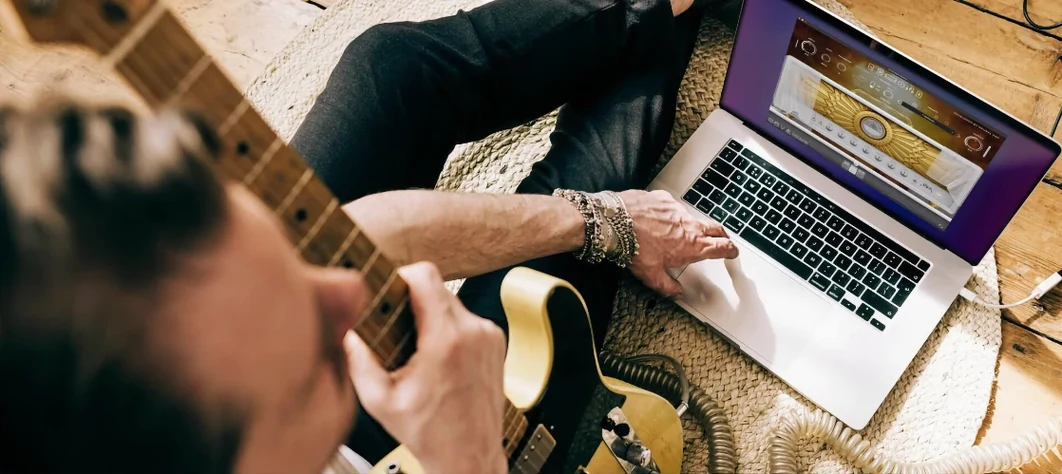
System requirements: runs native on Apple Silicon from day one
- Confirm your system. The plugin requires macOS 10.13 or later and runs natively on both Intel and Apple Silicon processors. No translation layer is needed on M-series machines.
- Choose your hosting mode. You can open it as a standalone application without any DAW, or load it inside a host that supports AU, VST3, or AAX formats. This covers Logic Pro, Ableton Live, Pro Tools, and most other modern recording environments.
- Load an instance and check the lower panel. The built-in tuner sits ready for quick adjustments before you record or practise.
The sound: three amps and a clean conscience
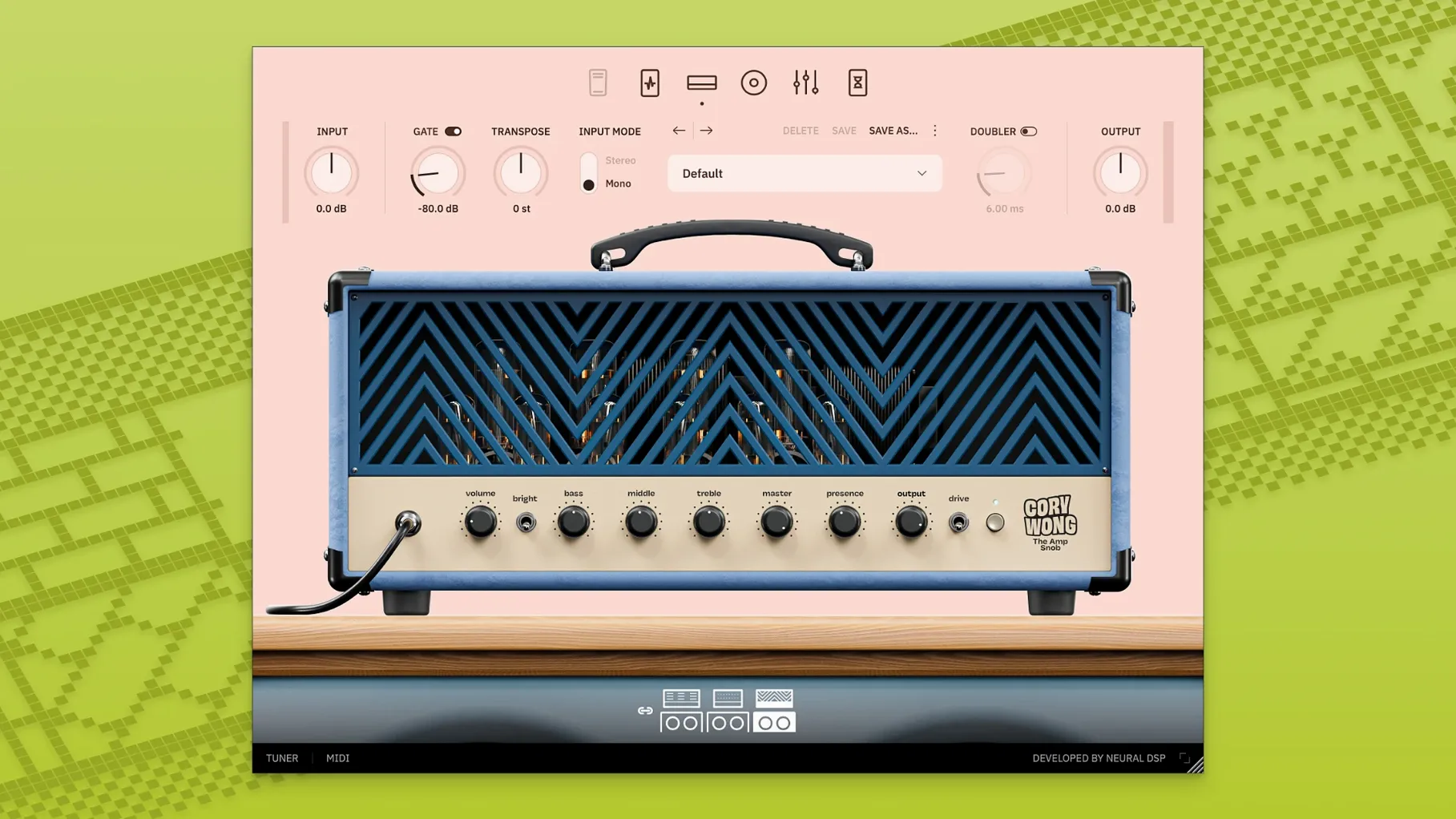
Once the routing is sorted, the signal path reveals why this plugin suits players who live in the space between pristine and lightly driven. Three amplifier models set the foundation: the D.I. Funk Console delivers a direct, percussive clean; The Clean Machine adds headroom and shimmer; The Amp Snob pushes into edge-of-breakup territory with a controlled, articulate grit. A cabinet simulator with six virtual microphones and 324 impulse responses shapes the room, and you can load your own IRs if the stock cabs are not enough. The four pre-effect pedals — The Postal Service, The 4th Position Compressor, The Tuber, and The Big Rig Overdrive — sit before the amp, joined by a wah, a doubler, and a transpose function for pitch-shifted layers. The X revision added new room reverbs and 133 presets, so dialling in a starting point is faster than ever.
Building a doubled rhythm part: start to finish
Here is a concrete workflow for a tight, wide funk-rhythm track, using only the plugin and a dry DI signal. Open your DAW, create a mono audio track, and set the input to your interface. Load Archetype Cory Wong X as an insert. Set the amp to The Clean Machine: gain at 9 o'clock, bass at noon, mids at 2 o'clock, treble at 1 o'clock. Enable The 4th Position Compressor in the pre-effects section, with the mix around 60% and the sustain pushed just until the needle moves on harder strums. This compressor model imitates a studio rack unit and keeps the transient bite while evening out the level, which is essential for a part that will be doubled.
Next, turn on the doubler and set it to a tight stereo spread with minimal detune — around 6 cents left and 4 cents right. The goal is width without obvious chorusing. Choose a cabinet impulse from the first bank, a dynamic mic placed close to the cone, and pull the room reverb fader up to roughly 15%. The X revision's new room reverbs are short and unobtrusive; at this level they add space without pushing the guitar back in the mix. Record a four-bar phrase. Then create a second track, load a fresh instance of the plugin, and switch the amp to The Amp Snob with the gain lowered to 7 o'clock — barely breaking up. Disable the compressor, keep the doubler off, and select a ribbon mic IR for a darker, rounder tone. Record the same phrase again. Pan the first track 80% left and the second 80% right. The result: a wide, articulate rhythm bed that leaves room for keys and vocals.
Standalone mode: one quiet evening without a DAW
It is late evening in the Ikebukuro studio. The audio producer next door has just finished a voice-over session, and the room is quiet. I open the standalone version of the plugin — no DAW today. The interface appears in its redesigned X form: dark, spacious, with large knobs and a clear signal-flow layout. I plug in a single-coil Telecaster and check the tuner at the bottom of the window. The needle responds smoothly; a quick tweak on the G string and it is locked in.
I start with a preset called something like "D.I. Clean Slap" — one of the 133 new ones. The D.I. Funk Console amp is active, paired with a compressor and a short room reverb. I tap the metronome in the lower panel to 108 bpm and play a few muted sixteenth-note patterns. The response is immediate, percussive. I swap the cabinet mic from a dynamic to a condenser model positioned three inches back, and the attack softens just enough to feel less aggressive on headphones. The transpose function stays off for now; the pitch is exactly where I want it.
After twenty minutes of looped practice, I engage The Big Rig Overdrive pedal with the gain barely on, just to warm the signal. It acts more like a console preamp pushed gently than a dirt box. I open The 80s post effect — a modulated reverb that hints at chorus — and set the mix to 20%. The part suddenly sits in a different decade. I save the preset locally, close the app, and the session ends. No recordings, no exports. Just a quiet half-hour of sound-shaping.
Doubler plus transpose: the phase trap that collapses to mono
One frequent mistake is stacking the doubler and the transpose function without checking phase. A slight time offset between the doubled voices can cause comb filtering when the signal collapses to mono, which is still how many club systems and phone speakers operate. Checking in mono early, and nudging the doubler's timing knob by a few milliseconds, usually fixes it.
Another is treating The 4th Position Compressor as an afterthought. New users often set it too aggressively, squashing the attack that gives clean funk its character, or bypass it entirely and wonder why the D.I. Funk Console sounds thin on playback. The compressor is voiced to work before the amp, and a modest ratio with a slow attack lets the transient through while controlling the tail.
A third misstep involves impulse response selection. With 324 stock IRs and the ability to load user files, it is tempting to audition dozens in quick succession. Ears fatigue fast. Picking three IRs — one dynamic, one ribbon, one condenser — and working with only those for an entire session teaches far more about mic placement than constant switching. The cabinet section rewards restraint.
Some beginners also overlook the tuner and metronome in the lower panel, perhaps because they sit outside the main signal-flow graphic. The tuner is accurate enough for quick intonation checks, and the metronome in standalone mode makes practice sessions self-contained. No need to open a separate app.




Correspondence 0
Take a chair or join the table to send a letter.
No correspondence on this note yet. Letters are read before they appear.