 LeCoqRoti
Death Trash appeals to the player who misses the textured, literary bleakness of early Fallout and the tactile crunch of real-time action. It is for someone who reads item descriptions, who treats each mutant encounter as a small puzzle, and who prefers a handcrafted map over procedural sprawl. If you skim dialogue and resent inventory weight, this world will likely feel more oppressive than intriguing.
Structure: a world built by hand
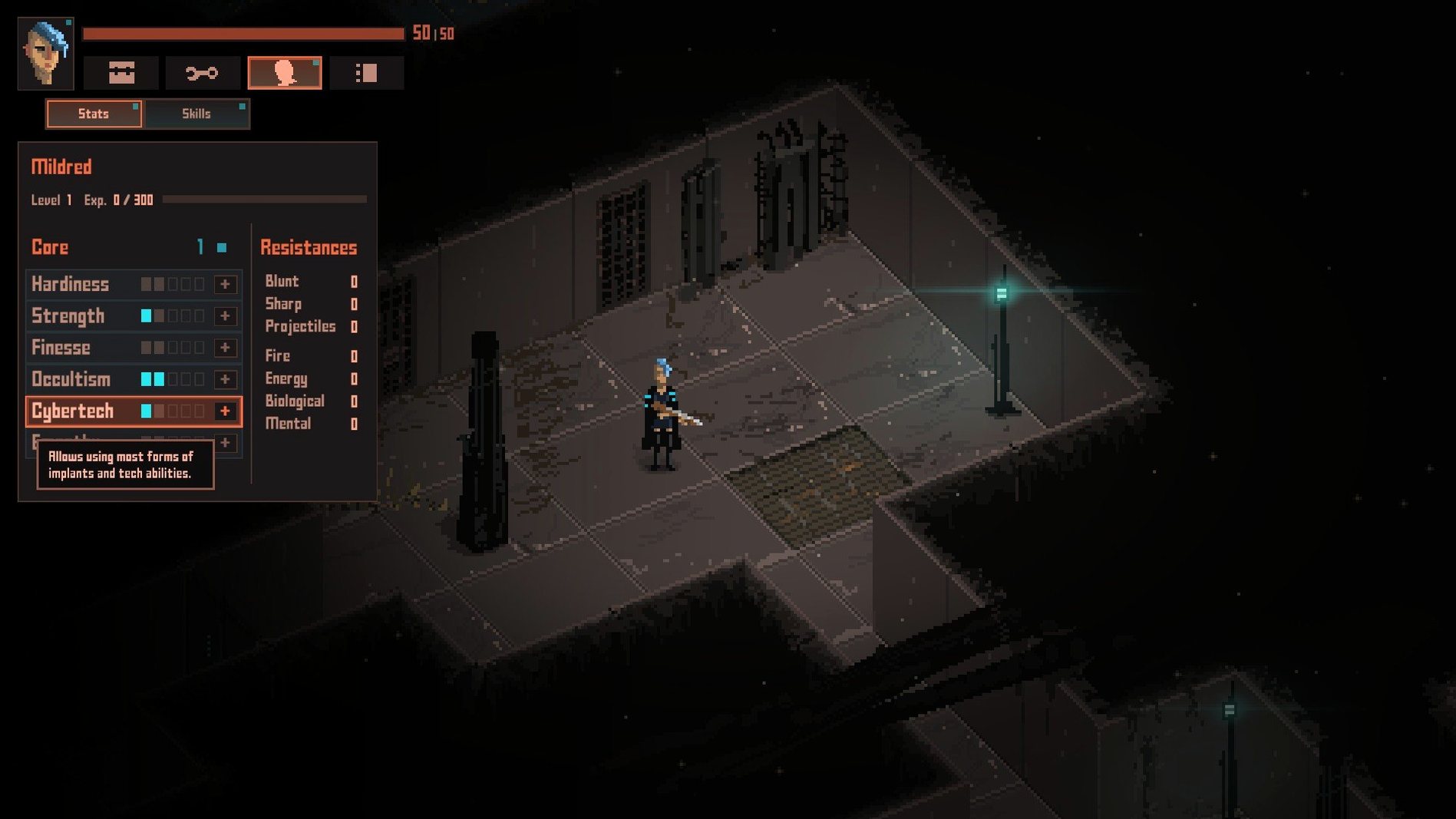
The game sets its post-apocalyptic role-playing on deliberately designed levels, not endless generated terrain. Every ruin and fleshy growth is placed, which gives exploration a quiet sense of intention. You move through a grim, organic landscape where old-school RPG systems — stats, dialogue choices, branching paths — sit alongside modern action combat that demands timing and positioning. The dynamic rhythm keeps even small skirmishes tense.
Freedom: systems that trust the player
Player freedom here means the mechanics do not chaperone you. The game supports multiple approaches to obstacles and rarely forces a single solution. You can fight, sneak, or talk your way through much of what the wastes throw at you, and the writing stays dry and strange throughout. It runs on both ARM and x86 64-bit Macs, with English and German language support, so the technical barrier is low even if the narrative one is deliberately high.
Bone-gate entry: a zoomed-in pixel art choice
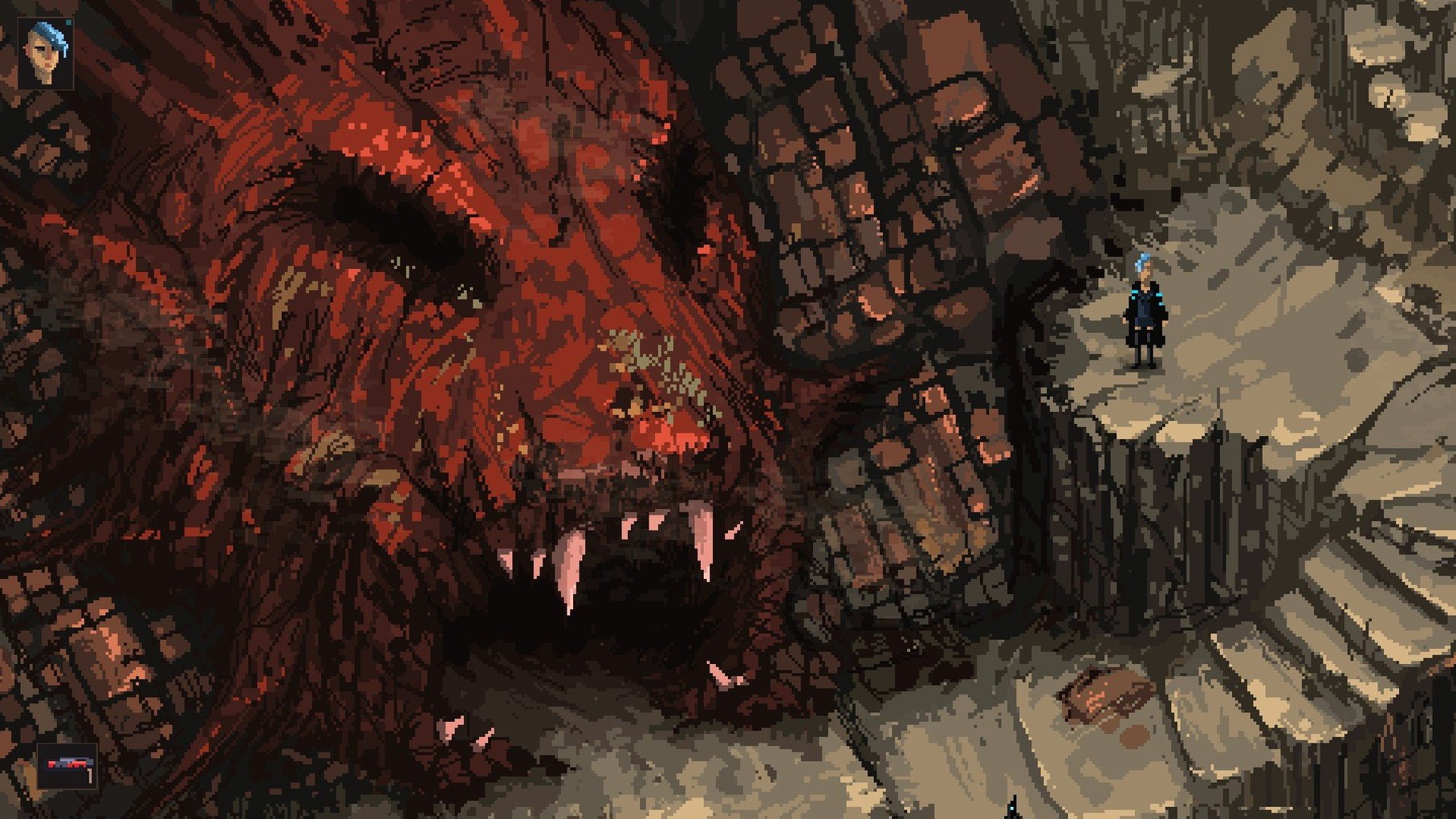
You load a save outside a settlement built into the ribcage of something long dead. The pixel art renders the bone texture with a care that rewards the zoomed-in glance. First decision: enter through the gate or slip in via a side passage you noticed last time. You pick the side passage, because the guard at the gate charged too much for entry on your previous visit, and your character's charisma is low — the game remembers that.
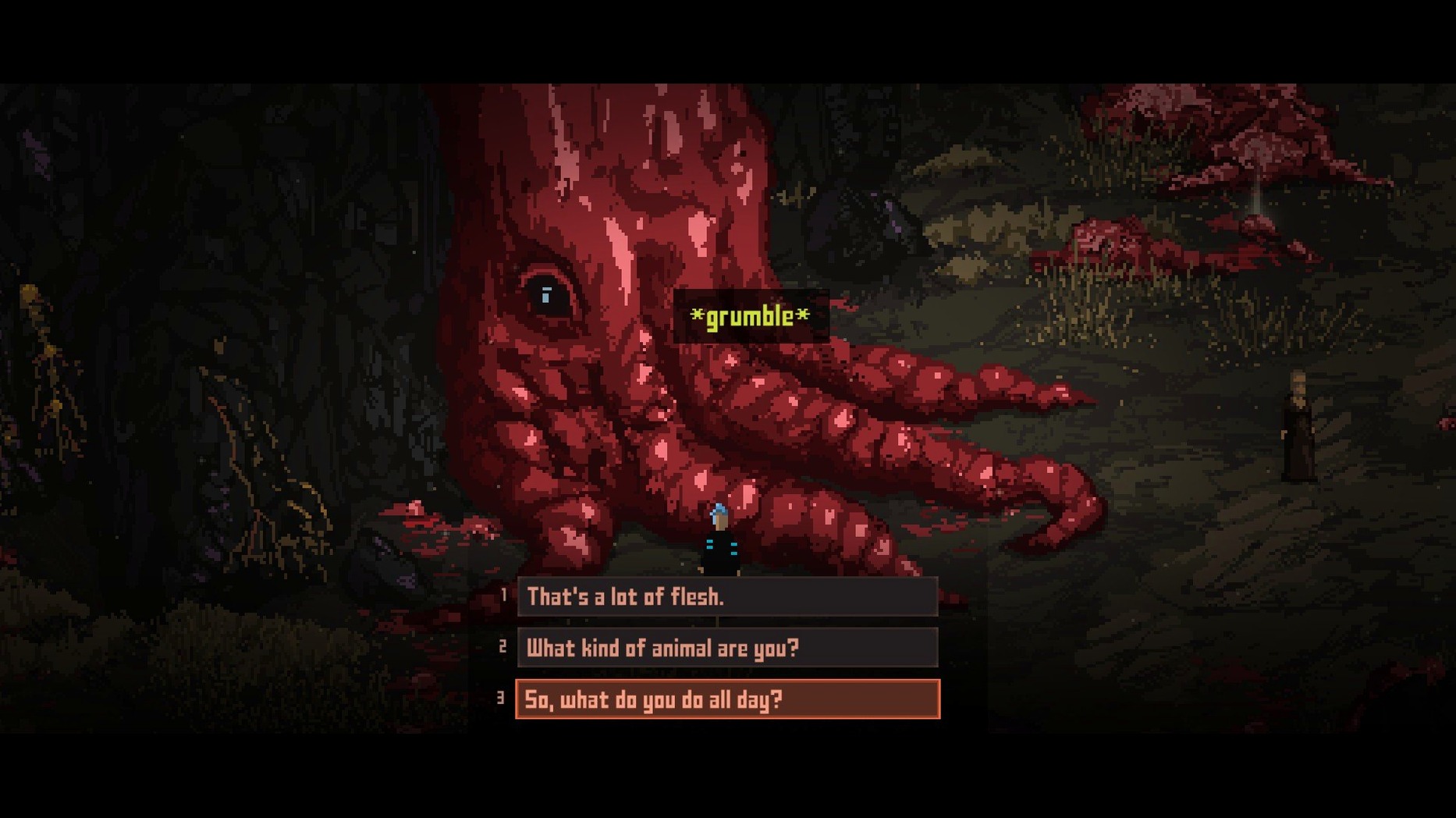
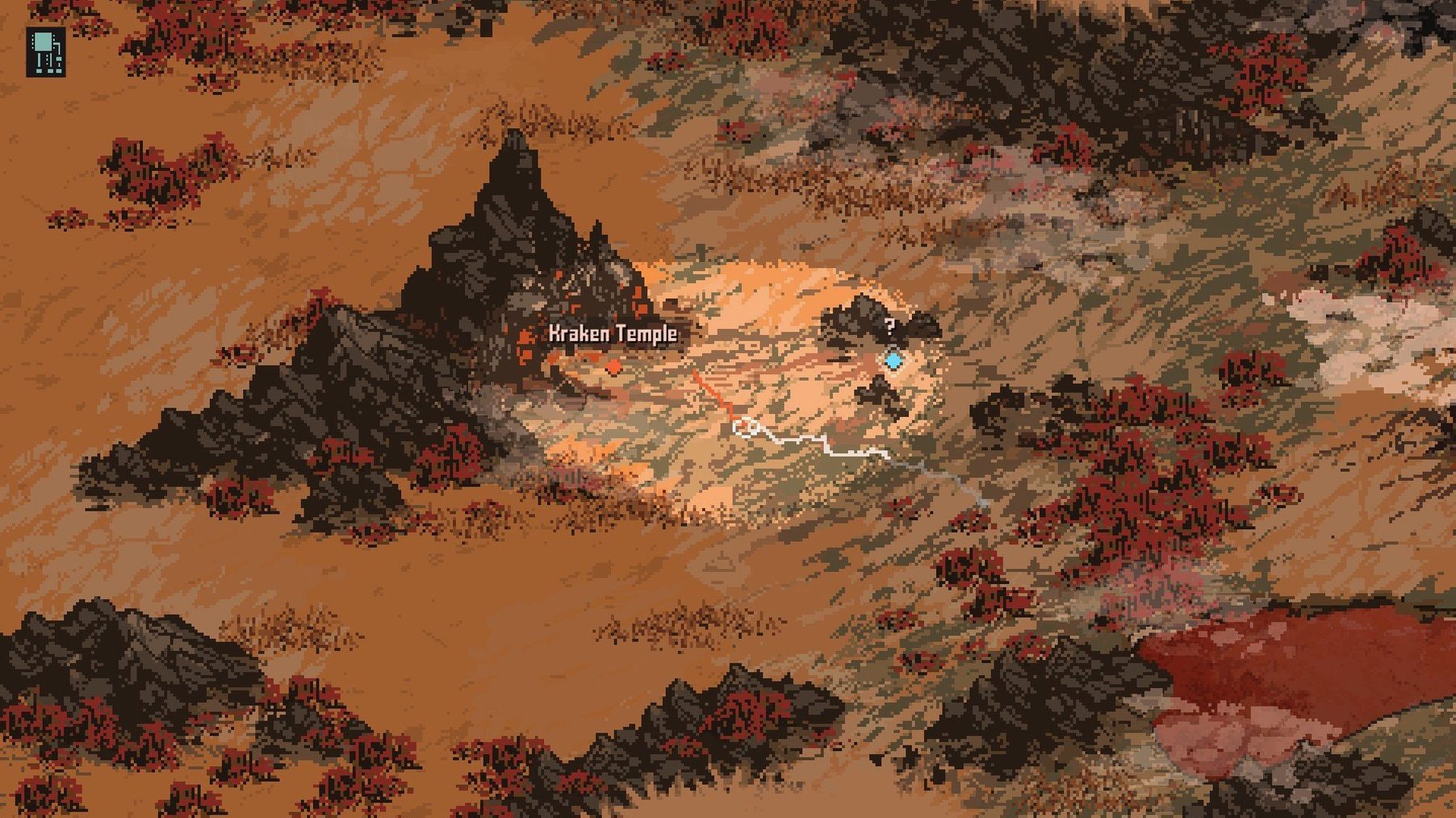
Inside, a merchant in a hood mutters about a shipment lost to a worm nest in the eastern tunnels. You note it on the map, a custom marker you place by hand. The dialogue window offers three responses. One is a lie, one is a threat, one asks for more detail. You pick the third. The merchant reveals that the shipment contains a stabiliser for the town's water purifier, which opens a choice later: return it for gratitude or keep it for your own camp. The writing never judges you for either.
You head east. Combat begins with a shriek — two fleshers and a spitter. You dodge left, fire a burst from the scrap rifle, then switch to the blade for a finish. The action is real-time but not frantic; every swing has a recovery window you cannot cancel, so you learn to commit. When the fight ends, you loot a note that references a cosmic horror by name, a name the game has never explained. That silence is typical. You close the session making a mental note, not ticking a quest box.
Single-player ritual: designed for a dark room with the music
Death Trash suits the Mac user who treats games as a slow, private ritual rather than a social activity. The local co-op mode exists, but the campaign feels designed for a single person, in a dark room, with the music low. It rewards players who read item descriptions not for stat bonuses but for the flavour text — a torn letter, a description of rust, a line that hints at the larger mythology without ever delivering a clean answer.
Pixel-art enthusiasts and fans of the death trash mac full version experience will appreciate that the sprite work is detailed enough to make armour choices visible on your character. If you play RPGs for loot glow and quest markers, the game will frustrate you. If you play them for atmosphere, for the feeling that a world existed before you arrived and will decay after you leave, it fits. It also runs quietly on both Intel and Apple Silicon Macs, so the machine stays cool during long sessions — a small practical mercy.
Small details worth noticing
Several conveniences hide in plain sight. The inventory screen lets you hold Option and click an item to drop it without a confirmation dialogue, which speeds up the constant weight management. Right-clicking on any equipped weapon swaps it with the alternate slot you configured earlier — a shortcut the tutorial never mentions. You can also zoom the camera in and out with the scroll wheel, closer than you might think, and the sprite art holds up well under scrutiny.
The dialogue system includes a subtle but useful feature: lines you have already spoken in previous conversations appear in a muted grey, while fresh options use full white text. This prevents repetition across multiple playthroughs without breaking immersion with an overt UI marker. The map screen allows you to type custom notes as short as a single word, and those notes persist across saves — practical when you return to a character after weeks away and need to remember why you marked a particular ruin. In short, the interface does its work quietly, which is the highest compliment a designer can pay it.







Correspondence 0
Take a chair or join the table to send a letter.
No correspondence on this note yet. Letters are read before they appear.