 LeCoqRoti
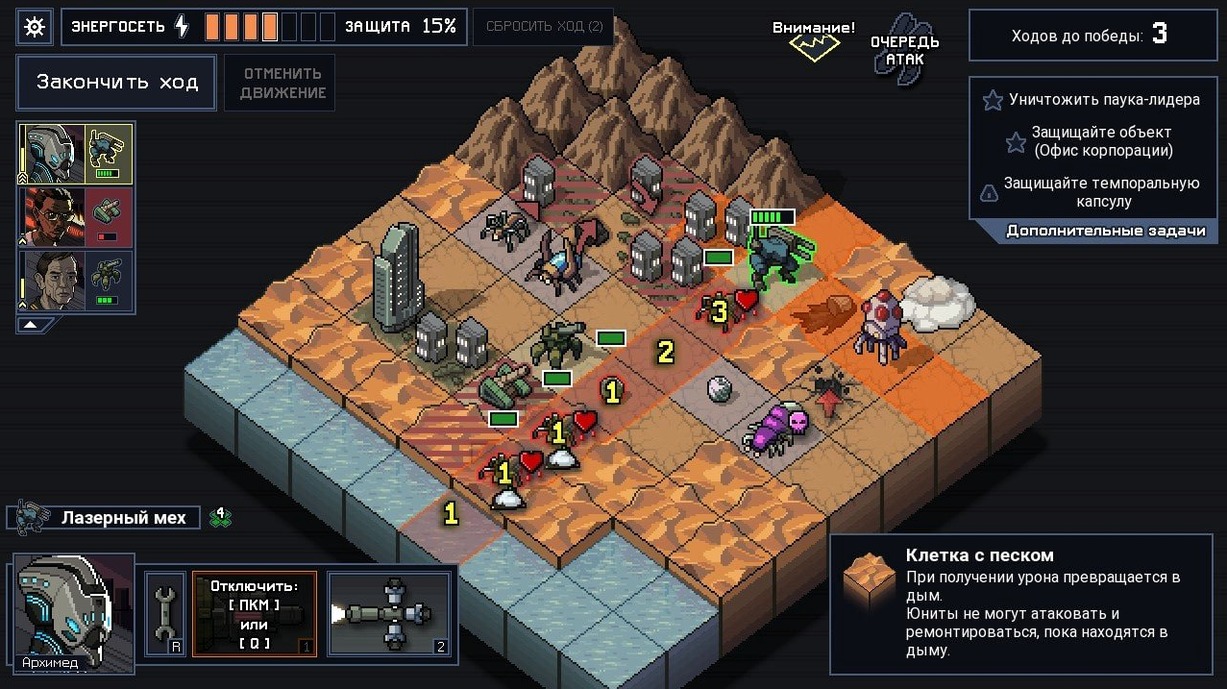
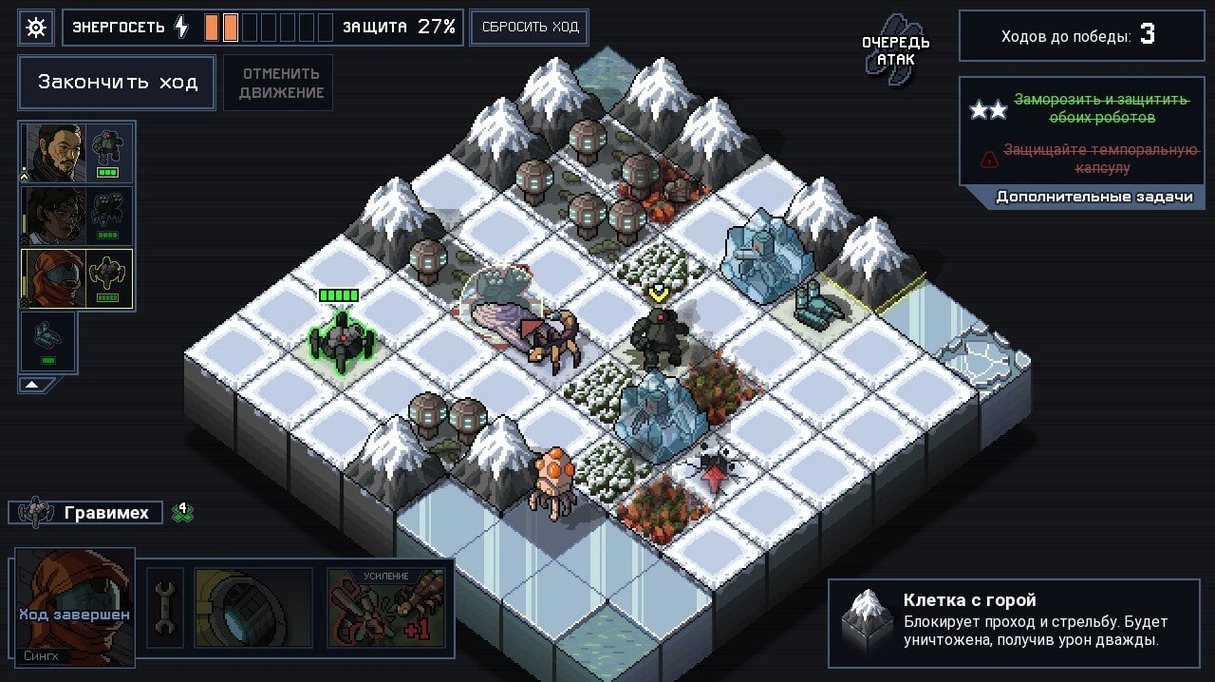
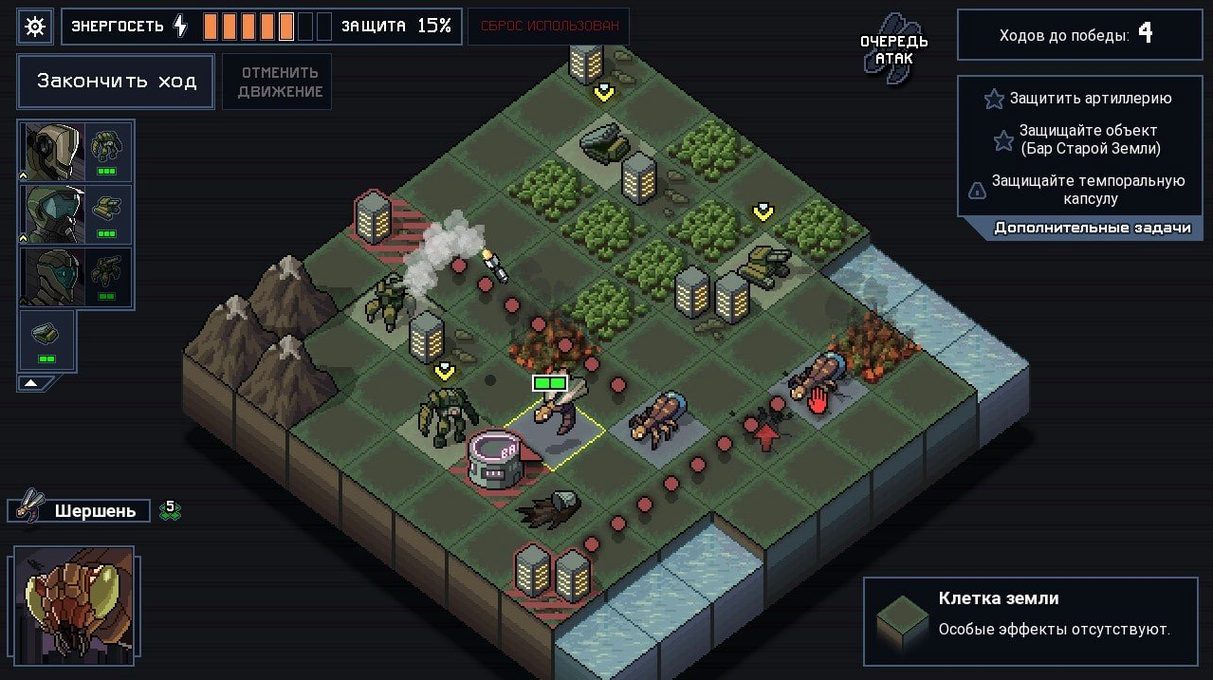
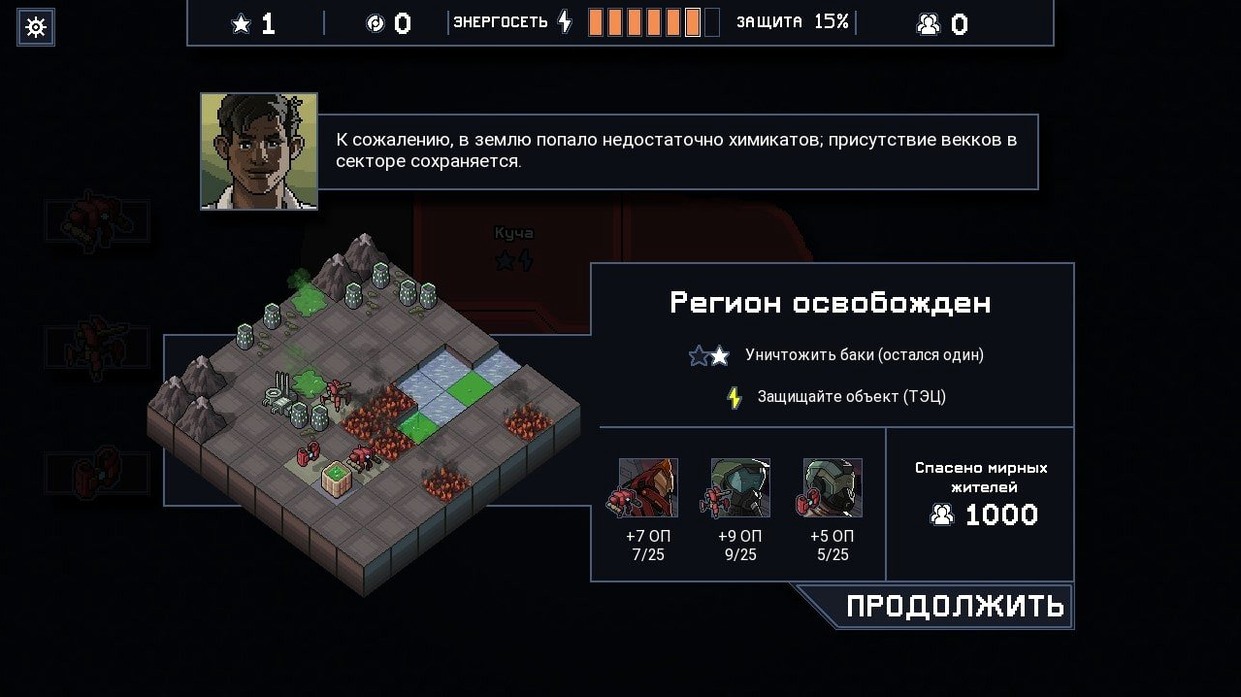
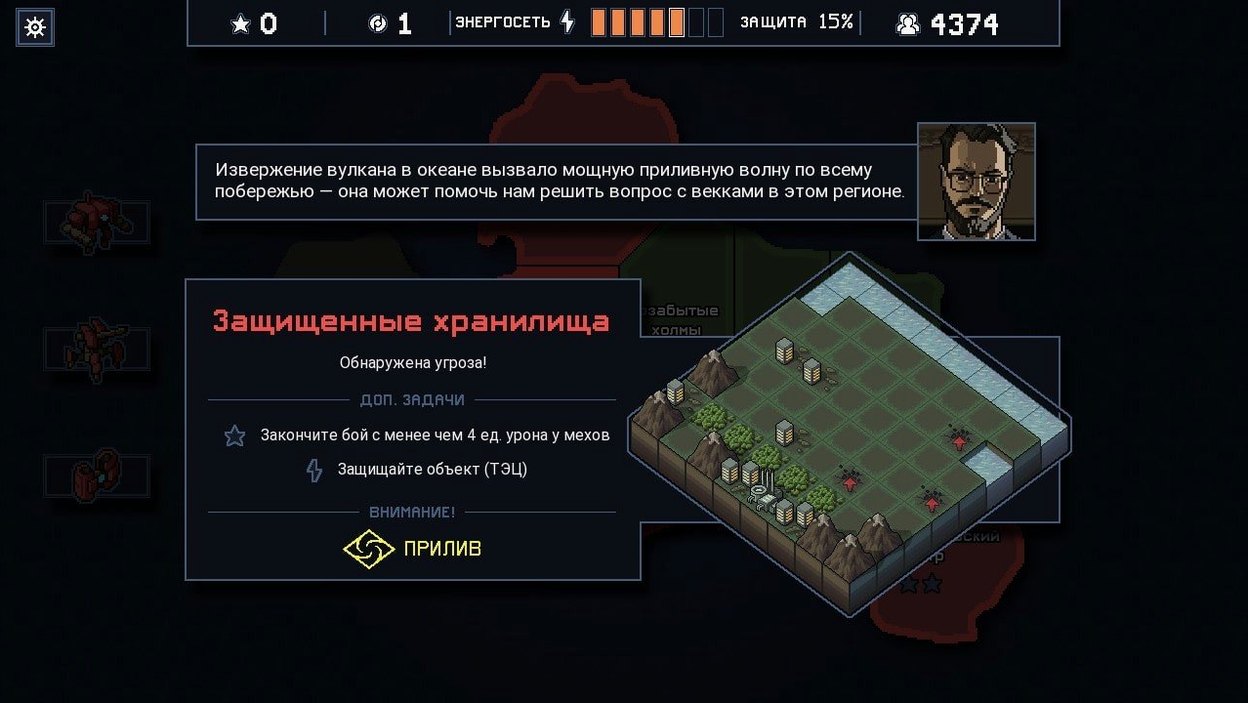
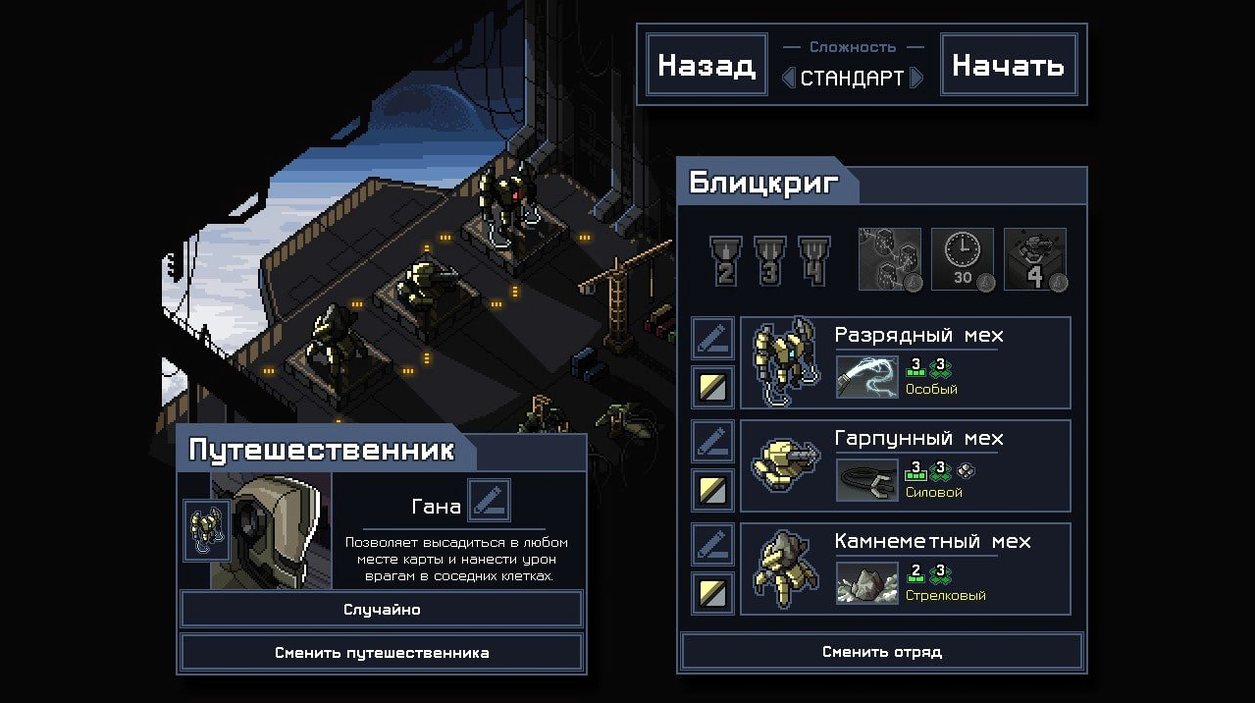
Eight by eight tiles, three mechs, one chance to undo a mistake per battle. Into the Breach strips the turn-based strategy genre down to a grid of tight, punishing decisions. The remnants of human civilisation huddle on islands while the Vek — gigantic subterranean creatures — rise to destroy the power grid. Civilian buildings supply energy to your mechs, so every structure you lose brings the run closer to collapse.
Mech squad puzzles: three units against telegraphed Vek strikes
A turn-based strategy game where you command a squad of three mechs from the future, repelling the Vek across small, procedurally generated maps. Each turn, enemies telegraph their attacks; your job is to reposition, block and counter with perfect economy of movement.
Pixel calm on Intel Macs: no crashes, light footprint
The game runs on Intel-based Macs and feels light even on older hardware. The pixel-art interface stays crisp, the music remains unobtrusive, and I have seen no reports of frame drops or crashes under typical conditions.
Does it support a controller or keyboard?
Keyboard and mouse work as expected. The game also recognises controllers, which makes it comfortable to play on a laptop propped further away — useful during longer sessions.
Mistakes beginners make: three habits that end runs early
New pilots tend to fixate on destroying Vek. That instinct costs runs. The objective is not to kill every enemy — it is to protect civilian buildings. A mech that spends its turn finishing off a wounded creature while a full-health Vek lines up a strike on the power grid has been misused.
Another common error: treating the undo move as a safety net rather than a learning tool. You get one reset per battle, and burning it on a sloppy first placement teaches nothing. The undo is there to let you explore a different line of play, not to correct a careless click.
Finally, beginners often ignore mech positioning between turns. A mech standing on an empty tile that could have blocked a spawn point has already lost value. The Vek emerge from fissures in the ground; parking a unit on one prevents reinforcements outright. It is the single most efficient action in the game, and it costs no weapon charge.
A typical session: twenty minutes on Archive Island
The map opens. Four civilian buildings sit clustered on the right side of the grid. Three Vek have surfaced — a standard beetle, a hornet preparing a ranged strike, and a burrower that will attack from underground next turn. My mechs: a cannon-equipped prime, an artillery unit with a building-immune upgrade, and a science mech that can pull enemies one tile.
I spend the first thirty seconds studying attack telegraphs. The hornet is targeting a hospital. The beetle aims for a power plant. The burrower will emerge under my artillery mech if I leave it where it stands. I move the science mech left, pull the hornet into water — drowning it — and end its threat. The artillery fires on the beetle, pushing it one square so its attack now hits an empty forest. The prime steps onto a spawn point, blocking a new Vek that was set to appear next turn. Three problems, three solutions, no damage taken.
Mid-battle, a fourth Vek emerges. I have no clean answer, so I let a mountain take the hit. The terrain counts as ablative armour — sometimes losing a forest or a ridge is the correct trade. Two turns later the island is clear. The corporate reward screen offers a new pilot with a shield ability; I take her and carry the timeline forward.
Four-second launch: Rosetta 2 and instant turn transitions
Into the Breach launches in under four seconds on a MacBook Air from 2020, even running through Rosetta 2. Battle transitions are immediate — no loading screens between turns, no animation bloat. The pixel art is static enough that the integrated GPU barely registers the workload. Activity Monitor shows the game idling at around 300 MB of RAM, rising only slightly during Vek attack sequences.
I have left it running behind other applications for hours without a hitch. The DRM-free build asks for nothing in the background: no launcher, no account check, no always-online requirement. That quietness extends to battery life. A full charge on the M1 Air carries through roughly five hours of continuous play — more if you dial the screen brightness down and keep music off.
Stability has been uneventful, which is the best kind. No crashes across dozens of island chains, no corrupted save timelines, no odd behaviour after waking the Mac from sleep. The only quirk worth noting: on first launch, the game may default to a resolution that does not quite match the display. Switching to native resolution in the settings takes ten seconds and fixes it permanently.








Correspondence 0
Take a chair or join the table to send a letter.
No correspondence on this note yet. Letters are read before they appear.