 LeCoqRoti
VMware Fusion Pro is a virtualisation tool that lets you run Windows and other operating systems alongside macOS without rebooting.
Will it run Windows 11 on my Mac?
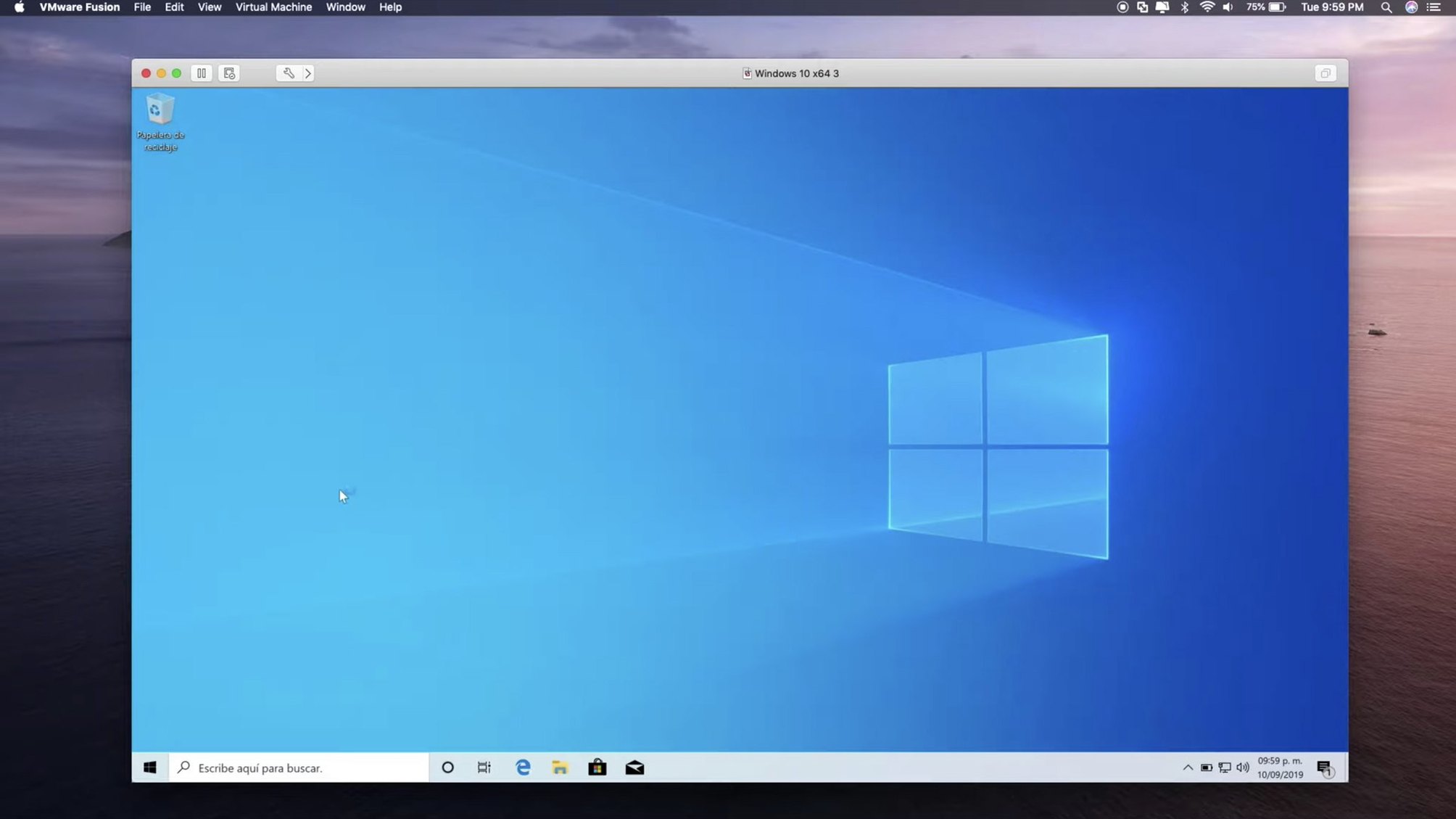
Yes. Fusion creates standard Windows virtual machines with DirectX 11 hardware acceleration for Windows 10 and later, so the desktop feels responsive for everyday tasks. USB 3.1 devices pass through to the guest without fuss.
Which Linux distributions are officially supported?
The 26H1 release added explicit guest OS support for Ubuntu 26.04 LTS, Fedora 43 and 44, SUSE Linux Enterprise 16, openSUSE 16.0 and FreeBSD 15.0. You can install these with confidence that VMware Tools will work as expected.
Apple Silicon support: now native on both architectures
It does. The current build supports both Intel and Apple Silicon architecture, and remote connections to ARM-based ESX hosts are now included.
Containers via CLI: OCI images alongside traditional VMs
There is a command-line interface for OCI containers, which is useful if your workflow mixes virtual machines with lightweight container images. It sits alongside the traditional virtual machine management, not as a replacement.
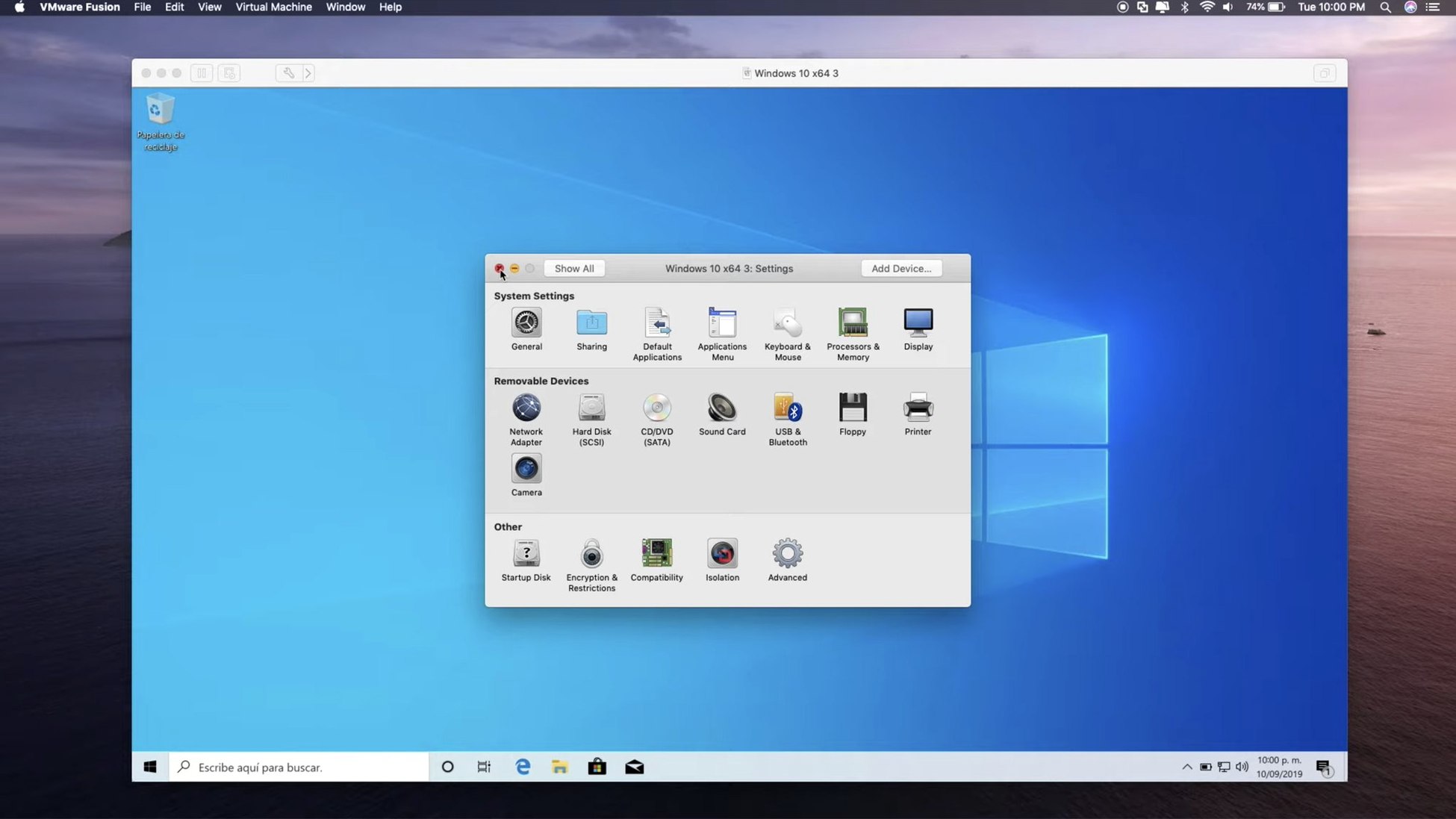
Before you spin up the first guest, a handful of preferences are worth a quiet look. They live under VMware Fusion Pro → Settings and on the per-virtual-machine Settings pane.
Default VM folder: point it to an external drive early
Default folder for virtual machines. Fusion defaults to a folder inside your home directory. If you keep large VMs on an external SSD, point this to the external volume before you create anything. Moving a multi-gigabyte bundle later is tedious.
Keyboard and mouse profile. The General tab lets you choose between a Mac profile (Command key maps to the Windows key) and a PC profile (Command acts as the Windows key only inside the guest). If you switch between macOS and Windows constantly, the Mac profile keeps muscle memory intact. If you work inside Windows for hours at a stretch, the PC profile prevents awkward shortcuts.
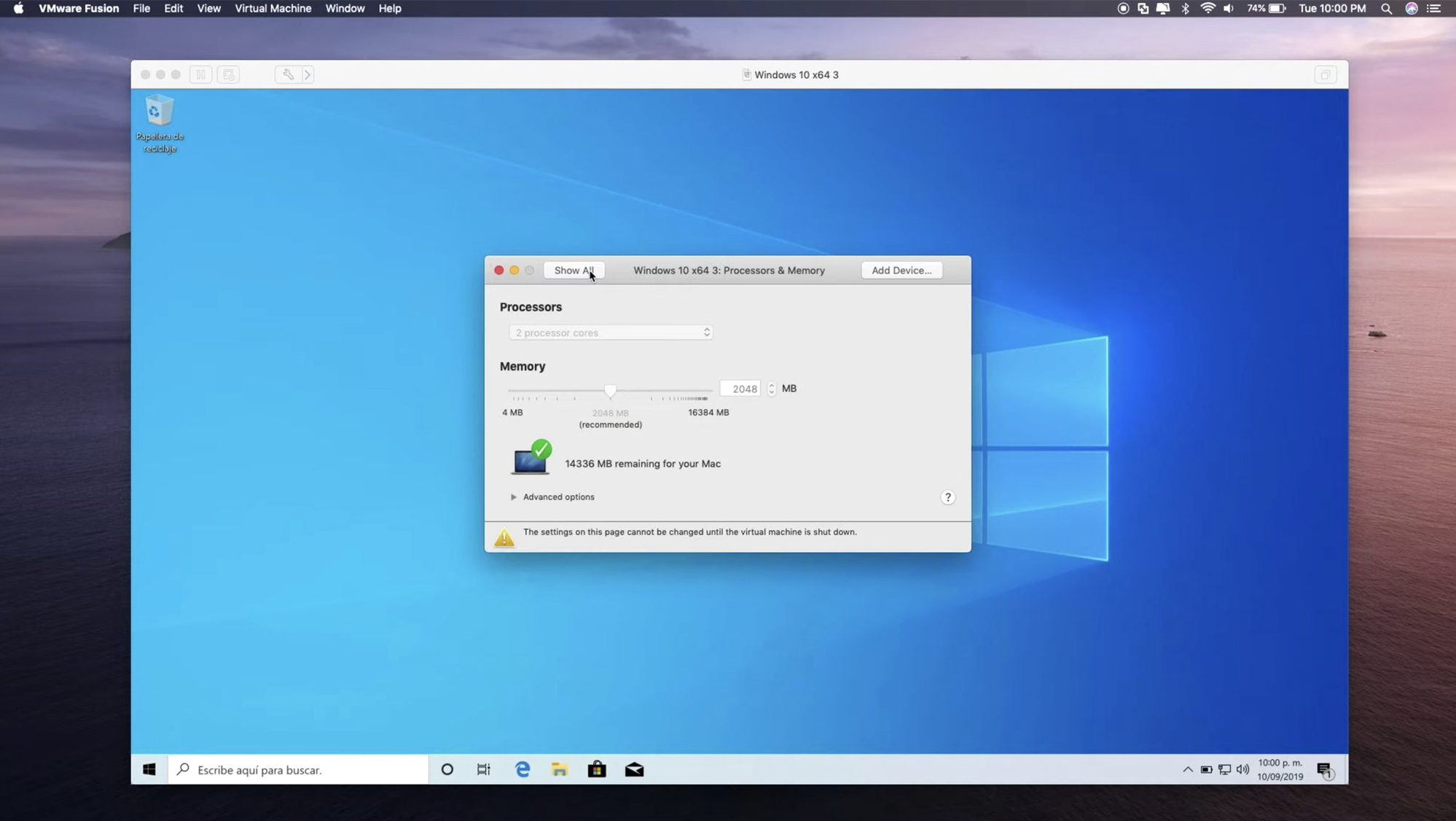
Memory and CPU allocation. Fusion suggests sensible defaults, but on an Apple Silicon Mac the figures lean conservative. A Windows 11 guest with 4 GB of RAM will run; with 8 GB it will feel like a native machine. The rule of thumb: leave at least 4 GB free for macOS. On a 16 GB Mac, assigning 8 GB to the guest is safe; on an 8 GB Mac, stick to 4 GB and close memory-hungry macOS apps before launching the VM.
Display scaling. Under Display, the Accelerate 3D Graphics box should remain checked for any modern guest. If you use an eGPU, the Displays pane recognises it automatically, and Fusion routes DirectX 11 calls through the external enclosure without extra configuration. Retina-aware scaling is on by default and rarely needs adjustment, though turning it off can sharpen text in older Linux distributions that lack HiDPI support.
Sharing and isolation. By default, the guest can see your Mac’s Desktop, Documents and Downloads folders, plus connected USB devices. If you test untrusted software inside the VM, uncheck shared folders and set the network to Host-only rather than Share with my Mac. This keeps the guest off your local network entirely.
Library timestamps: creation and power-on dates now visible
The 26H1 build is quieter than it looks on the changelog. The additions that affect daily work are practical rather than flashy.
Timestamps for virtual machine creation and last power-on time now appear in the library list. It is a small thing, but when you maintain five or six test environments it becomes the fastest way to identify the stale clone you meant to delete weeks ago.
ARM-based ESX host connections arrived with this release. For anyone who manages a mixed lab — a Mac at the desk, ESX hosts in a cupboard or a data centre — this means you can now open a remote console to ARM guests from the same Fusion window you use for local VMs. The interface does not distinguish between local and remote; the remote guest simply appears as another tab.
The guest OS list grew by seven entries: Ubuntu 26.04 LTS, Fedora 43 and 44, SUSE Linux Enterprise 16, openSUSE 16.0 and FreeBSD 15.0. In practice, selecting one of these during VM creation pre-fills the recommended disk size, memory and VMware Tools package. It does not lock you to that distribution — you can still install an unsupported OS as “Other” — but the template saves several minutes of manual setup per VM.
Shared folders with Spotlight: instant desktop hand-off
Fusion Pro integrates with macOS at a level that rewards a little deliberate wiring.
Spotlight and file hand-off. With shared folders enabled, a document saved to the Windows desktop appears in the Mac’s ~/Desktop folder instantly. Spotlight indexes it on the Mac side, so you can search for a Word file by name without leaving macOS. The reverse works too: drop a PNG into the shared Downloads folder and it is available inside the guest immediately. This two-way flow removes the friction of transferring files through a network share or a USB stick.
Clipboard synchronisation. Copy text on the Mac, paste it into the Windows guest with Command‑V. The clipboard handles plain text, rich text and images reliably across the hypervisor boundary. If you work with code, watch the encoding: special characters sometimes mutate when pasting into a terminal. Using the guest’s native paste command avoids this.
Drag-and-drop between hosts. You can drag a file from the macOS Finder directly onto the Windows desktop. It copies the file, not a shortcut, and the transfer speed matches the disk’s capability. Large transfers — ISO images, virtual disk clones — are better handled through shared folders or a mounted volume, but for a PDF or a screenshot, drag-and-drop is the quickest route.
Terminal and the CLI. The OCI container command-line interface sits behind the vmrun utility, which also controls virtual machines. You can script a workflow that starts a VM, runs a test suite inside it, pulls the results back to macOS and suspends the guest — all from a single shell script. This plays nicely with Automator and Shortcuts, too, if you prefer a visual trigger.
Networking with other Mac tools. A guest on the Share with my Mac network can reach services running on the host: a local web server, a database, a file share. Developers often run a backend API on the Mac and test it from a Windows browser inside Fusion. The virtual network adapter handles NAT translation transparently, so no manual IP configuration is needed.
Windows 11 TPM: the virtual module is added automatically
Windows 11 refuses to install because of TPM requirements. Fusion Pro includes a virtual Trusted Platform Module. When you create a Windows 11 guest using the template, the TPM is added automatically. If the installer still complains, check that the VM’s encryption settings are enabled — the virtual TPM needs an encrypted virtual disk to function. Encrypt the VM from Settings → Encryption, then restart the installation.
The guest feels sluggish despite plenty of RAM. Look at the number of virtual CPU cores assigned. On an Apple Silicon Mac, assigning more than half the available performance cores can starve macOS. A four-core guest on an eight-core Mac usually works; a six-core guest on the same machine may cause stutter on both sides. Drop the core count by one and test again. Also check that VMware Tools installed correctly — the system tray icon in Windows should show a grey and white VMware logo. If it does not, re-run the VMware Tools installer from the Virtual Machine menu.
USB 3.1 devices do not appear in the guest. When you plug in a device, Fusion asks whether to connect it to Mac or to Windows. If the dialogue does not appear, open Virtual Machine → USB & Bluetooth and select the device manually. Some external drives need to be ejected from macOS first — the two operating systems cannot mount the same volume simultaneously.
Shared folders vanish after a macOS update. A major macOS upgrade sometimes resets Full Disk Access permissions. Go to System Settings → Privacy & Security → Full Disk Access and confirm that VMware Fusion Pro is listed and checked. If it is missing, add it manually and restart Fusion. The shared folders should reappear on the next VM boot.
Networking stops working after waking the Mac from sleep. This affects the Share with my Mac NAT connection more than bridged mode. The quick fix: suspend the guest, wait three seconds, and resume it. Fusion reinitialises the network stack during resume. If the problem recurs often, switching the guest’s network adapter to Bridged mode and assigning a static IP on your local network is more resilient across sleep cycles.
High-resolution display shows tiny interface elements in the guest. Older operating systems — Windows 7, some Linux desktops — do not scale well on Retina displays. In the VM’s Display settings, uncheck Use full resolution for Retina display. This halves the reported resolution inside the guest, and the interface elements scale up to a comfortable size without blurriness.








Correspondence 0
Take a chair or join the table to send a letter.
No correspondence on this note yet. Letters are read before they appear.