 LeCoqRoti
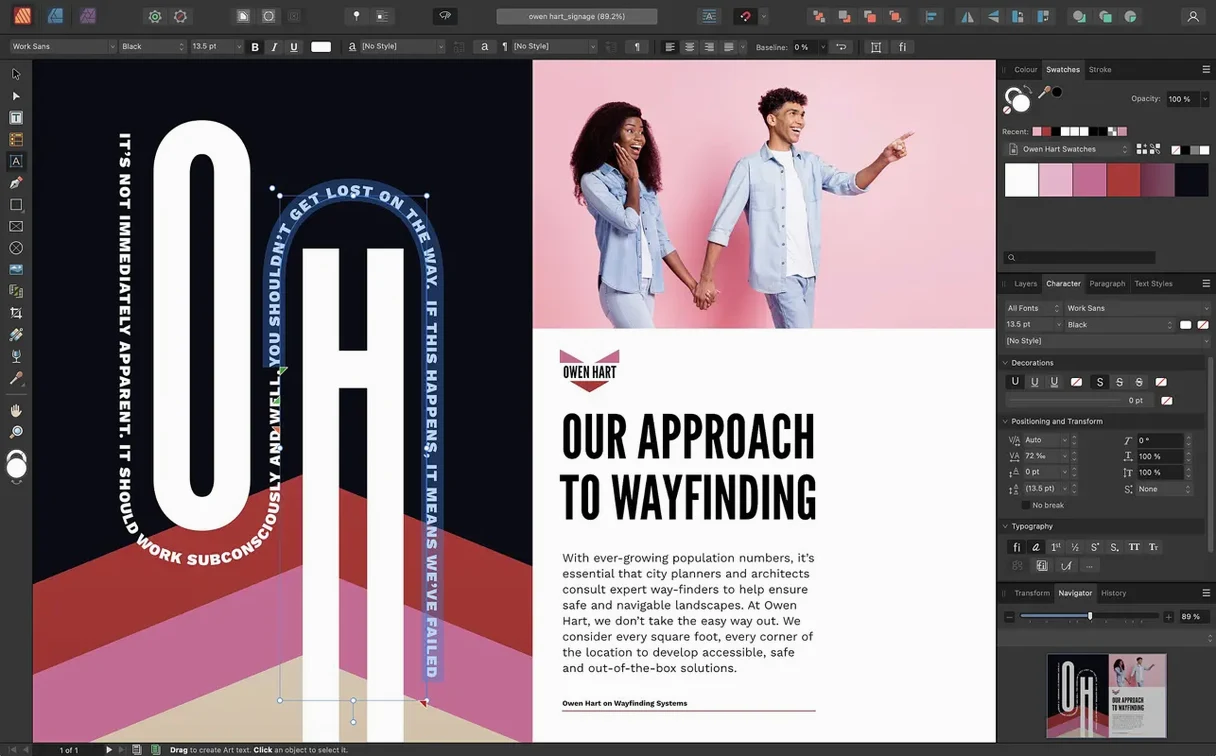
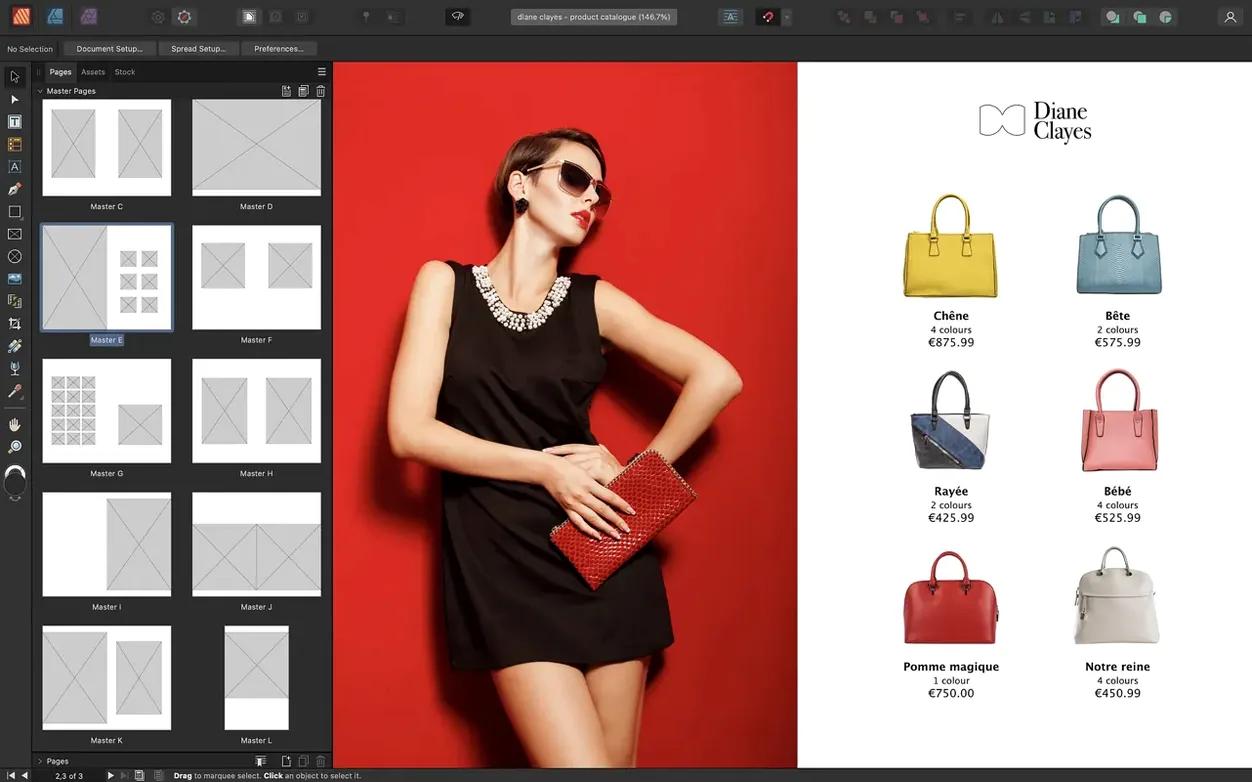
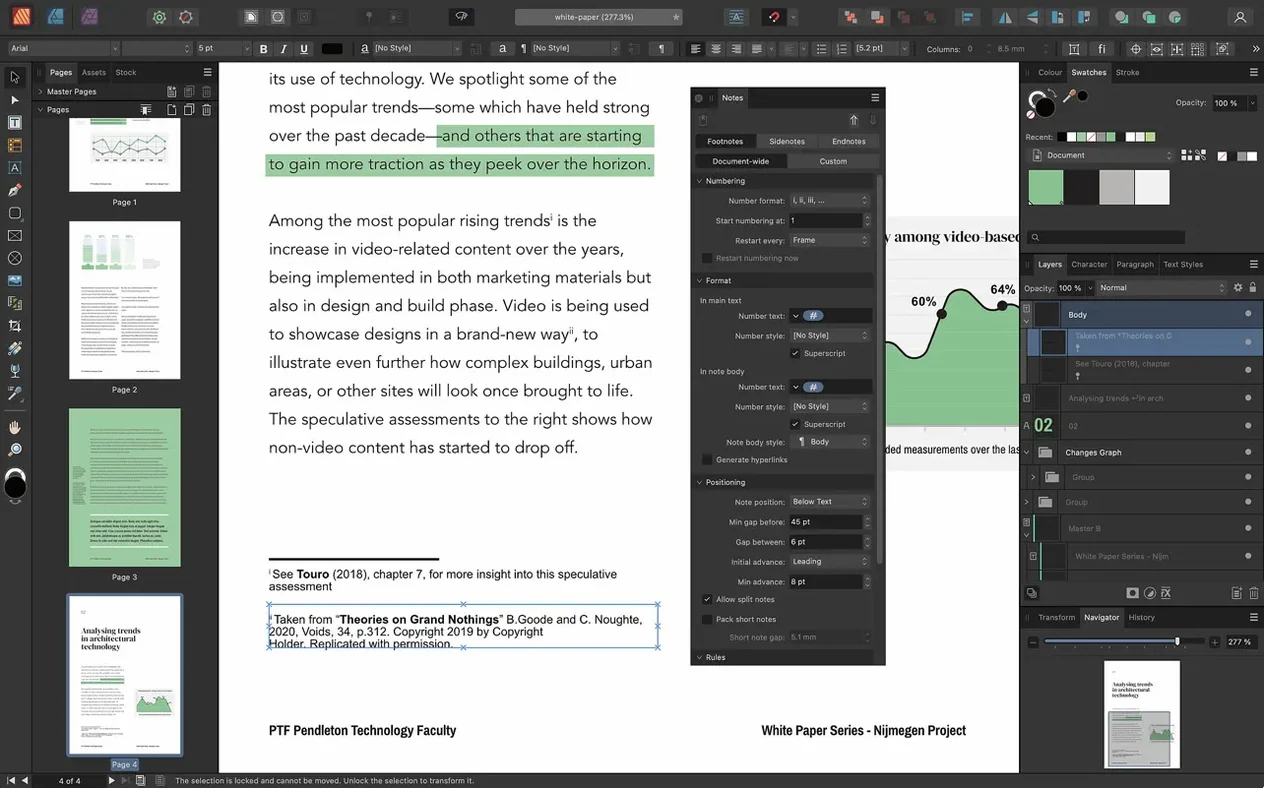
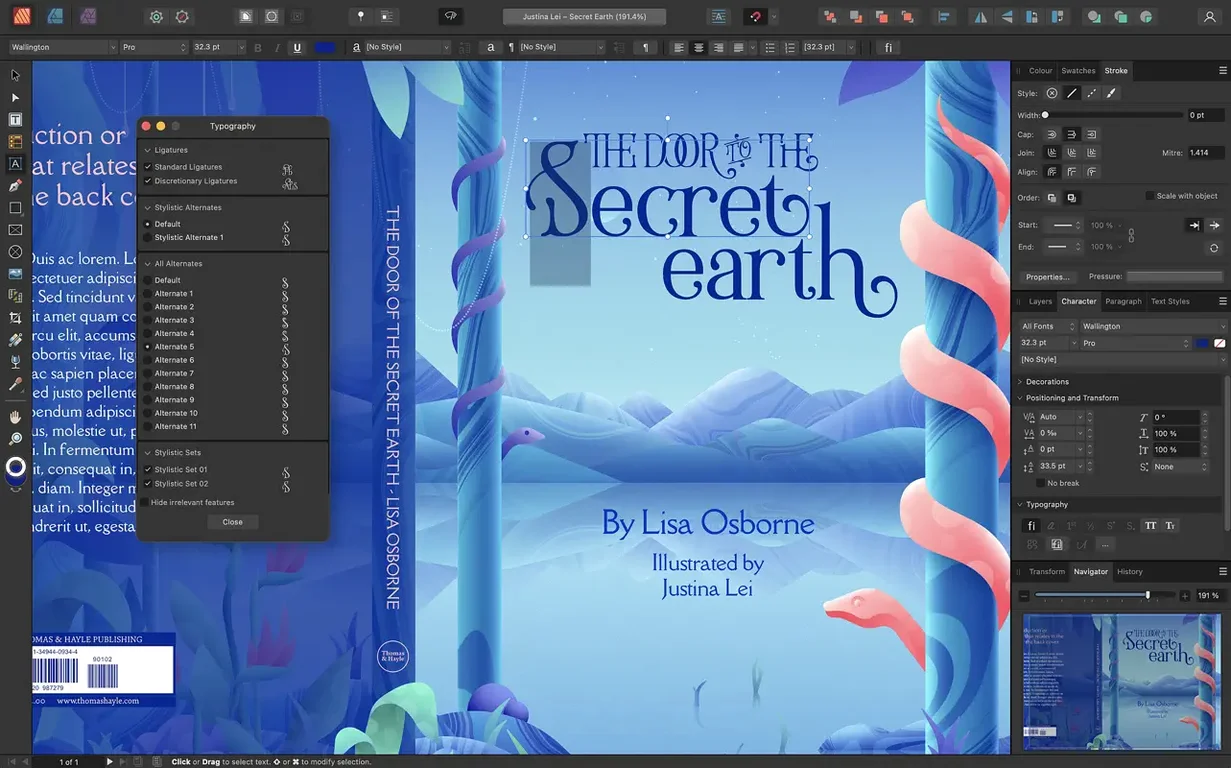
Finding a page-layout tool that handles long documents and precise print output without crashing halfway through a brochure can feel like a gamble. Affinity Publisher was built for that pressure: a single working file that moves cleanly from a folded leaflet to a 200-page book, with colour management that holds from screen to press.
Multi-page, mixed-media print projects: a natural home
- Multi-page documents that mix placed images, linked text frames, and custom-shaped text blocks.
- Print workflows that rely on CMYK, spot colours, and PDF/X-1a through PDF/X-4 export.
- Designers working across Intel and Apple M-series Macs from the same file.
- Projects that use nested master pages and dynamic spreads — gatefolds and accordion folds are now native in version 2.6.
No variable-font axis controls: a type feature gap
- macOS 10.15 Catalina is the floor; anything older cannot run the current build.
- OpenType support is present, but variable-font axis controls are not part of the feature set.
- The Reading Order panel added in 2.6 is a first step toward tagged PDF; full accessibility tagging still requires manual verification.
- Large linked-image documents benefit from 8 GB of RAM or more.
Multi-page spreads beyond pairs: the 2.6 rethinking
Version 2.6 rethought the flat spread model that most layout tools have stuck with for decades. Before the update, a spread meant two facing pages and nothing else. That covered most books and magazines, but it left designers building gatefold covers and trifold brochures by manually offsetting pages and hoping the printer would interpret the imposition correctly. The multiple-page spread feature removes that guesswork: you can now define three, four, or more pages in a single spread, and Publisher handles the fold logic natively. Accordion and gatefold templates ship with the update, so setting up a six-panel leaflet takes about as long as dragging a master onto the canvas.
The Reading Order panel appeared in the same release, tucked into the Window menu. It lets you drag content into a tagged sequence that exports to PDF/UA. For anyone who prepares public-sector documents or corporate reports where accessibility is becoming a contractual requirement, this panel moves the job from a post-export repair in Acrobat to something you handle inside the layout file. The interface is deliberately simple: a vertical list of tagged elements, with drag reordering and a few right-click options. It does not write alt-text for you or check colour contrast — two tasks that remain manual — but the structural tagging alone cuts hours from a typical compliance round.
Designer and Photo tools inside Publisher: one-click persona switching
- StudioLink persona switching: when you have Affinity Designer and Affinity Photo installed, the toolbar icons change context. Click the Designer persona to draw a vector curve around a placed image without leaving Publisher. Click the Photo persona to run a non-destructive levels adjustment on the same image. The file stays a Publisher document; no round-tripping through exported TIFFs.
- Smart colour picker: holding
Optionwhile the Colour Picker tool is active samples the screen colour under the cursor — even from outside the Publisher window. Useful when matching a brand colour from a PDF reference opened in Preview alongside. - Text-frame scaling with content: the detached handle at the bottom-right of a text frame scales both the frame and its text proportionally. Dragging a standard corner handle resizes only the frame and reflows the text. The distinction is subtle but prevents the common accident of stretching type by mistake.
- Quick grid setup from a shape: draw any rectangle, then use
Layer > Convert to Grid. Publisher builds a repeatable grid from that single cell — handy for price lists and timetable layouts where the grid spacing needs to feel custom, not generic. - Resource Manager filtering: the Resource Manager panel lists every placed image and linked document. A small dropdown lets you filter by status — modified, missing, embedded — so you can catch a broken link before export rather than after.
IDML import without GREP or conditional text: the InDesign bridge
Does it open InDesign files? Not directly. Publisher imports IDML (InDesign Markup Language), which InDesign can export. The fidelity is good for text frames, paragraph styles, and placed images; complex InDesign features like GREP styles, conditional text, and some plug-in-driven objects may need manual cleanup after import. For a typical magazine layout, the conversion is workable. For a heavily scripted annual report, expect to budget a few hours of checking.
Can I use my existing fonts? Yes. Publisher reads installed macOS fonts and supports OpenType features through the Typography panel — ligatures, stylistic alternates, old-style figures, and swashes all appear when the font includes them. It does not yet offer the variable-font axis sliders found in more type-focused tools, so weight and width variants need to be installed as separate font files.
Will it slow down on a large book? Performance depends more on linked-image resolution than on page count. A 300-page novel with small placed chapter-head illustrations runs lightly, even on a Mac with 8 GB of RAM. A 96-page art catalogue filled with 300-dpi full-bleed TIFFs benefits from 16 GB or more. The Resource Manager lets you toggle between linked and embedded images per file, which helps balance speed against portability.
Is it a replacement for Microsoft Publisher? No. Microsoft Publisher is a Windows-only consumer tool with a different scope — it leans toward office documents, simple flyers, and mail merge. Affinity Publisher serves professional print and digital layout. Users searching for a Microsoft Publisher torrent or an Affinity Publisher torrent on macOS are often looking for something lighter than InDesign but more capable than Pages; Publisher sits exactly in that gap.
Single-purchase calm for multi-book freelancers: a cost model match
Independent book designers and small-press publishers tend to adopt it quickly, because the single-purchase model removes the recurring cost anxiety that comes with per-seat subscriptions. A designer laying out three novels and a cookbook in a year can work from the same build without recalculating overhead.
Magazine art directors who juggle long-form articles, pull quotes, and full-page ad placements benefit from the linked text-frame engine: a single story can flow across a dozen pages, with smart text reflow when a picture box shifts size. The baseline grid and character-style override highlighter catch tiny inconsistencies that would otherwise reach the proofing stage.
In-house marketing teams preparing multi-format brochures — print PDF, screen PDF, and a lightweight digital version — use the export persona to batch-output all three from one file. Anyone who has ever exported a print spread and then manually re-ordered pages for a screen-friendly single-page PDF will appreciate that the exporter remembers presets between sessions.
Students and self-taught designers coming from an Affinity Publisher Mac torrent or an Affinity torrent often stay because the learning curve is shallower than the alternatives and the StudioLink integration means they can correct an image in Photo or tweak a logo in Designer without launching a separate application and re-importing assets.
System colour picker and text replacement: everyday macOS harmony
StudioLink is the headline integration, but the macOS-native touches matter day to day. Publisher writes to the system colour picker, so palettes saved in other Mac apps are available immediately. It respects macOS spell-check and text replacement, meaning shortcuts typed in System Preferences appear in text frames without extra configuration. The print dialog uses the standard macOS panel, including paper-size presets and colour-matching options that talk to installed ICC profiles.
For photographers and illustrators who work in Capture One, Lightroom, or Photoshop, Publisher accepts PSD, TIFF, and JPEG directly — placed images update automatically when the source file changes, provided the link is intact. Vector work from Affinity Designer moves across with full editability via copy-paste or the persona switch; Illustrator AI files need to be exported to PDF or SVG first, as Publisher does not read the native AI format.
PDF export is where the tool shows its print heritage. The export dialog offers PDF/X-1a, PDF/X-3, and PDF/X-4 presets, each with control over bleed, crop marks, and colour conversion. For digital distribution, the standard PDF preset includes hyperlink export and bookmark generation from the table of contents. The Reading Order panel added in 2.6 feeds directly into the tagged-PDF export, so a layout that starts with accessibility in mind stays tagged through to the final file — no post-processing required.
Users who arrive searching for a publisher torrent often discover that the app plays well with macOS Sidecar too: dragging panels onto an iPad screen frees up the main display for the spread view, which makes fine-tuning typography on a 13-inch MacBook far more comfortable than it sounds.







Correspondence 0
Take a chair or join the table to send a letter.
No correspondence on this note yet. Letters are read before they appear.