 LeCoqRoti

Who uses it: a player who enjoys learning through failure
The crowd that keeps Clone Drone in the Danger Zone installed tends to be comfortable with repetition and gradual mastery. They accept that a single mistake can end a run and that the next attempt is the lesson. The game rewards precision and pattern recognition over button-mashing, so it suits someone who treats each arena death as a small puzzle solved.
Fight: reading the arena before the blade
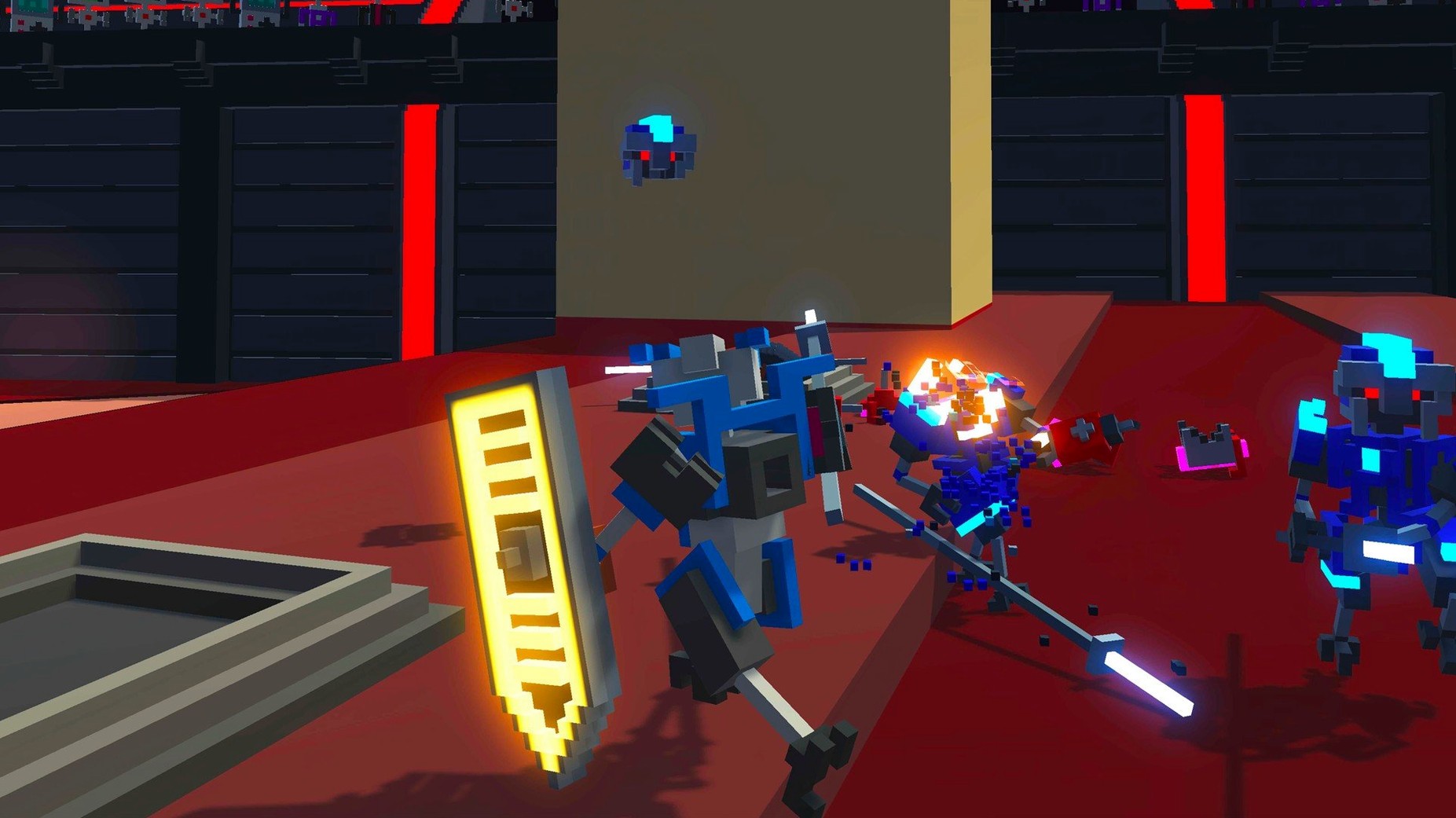
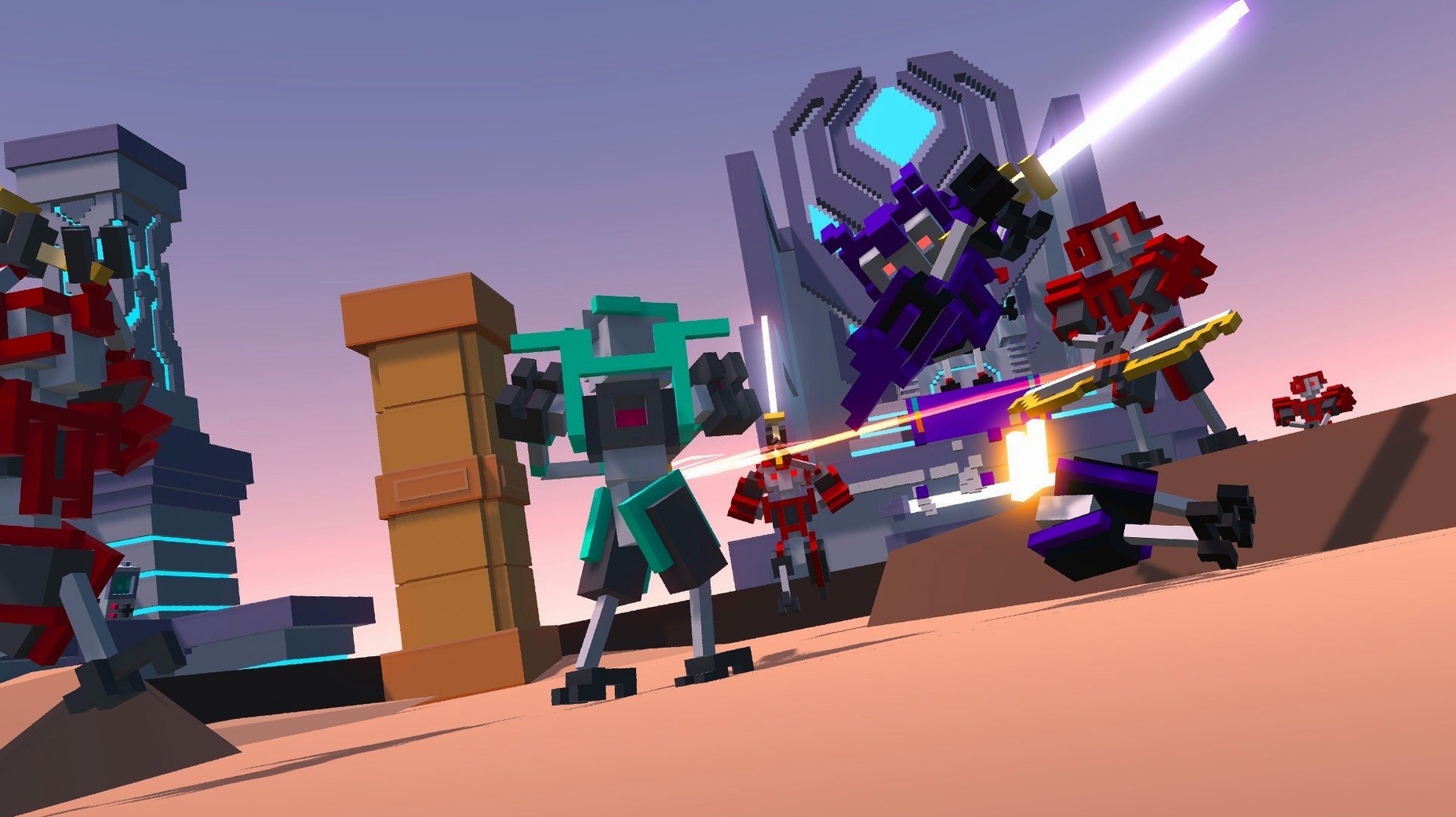
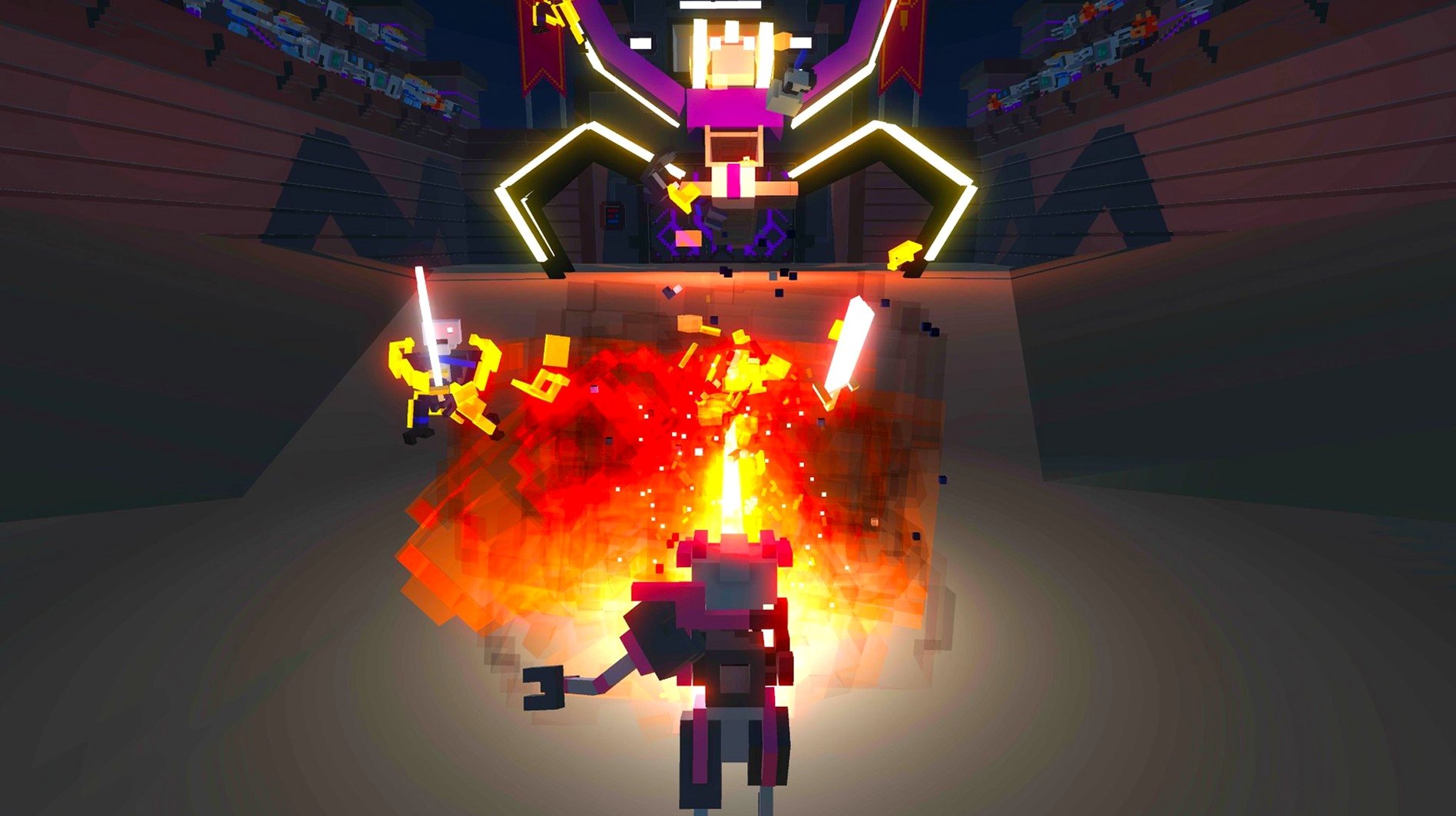
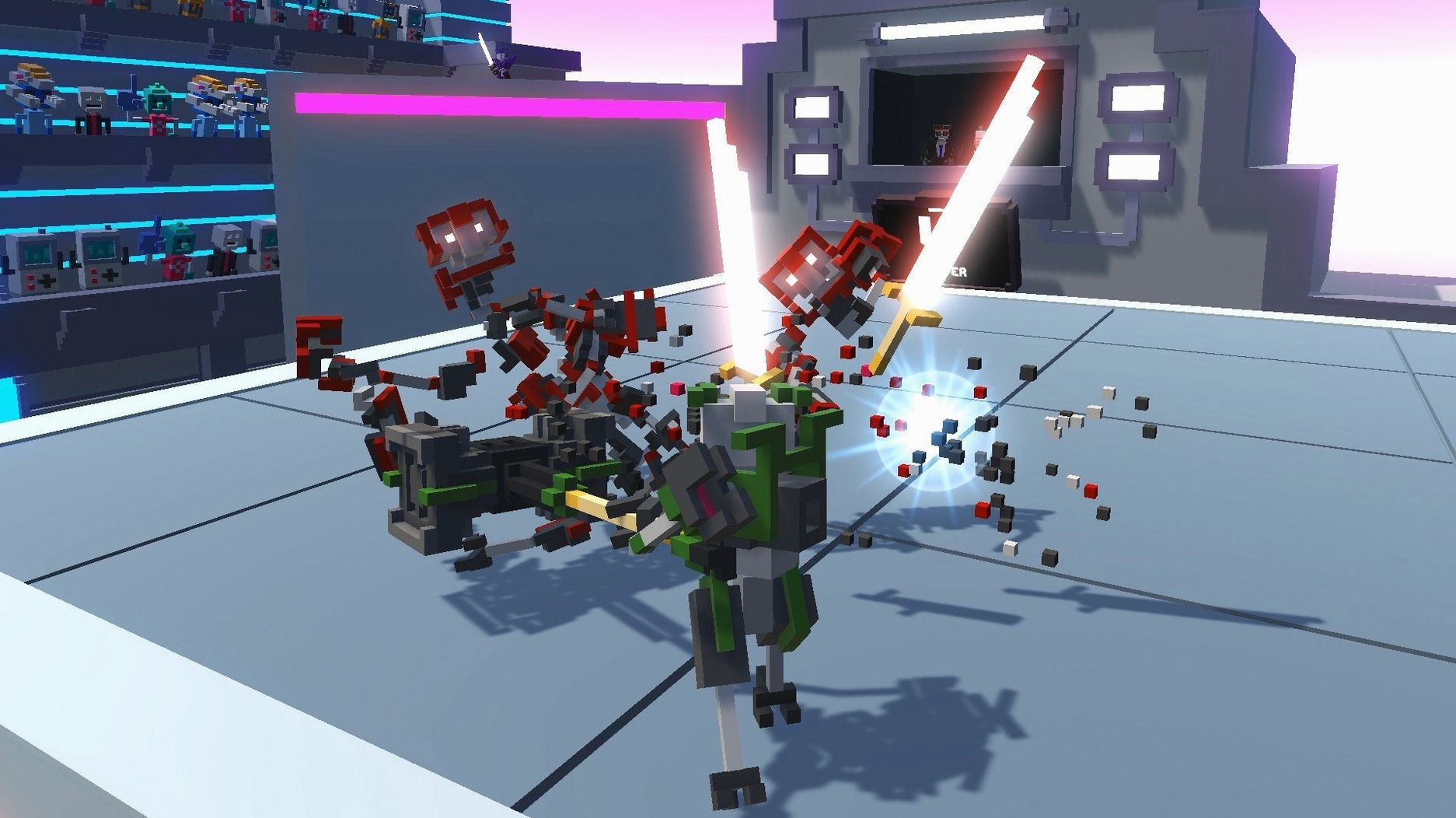
Combat centres on third-person swordplay inside voxel-built arenas. After each successful fight, a new upgrade and a more effective weapon become available, shifting the rhythm from cautious slicing to more confident, strategic aggression. The starting sword is deliberately modest, which makes the later weapon choices feel earned rather than given. Endless mode and challenge mode extend the formula for players who want to test a particular build without the campaign structure.
Create: the editor as a quiet second act
A full level editor ships with the game, letting players construct their own danger zones from the same voxel blocks that define the visual world. For the kind of player who finds the combat compelling but finite, the editor offers a longer tail: a space to design predicaments and share them, turning the game into a toolkit as much as a test of reflexes.
An illustrator’s evening: one run, one story
A freelance illustrator I share the studio with treats Clone Drone less as an arena fighter and more as a nightly ritual. She finishes a commission around half past nine, pours a short glass of something cold, and starts a single Endless mode run. She plays as the bow-wielding class — not because it is optimal, but because she enjoys the tension of drawing a shot while a Hammerbot closes in. The run rarely lasts more than fifteen minutes. That is precisely the point. The game gives her a short, self-contained narrative every evening: a fragile robot who gets a little stronger, a little more specialised, then meets its spectacular end. She describes the voxel dismemberment as oddly satisfying after a day spent pushing bezier curves. Something about watching a robot arm fly across the arena resets the part of the brain that has been staring at colour palettes for hours.
Best fits: three kinds of player
Not every action-game fan will take to Clone Drone. The people who get the most from it tend to fall into three groups.
- The short-session player. Someone with twenty minutes, not two hours. The arena format respects that: a full story-mode chapter, a handful of Endless waves, or a single challenge run all wrap up quickly. The upgrade tree is deep enough to feel like progress, but shallow enough that you can decide on a direction within seconds.
- The editor-minded tinkerer. A player who spent more time in Super Mario Maker building than playing will recognise the appeal. The level editor uses the same voxel logic as the main game, which means designing a trap that slices a bot in half is almost as entertaining as surviving one yourself.
- The local co-op pair. Two people on a couch, one screen, no matchmaking queue. The multiplayer component turns the arena into a shared mess of friendly fire and shouted warnings, which suits siblings or flatmates more than it suits strangers online.
Habits that get you killed: dodge, sword speed and overcommitment
New players bring habits from other action games that Clone Drone punishes hard. The first dozen deaths often teach the same lessons.
Treating the dodge as optional. The starting sword has reach, but it does not have speed. A new player who stands still and trades blows with a Hammerbot will lose every time. Lateral movement is not decoration: it is the primary survival tool. The game expects you to circle, to sidestep, and to strike only when the enemy’s swing has already missed.
Upgrading without a plan. The post-fight upgrade screen offers choices that feel generous, and the beginner instinct is to spread points across everything — a little armour, a little energy, a slightly better kick. What actually works is committing to one path early. A specialised robot with a single strong ability survives longer than a generalist with three mediocre ones. The game does not explain this. The arena does.
Forgetting the clone. After a defeat, the game offers a one-time clone revival that lets you continue the current run. Beginners often burn it on an early wave, treating it like an extra life in a platformer. The smarter play is to hoard it for the moment when a run is genuinely going well — a build you like, a weapon you have grown comfortable with — and only then accept the second chance. Using a clone on wave three of Endless mode is almost always a waste.





Correspondence 0
Take a chair or join the table to send a letter.
No correspondence on this note yet. Letters are read before they appear.