 LeCoqRoti
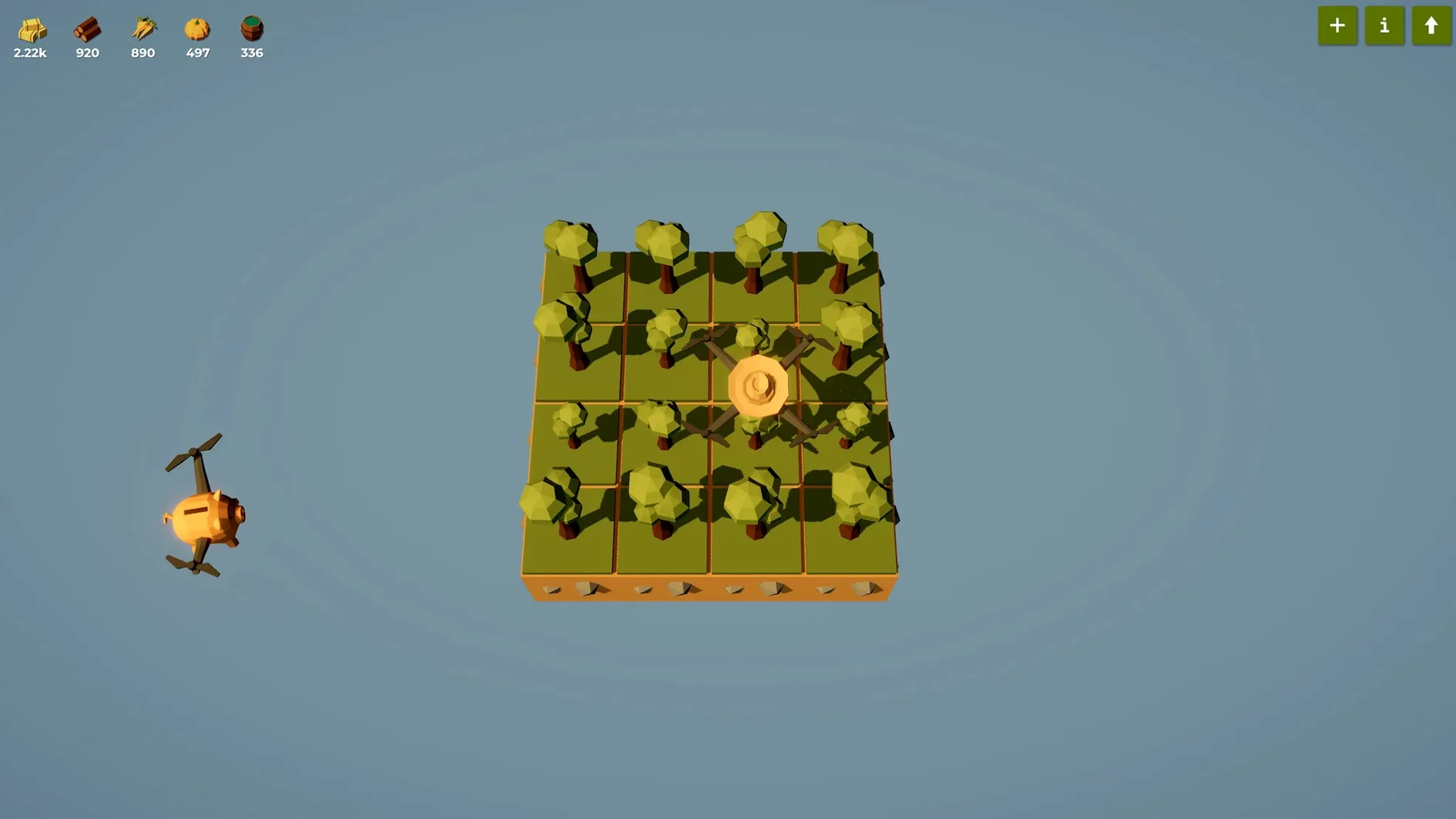
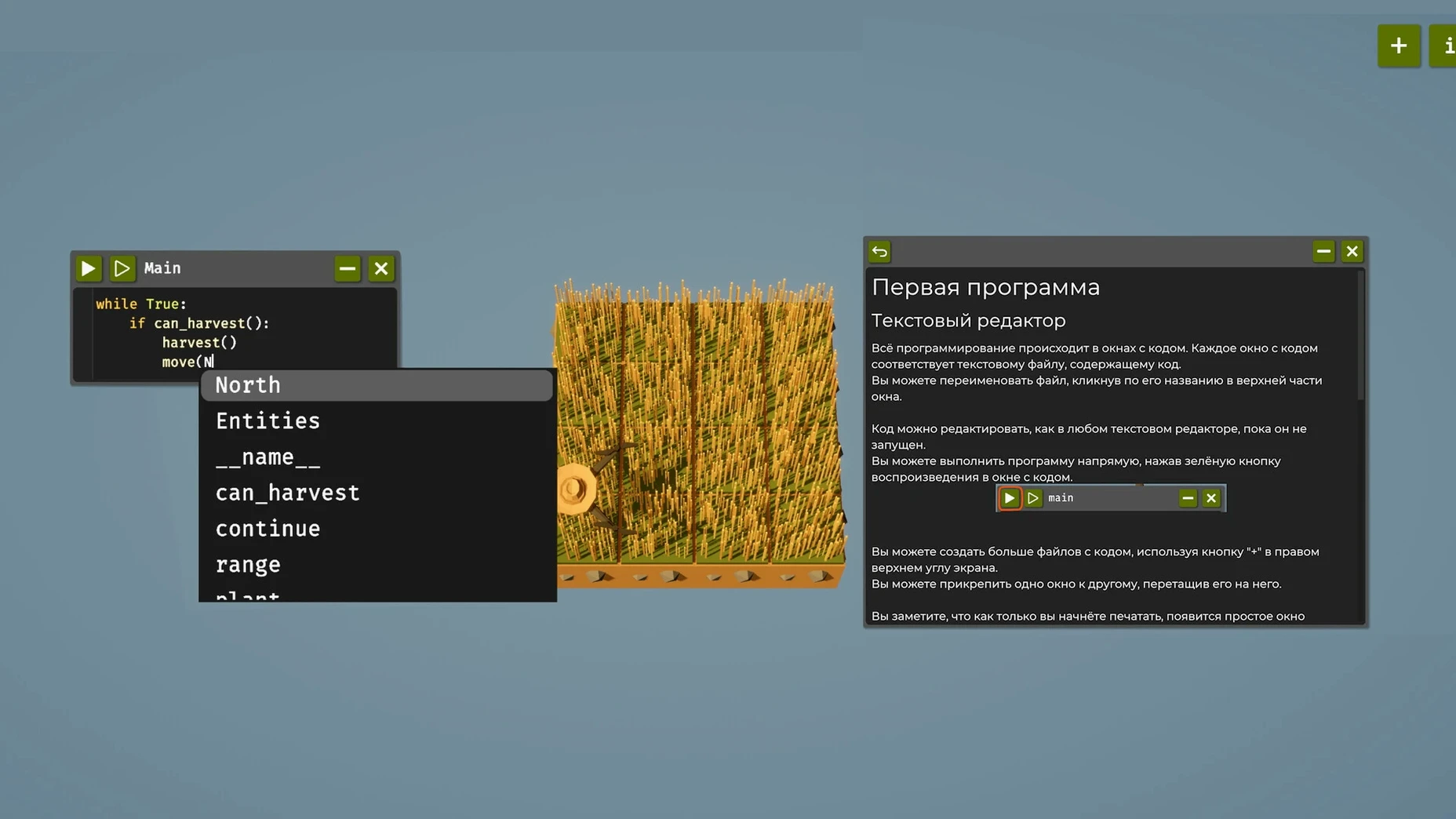
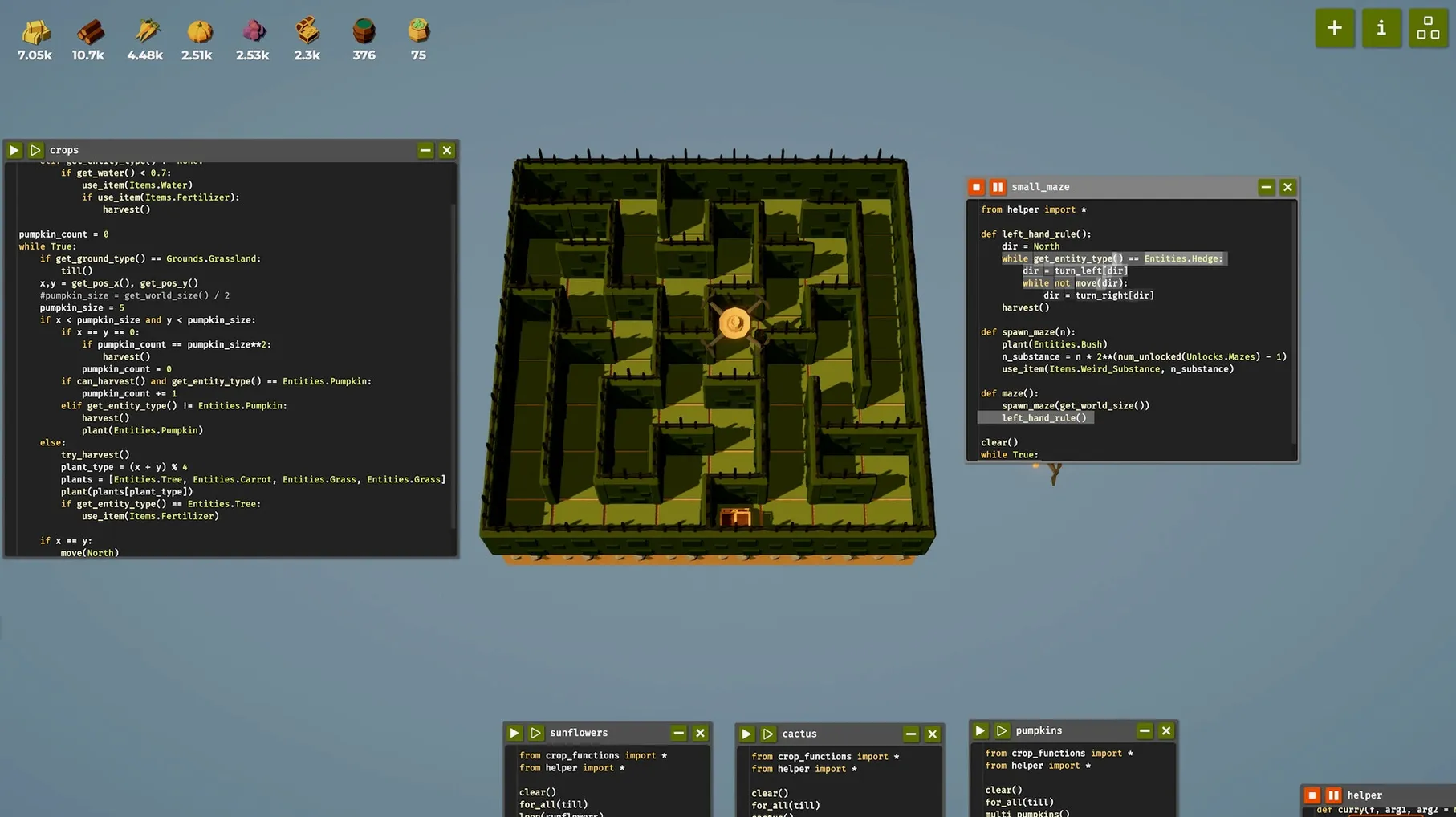
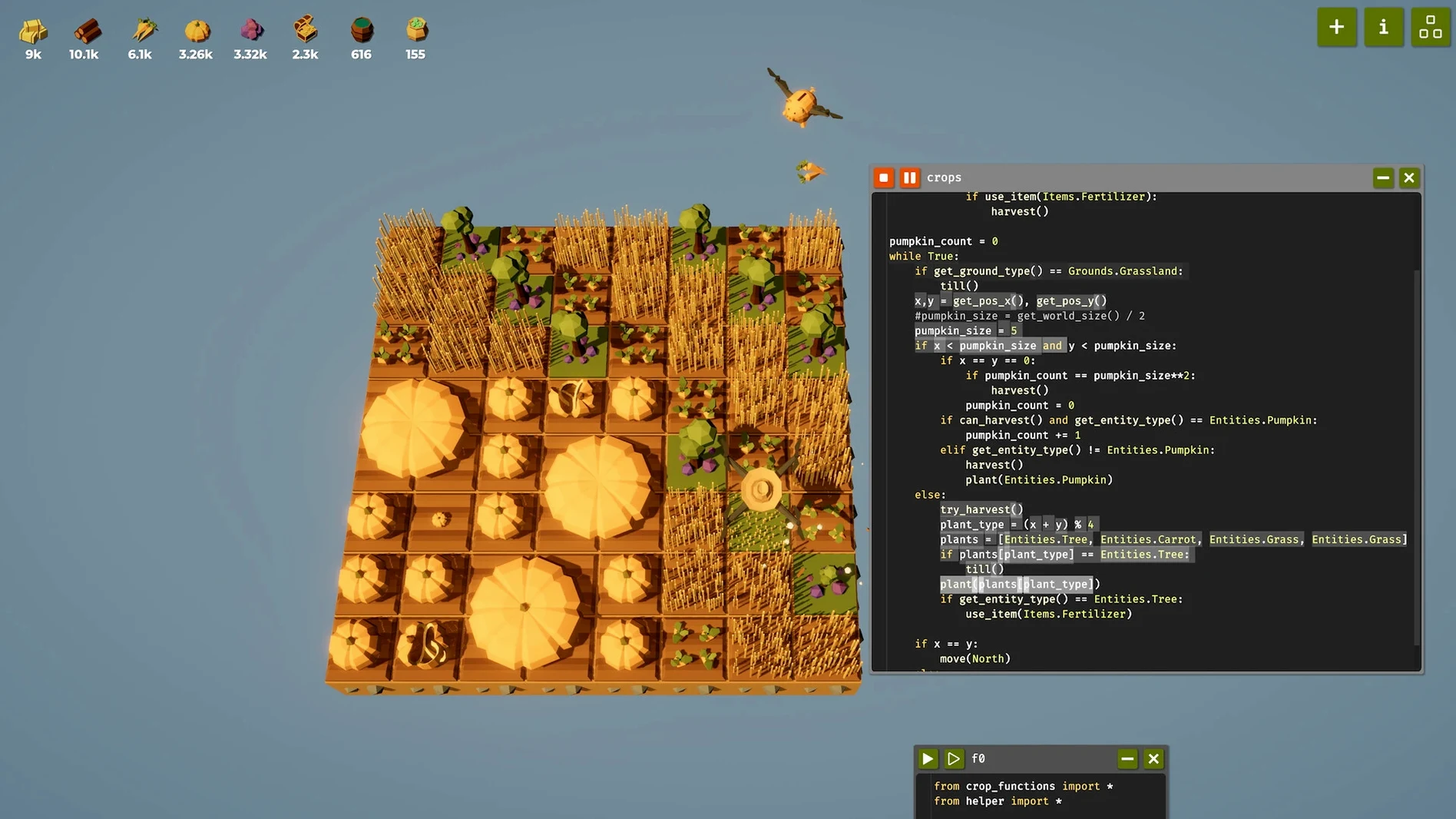
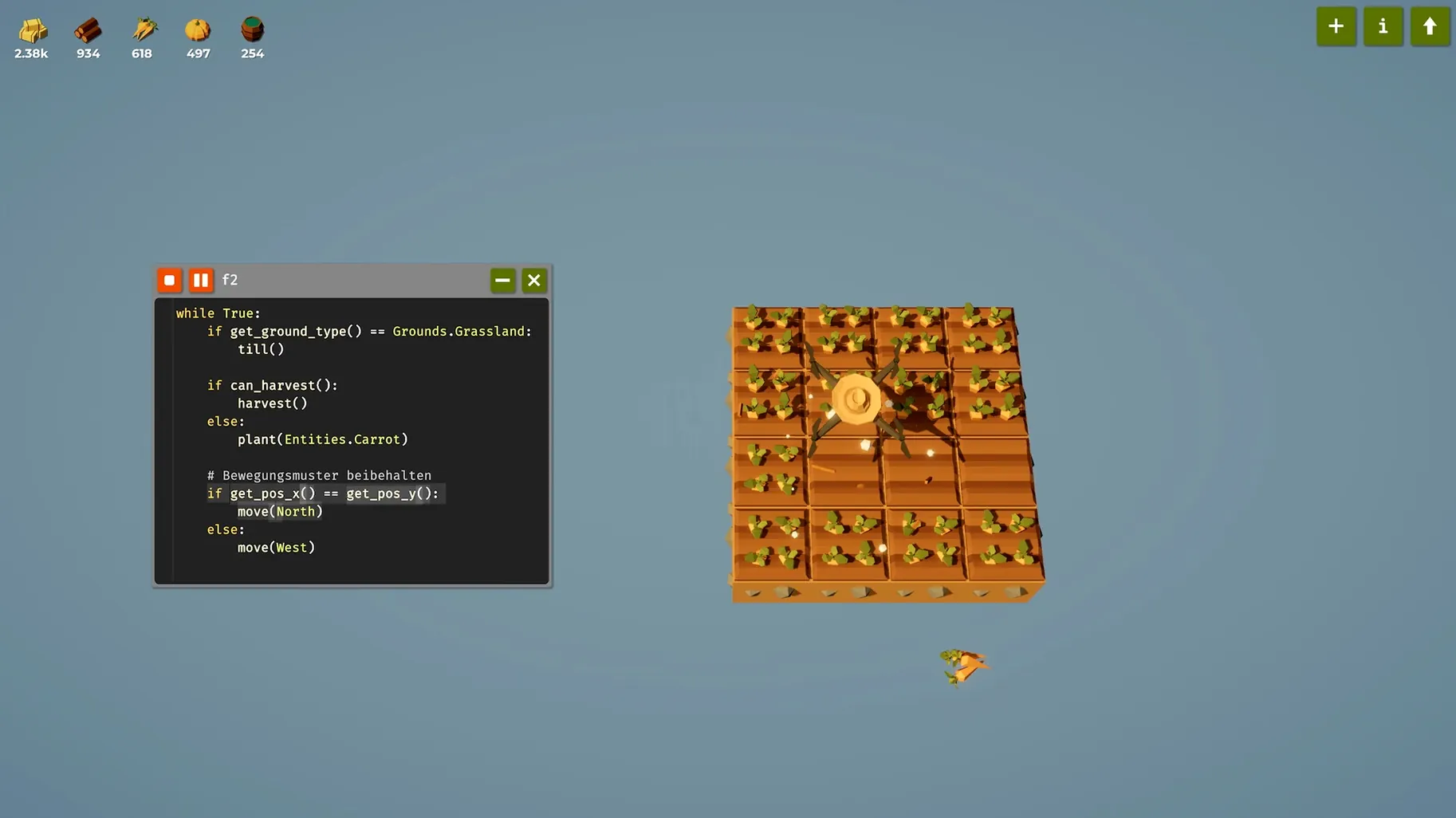
Eleven languages ship with version 1.0, and the game logic itself sits in plain .py files — visible, editable, entirely yours. The Farmer Was Replaced turns a small plot of land into a quiet exercise in writing instructions.
Automation with a living farm as your classroom
- Learning a Python-like language through real, visible consequences
- Anyone curious about automation without a separate programming setup
- Long, gradual progression with no level boundaries to interrupt the flow
Editing outside the game: VS Code and file quirks
- The language is Python-like, not Python itself — habits may need adjusting
- External editors such as VS Code work best when File Watcher is enabled
- The code lives in .py files, so version control and backups are your own affair
Resources build toward new technologies, and the drone takes over the repetitive work once the code is right. It is a game about refinement: a small fix to a loop, a shorter path, a cleaner condition. In short: a compact, persistent sandbox for thinking in code.
External code editors integrate cleanly once you toggle File Watcher in the settings. I keep a VS Code window open on the same .py directory, and the game picks up any save within a second or two. The workflow feels closer to real development than a typical in-game script pane: you can split your screen, use syntax highlighting, and rely on your own undo history without the game intervening.
First days: three small habits
The opening hours ask for patience, not speed. The drone starts with a limited set of instructions and a modest energy budget, so early scripts tend toward the literal — move, harvest, plant, repeat. A few patterns make the first sessions easier:
- Write for visibility before elegance. A long, repetitive sequence that runs correctly is better than a clever loop that breaks half the time. Once the farm is stable, refactoring becomes its own quiet pleasure.
- Keep a paper note of coordinates. The grid positions of water tiles, plantable ground and the deposit point do not change. Scribbling them down avoids re-measuring after every script edit.
- Let the drone rest deliberately. Energy is a resource like any other. Adding a short
waitat the end of a cycle prevents wasteful back-and-forth when there is nothing to harvest yet.
Overlooked conveniences
A handful of interface details sit just outside the main view and are easy to miss for the first few hours. The unlock tree, reworked in version 1.0, is not a simple linear path — branching choices appear once certain thresholds of stored resources are met. Checking it after each harvest often reveals a sensor or a drone upgrade that changes what a script can assume about the field.
Multiple drones become available later, and each one runs its own code independently. The game does not push you toward concurrency, but once a second drone is unlocked, splitting duties between planting and harvesting removes the need to over-optimise a single loop. The achievements panel, with over 50 entries, doubles as a gentle hint system: reading a locked achievement often suggests a direction you had not considered.
Persistent fields versus discrete puzzle levels
Human Resource Machine shares the office-floor aesthetic of instruction-based puzzles but operates in discrete, self-contained levels. Where that game teaches assembly-like logic through isolated tasks, The Farmer Was Replaced offers a single persistent farm with no reset between objectives. The mental model shifts from solving a level to maintaining a system.
Screeps is closer in spirit — real scripting, persistent world, resource loops — but its JavaScript environment and MMO structure add layers of networking and player competition. The Farmer Was Replaced strips that back to a local, single-player space where the drone is the only other actor. The Python-like syntax lowers the entry bar for anyone who has glanced at a scripting language but does not want to wrestle with npm or server ticks.
Autonauts leans on visual, block-based programming with cartoon bots, which suits a younger audience or those who prefer clicking commands together. The Farmer Was Replaced trusts you with text from the start. The difference is primarily one of texture: typed code in an external editor versus dragged blocks on a play mat. For a Mac user who already keeps a terminal nearby, the text-first approach feels less like a toy.
In short: the game carves a niche between puzzle-box precision and open-ended scripting sandbox, and the native Mac build keeps the focus on the code, not the platform.








Correspondence 0
Take a chair or join the table to send a letter.
No correspondence on this note yet. Letters are read before they appear.