 LeCoqRoti
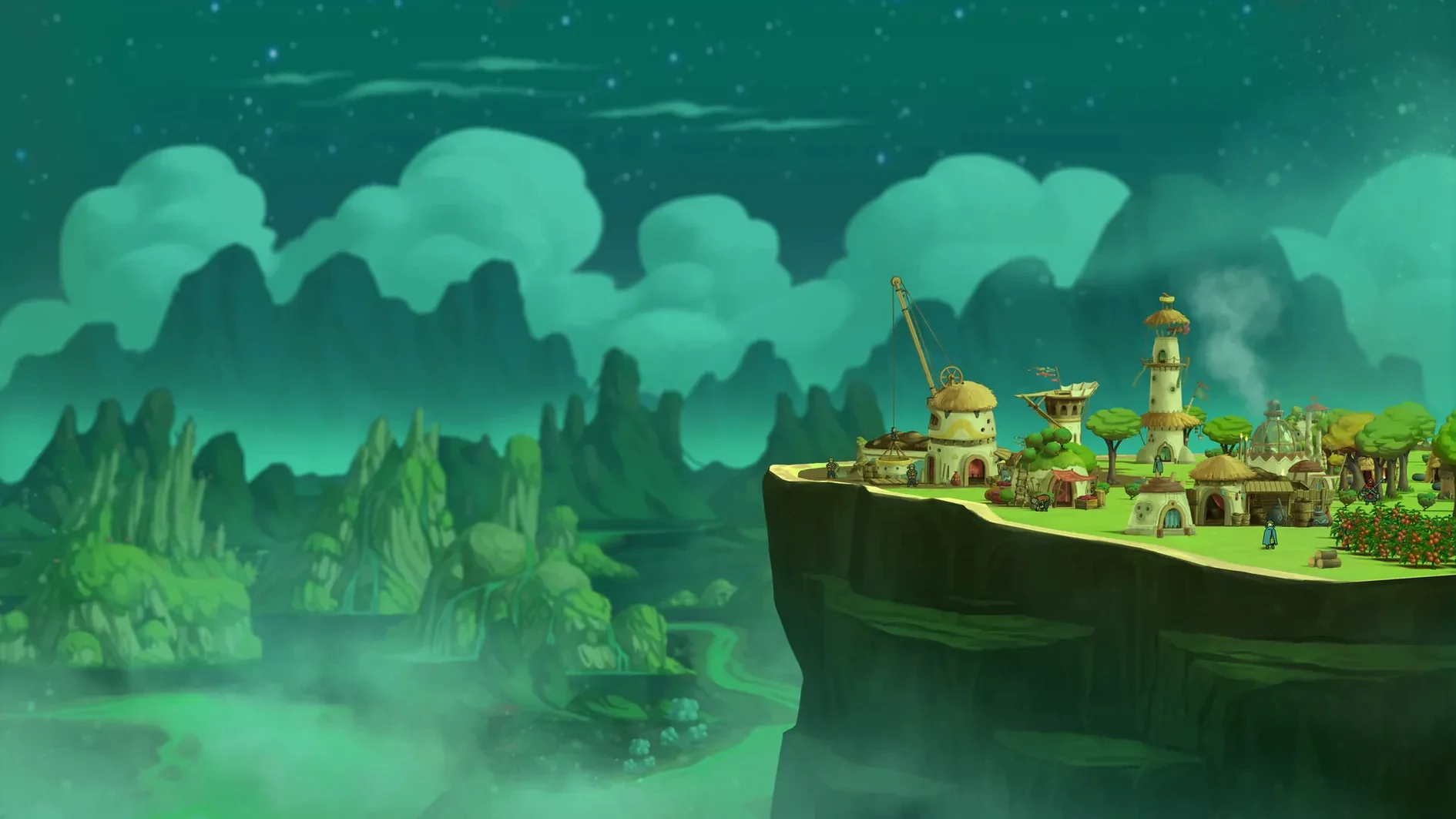
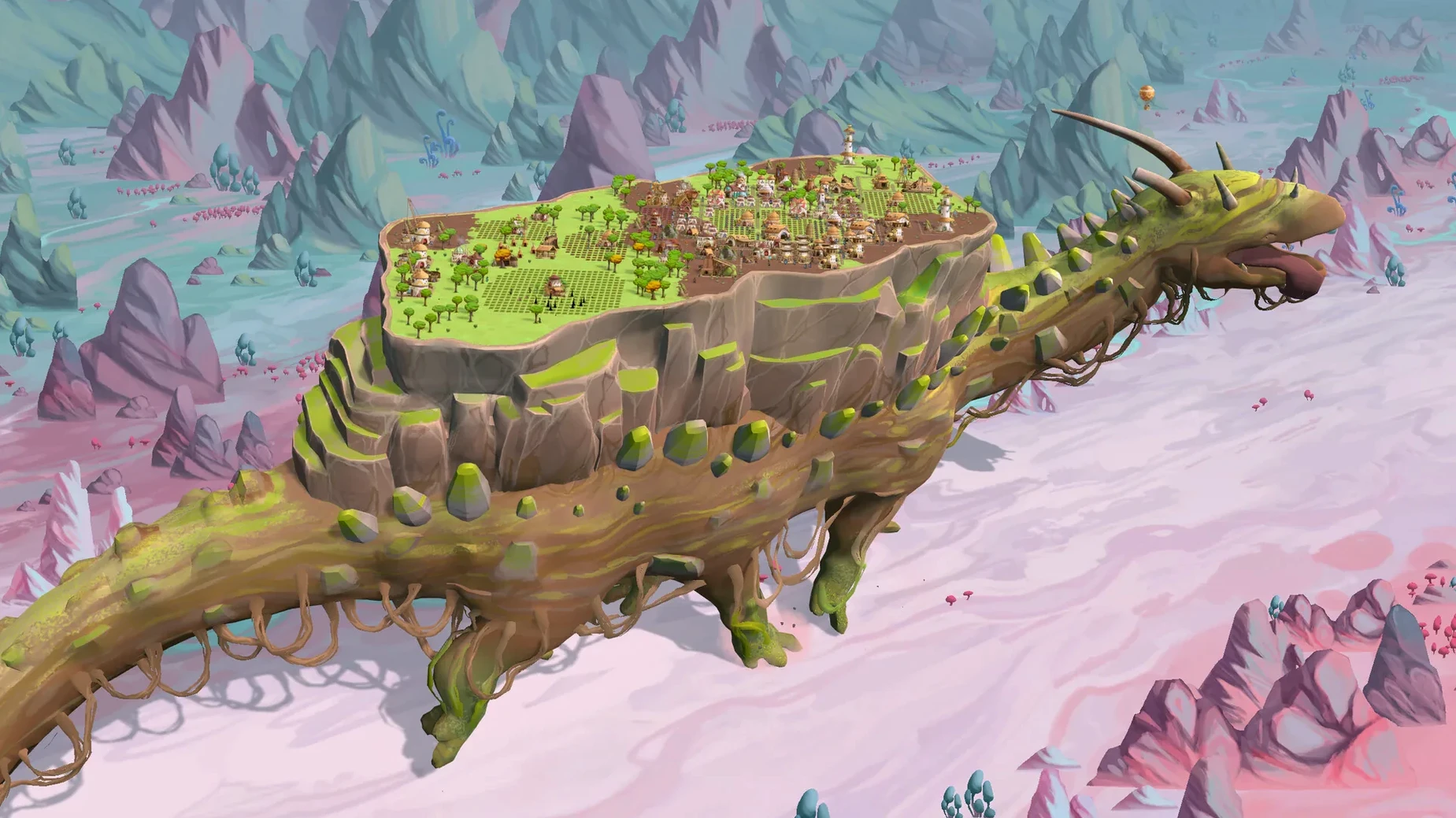
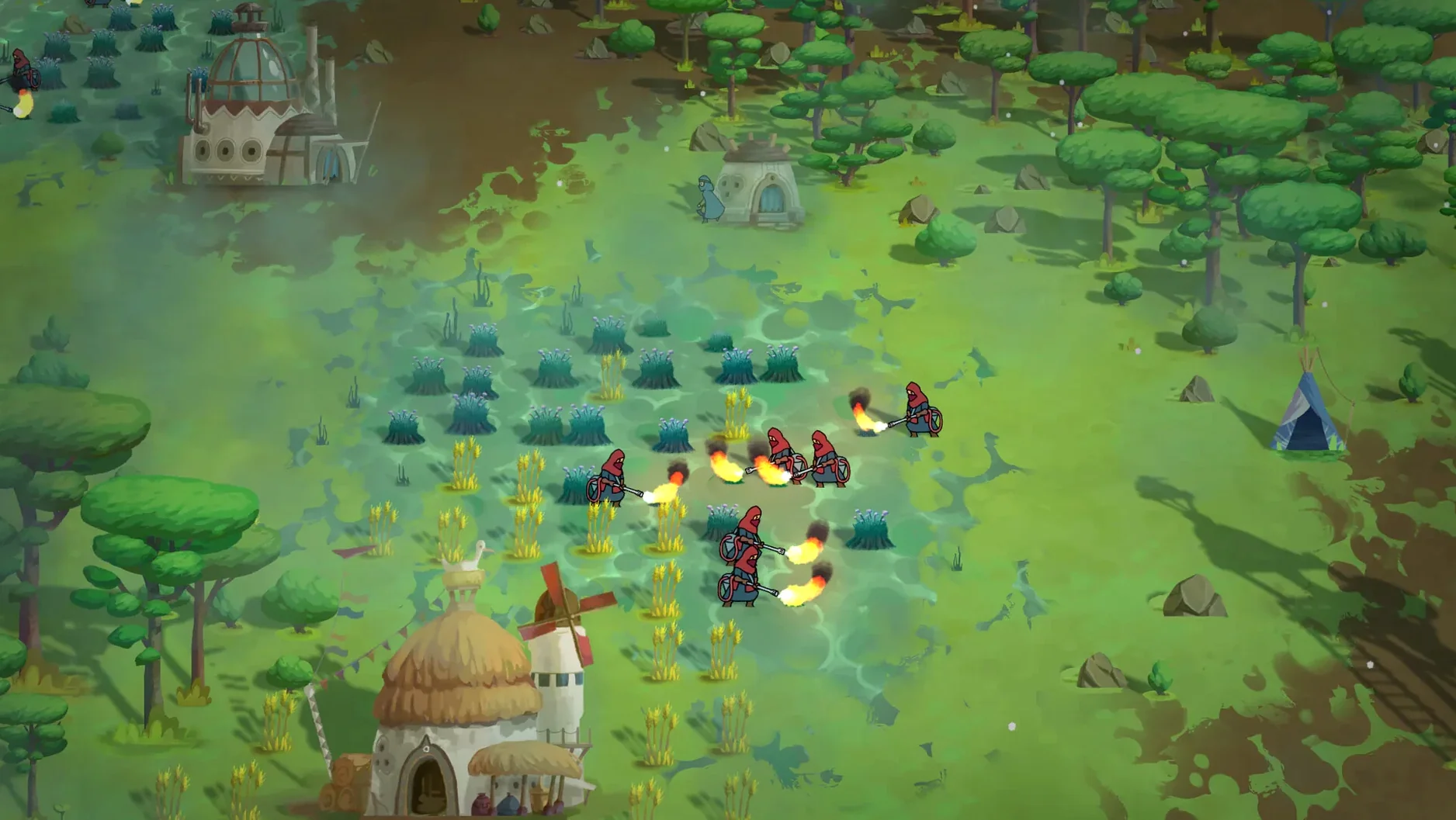
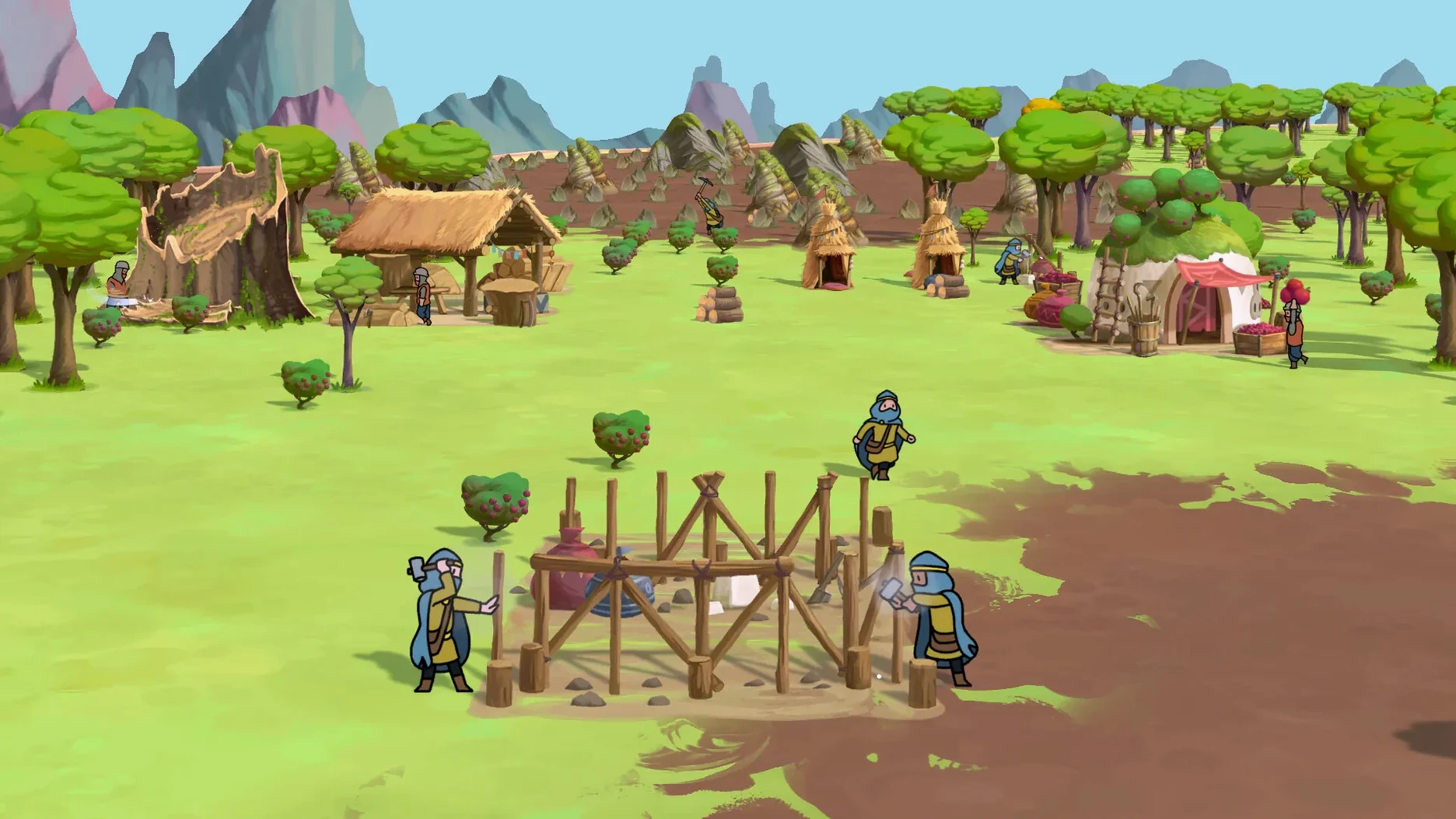
The Wandering Village is a city-building game where your settlement travels on the back of Onbu, a towering creature moving through a poisoned world. It mixes familiar production chains and villager management with a constant spatial puzzle: every farm, workshop, and house must fit on Onbu's back, and the ground beneath you keeps changing. This angle — logistics on a living, mobile surface — defines who will connect with it and who may bounce off.
- You enjoy managing tight, awkward spaces. The buildable area is fixed and irregular. Layout is a puzzle from the first hut onward, not an afterthought.
- You want a city-builder with a tangible companion. Onbu is not scenery. It has needs, can fall ill, and responds to how you treat it. The relationship adds a layer beyond resource numbers.
- You appreciate slower pacing and atmosphere. Biomes shift as Onbu travels, bringing new climates and dangers. The mood is calm but edged with the pressure of spores and uncertain ground.
- You dislike open-ended sandboxes without direction. The game gives you a clear situation — a world blanketed by poisonous plants, a creature to keep alive — and asks you to survive it, not just decorate a map.
- You may find it frustrating if you prefer total control. Onbu acts on its own instincts. A player who wants full authority over every variable may chafe against a settlement that literally walks away from a plan.
In short: this is a game for players who see constraints as texture. If you like the idea of building a working village on ground that breathes, the fit is natural.
Early habits: watch the stomach before the first crisis
A settlement on Onbu teaches its own lessons, and the first hours can feel quietly punishing if you approach them like a static city-builder. Three habits help the village find its rhythm before the first crisis hits.
Watch the stomach, not just the stores. A full granary can mask a bottleneck in the kitchen chain. Open the production overlay early and trace each food type from harvest to meal. If raw crops pile up while villagers go hungry, the gap is usually a missing processing step — a windmill sitting idle, or a cookery placed too far from the water carrier's path.
Leave breathing room around the spine. Onbu's back curves; the centre offers flat ground, the edges slope. Placing heavy structures along the ridge early gives you room to expand outward later. Packing buildings tightly near the tail may seem efficient, but it chokes your supply paths when the village doubles in size after two biome crossings.
Visit Onbu daily, not just in emergencies. Click on the creature itself. The interface shows its trust level, hunger, and any accumulated toxins from the spore plains. A short check each in-game morning — before you open the build menu — catches a parasite infestation before it spreads. Treating it early costs herbs; treating it late costs buildings.
Spore plains shift: pausing at forty percent
You load a save from the previous evening. The village sits in early autumn, crossing a lowland biome where yellowed grass gives way to fungal thickets. The spore meter sits at forty percent; not critical, but climbing.
First action: pause. You zoom out to see the full settlement — thirty-two villagers, five production buildings, one field nearing harvest. The kitchen stock shows twelve meals remaining. You open the expeditions panel and send two villagers toward a ruined tower visible on the horizon. They carry rations for three days and a note to prioritise metal scraps.
With the expedition underway, you unpause at normal speed. A farmer finishes cutting wheat and begins hauling it to the windmill. You watch the path: it crosses a narrow gap between the weaver and the water tank, a pinch point you flagged last session. You place a section of wooden path to widen it, costing ten planks. The miller begins processing within a minute of the change.
Mid-session, a notification: Onbu has scratched against a rocky outcrop, damaging the eastern storage hut. You mark the hut for repair and move its contents to a temporary stockpile. The builder arrives within moments; the rhythm of small crises and adjustments feels familiar now.
Before closing, you check the research tree. The expedition returned with three ancient tablets, unlocking a branch toward improved water purification. You queue the research and save. The session lasted forty minutes, covered one full season, and left the village with a fuller pantry and a calmer Onbu than when it started.
Workflow: preparing for a desert crossing
Onbu's route is visible three biomes ahead. When a desert appears on the horizon map, the window for preparation is roughly two in-game seasons. A methodical approach prevents the kind of cascading failure that dry heat brings.
Begin with water. Count your current tanks and multiply by their capacity, then divide by the number of villagers. If the result is below three days of coverage, build an additional tank immediately. Place it near the tail, where Onbu's movement stirs less dust and contamination risk is lower.
Next, audit the food supply. Deserts reduce crop growth speed and can wilt unharvested fields. Switch at least one field to a heat-tolerant crop — millet, if you have it — and harvest everything ripe before the biome transition. Preserve any surplus as dried rations; they last longer and free up kitchen labour during the crossing.
Third, prepare Onbu directly. Stock the creature's healing herbs at double the usual amount. Desert parasites are rarer than swamp varieties, but heat exhaustion drains trust faster than hunger. If trust drops too low, Onbu may refuse direction and wander toward spore-heavy terrain. Apply a cooling poultice before the first hot day, not after.
Finally, adjust labour priorities. Disable non-essential buildings — the weaver, the decoration workshop — and redirect those villagers to water carrying and kitchen work. A lean workforce focused on two resources survives a desert crossing far more reliably than a fully staffed village trying to do everything at once.
The wandering village mac full version handles these biome transitions with a quiet logic: the game tracks temperature, humidity, and spore density per tile, and the desert is not simply a cosmetic change. It tests your preparation, not your reflexes. A village that enters the sands with full tanks, dried food, and a calm Onbu will exit the other side intact.








Correspondence 0
Take a chair or join the table to send a letter.
No correspondence on this note yet. Letters are read before they appear.