 LeCoqRoti
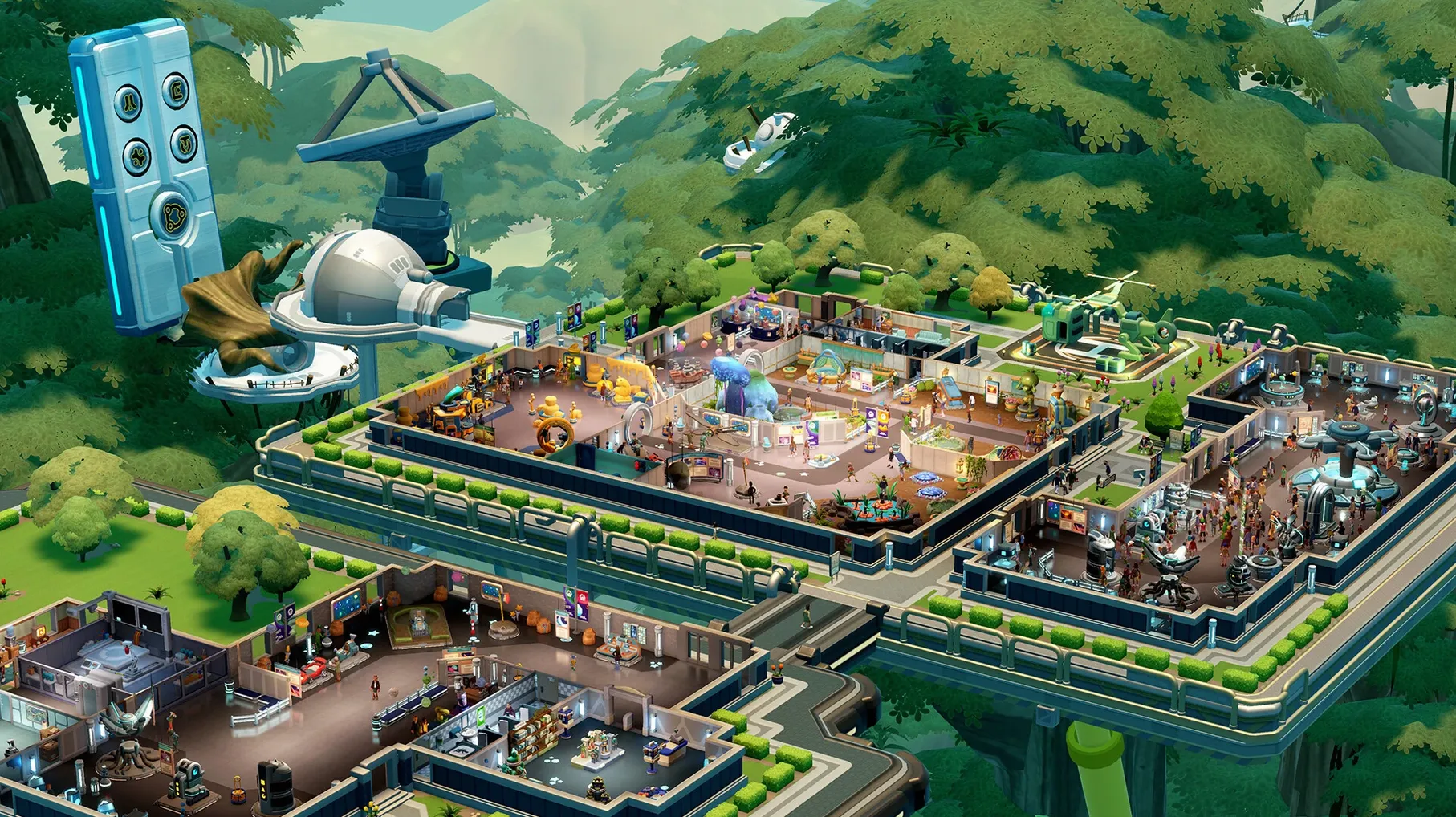
Two Point Museum attracts a particular kind of player: someone who enjoys seeing a space transform under their care, who finds satisfaction in adjusting the placement of a dinosaur skeleton by a few degrees, and who does not mind that a pristine museum floor will, inevitably, be littered with crisp packets by lunchtime. It is a game about patience and polish, not rapid expansion.
Who it suits: the methodical curator
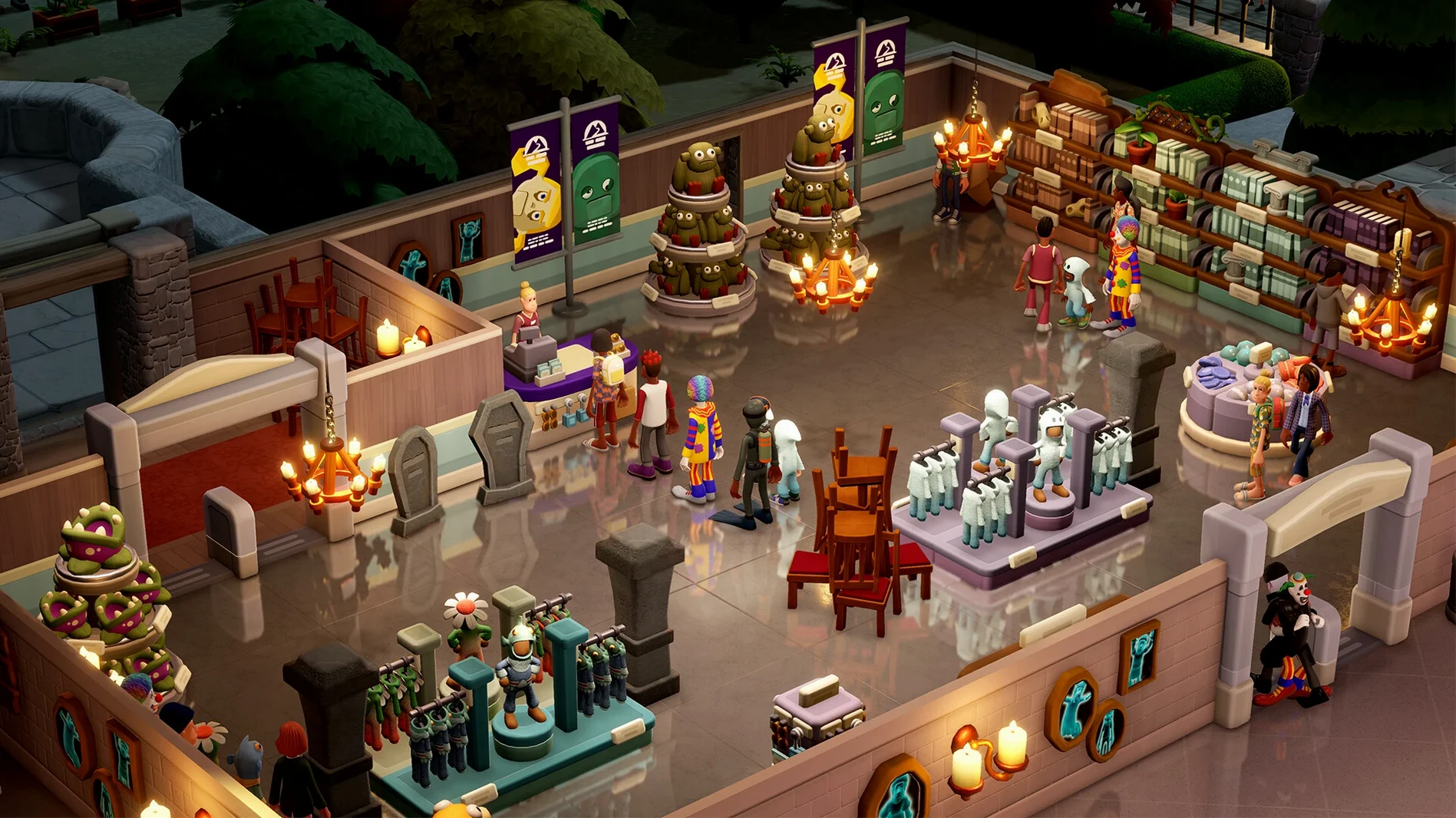
If your instinct in a management game is to pause, survey the scene, and gently reorganise the queue barriers before anything catches fire, you will feel at home here. The loop is generous: send an expert to a dig site, wait for their return, then find the perfect spot for the new exhibit among more than 200 possibilities. The decorative freedom is considerable, with over 350 items to arrange. Managing visitor flow — from the ticket desk to the toilets and the gift shop — becomes a quiet, absorbing puzzle. The temporary exhibits, three in total, each bring their own objectives and a welcome change of rhythm. A charismatic guide can lead tours, adding a layer of performance to your carefully planned halls.
Who might not connect with it
Players who thrive on immediate feedback or fast-paced crisis management may find the tempo too gentle. This is not a game that punishes you quickly; its challenges come from cumulative neglect rather than sudden disaster. The 18 visitor types have distinct expectations, but understanding them rewards observation over quick fixes. If you prefer a management simulation that escalates into delightful chaos within the first hour, Two Point Museum asks for a longer, calmer attention span. It is the studio's most contemplative work yet, following the more urgent rhythms of Two Point Hospital and the academic bustle of Two Point Campus.
Expedition timer: switch to fast-forward for snappier play
A few preferences tucked away in the menus sharpen the daily rhythm considerably. The game defaults to a moderately paced expedition timer, but switching this to fast-forward during expeditions in the gameplay options trims idle waiting without affecting anything else. It is one of those small adjustments that quietly improves an entire session.
Three other settings to revisit before the first museum opens:
- Edge scrolling: off. The default camera friction against the screen edge can fight against deliberate placement. Keyboard panning or middle-mouse drag feels more precise when aligning a Pterodactyl skeleton along a gallery wall.
- Guest thought bubbles: minimal. The full setting floods the screen with commentary; the minimal option surfaces only actionable complaints — thirst, boredom, a blocked toilet — which is precisely what a curator needs.
- Auto-save frequency: every 10 minutes. The default is generous, but a tighter interval suits the exploratory nature of sandbox mode, where a single ill-judged expedition can cascade into a funding shortfall.
Marine cohesion: designing a believable aquarium journey over profit
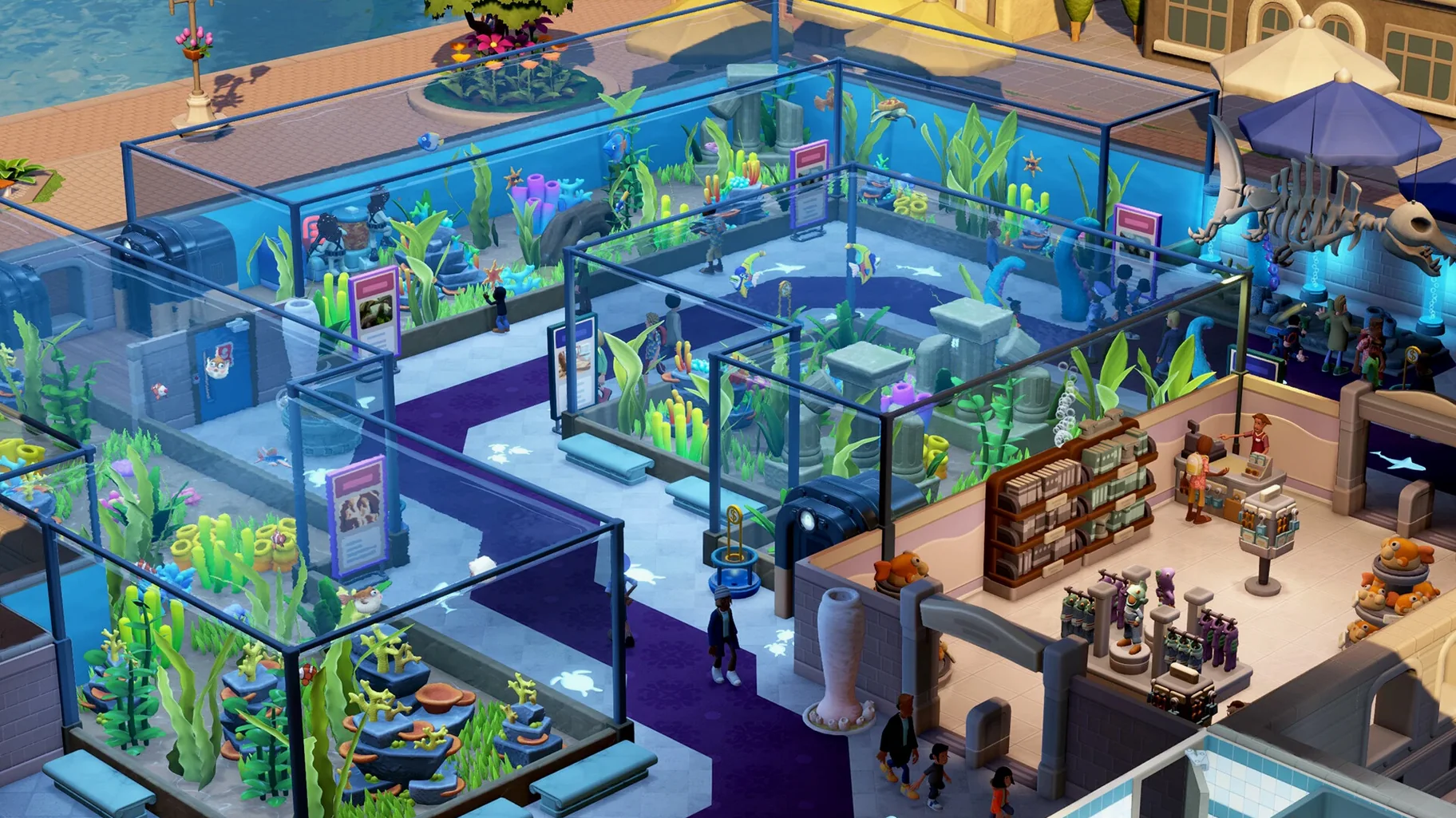
Consider a player who gravitates toward the aquarium location and cares less about profit than about exhibit coherence. Their goal is not to maximise donations but to build a believable marine sequence — a journey from tidal rock pools to a deep-sea trench. They spend the first hour simply arranging tanks so that a visitor walking the main corridor encounters species in a plausible ecological order. The expedition map becomes a research wishlist: they send their best marine biologist repeatedly to a single point of interest, hunting a rare coelacanth specimen to anchor the deep-water wing. When the coelacanth finally arrives, its tank demands a precise balance of temperature and salinity, which means rearranging the utility corridor behind the scenes. A burglar sneaks in during the opening event, but the curator barely notices — they are too busy adjusting the lighting angle so the coelacanth's shadow falls just so across the floor. That is the kind of satisfaction the aquarium rewards.
First fossil hall: building a prehistoric exhibition step by step
A new prehistoric museum begins with an empty hall and a modest expedition budget. Here is how a first exhibition takes shape, step by deliberate step.
1. Survey the available dig sites. The five expedition maps each hold different fossil types. For a prehistoric museum, the obvious starting point is a bone-rich site with a moderate difficulty rating. Sending a newly hired expert on a short expedition yields a partial skeleton — a triceratops skull, perhaps — and a handful of analysis points.
2. Analyse and prepare the find. Back at the museum, the analysis room processes the fossil fragments. This step is not instant: it ticks away while other tasks proceed. A complete triceratops requires three more expeditions to the same site, each one slightly riskier as the easier extraction points are exhausted.
3. Design the exhibit space. While expeditions run, the exhibition hall takes shape. A central platform, raised slightly, with a circular viewing path. Decorative items — fossilised ferns, a museum information board, a donation stand angled toward the exit — frame the space. The key is leaving enough walking room for tour groups, who move as a cluster and will bottleneck at tight corners.
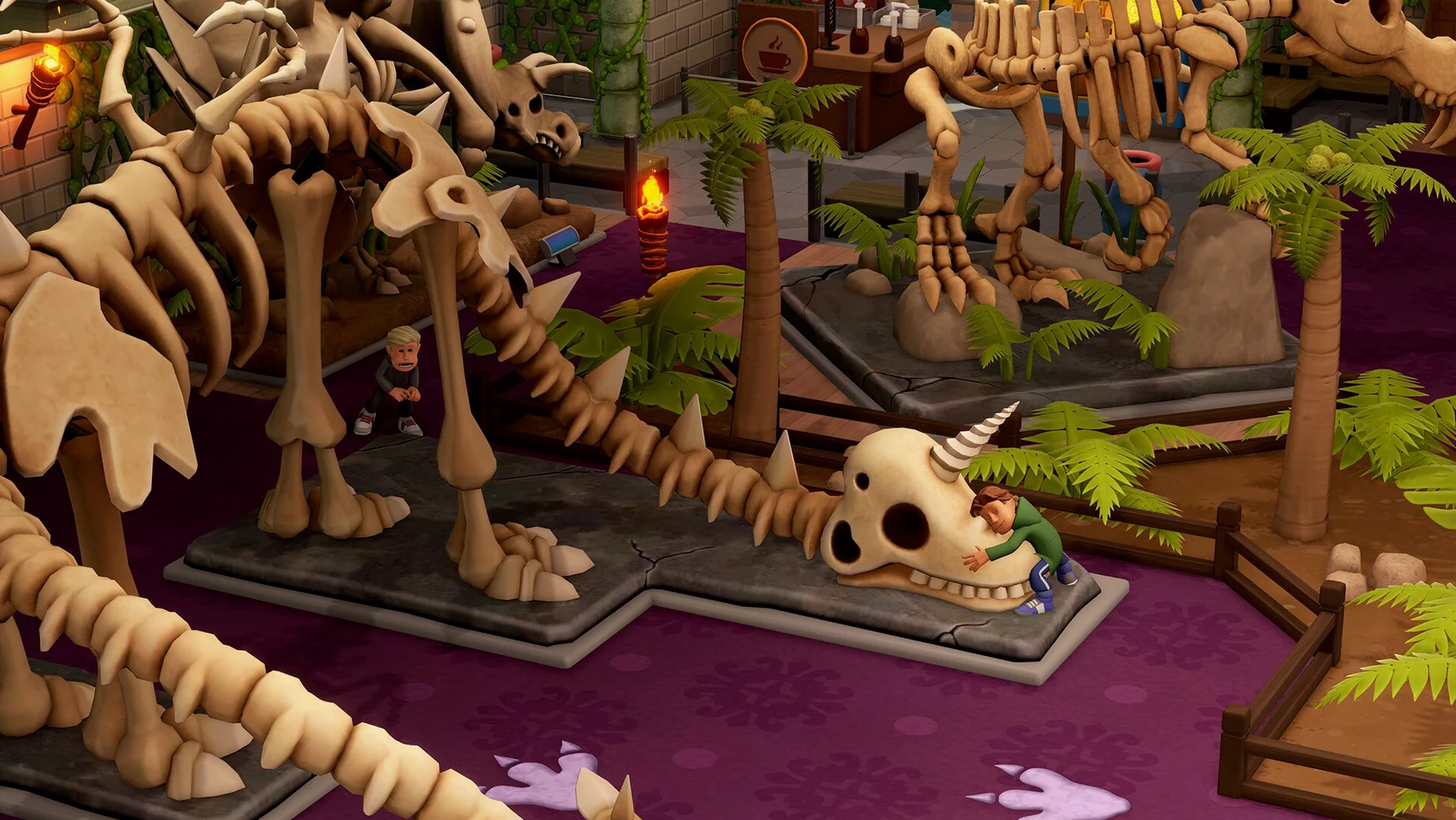
4. Place the complete skeleton. Once all fragments are analysed, the triceratops assembles on the platform. Its placement affects guest knowledge gain: positioning it so visitors can walk a full 360 degrees around it maximises the exhibit's educational value. A quick test tour confirms the guide stops here for exactly the right number of seconds.
5. Layer in guest services. A drinks machine near the hall exit catches thirsty visitors before they wander off in search of refreshment. A single security camera covers the fossil's donation stand — prehistoric exhibits attract a particular kind of light-fingered guest. A bin placed between the camera and the door reduces litter without spoiling the sightline.
6. Open and observe. The first visitors trickle in. The curator watches for two things: where guests pause longest, and where they turn back. A guest who walks halfway around the triceratops and then doubles back indicates a pathing problem — perhaps the rear walkway is too narrow, or a decorative item blocks the natural flow. A small adjustment, a minute of observation, and the circuit works.








Correspondence 0
Take a chair or join the table to send a letter.
No correspondence on this note yet. Letters are read before they appear.