 LeCoqRoti
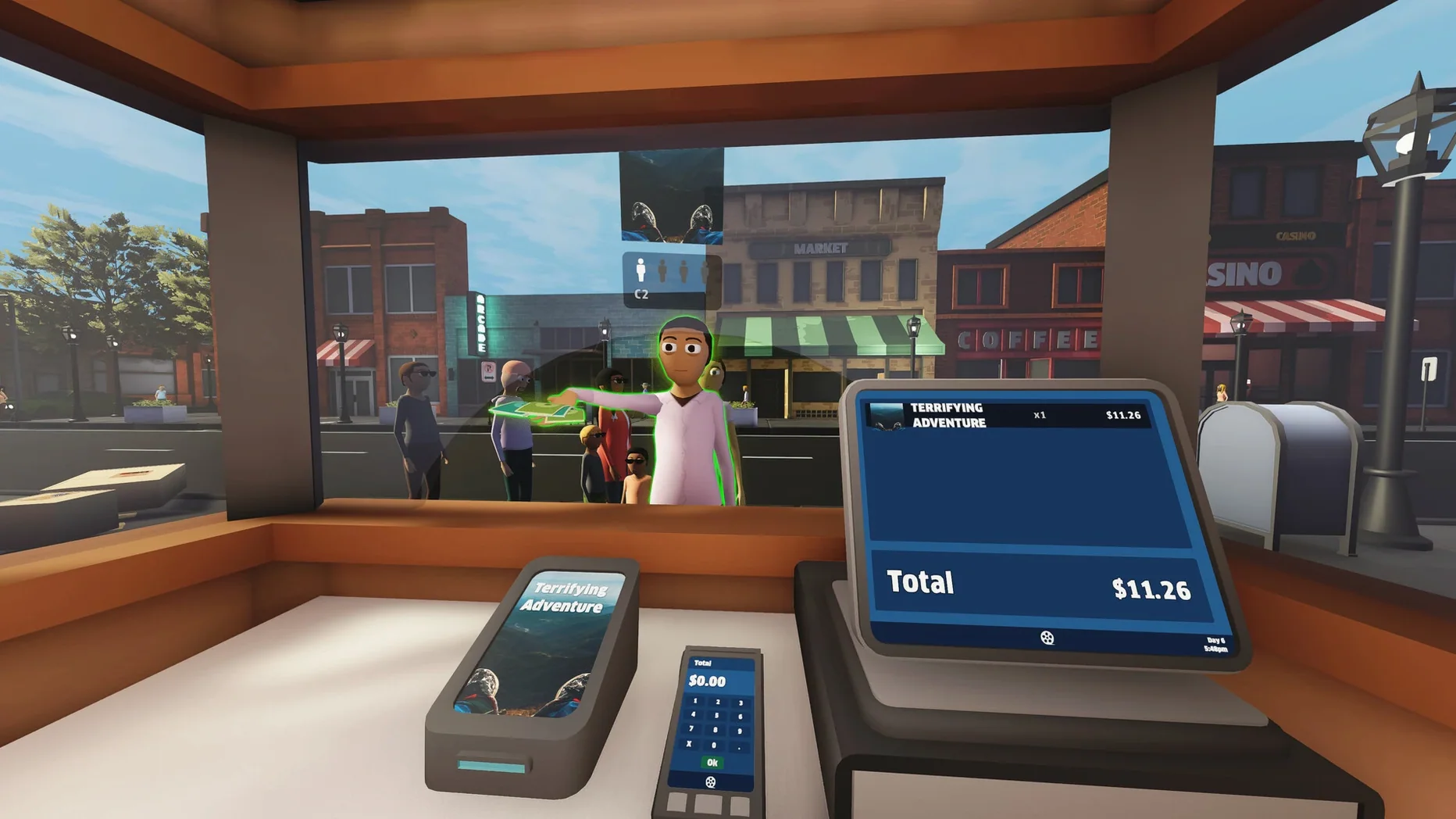
Anyone who has spent an evening adjusting seating layouts in a floor-plan tool will recognise the quiet satisfaction of arranging a room just so. Ultimate Theater Simulator takes that instinct and places it inside a working cinema, where the layout you design has to survive popcorn spills, arcade noise and a projector that never quite runs itself.
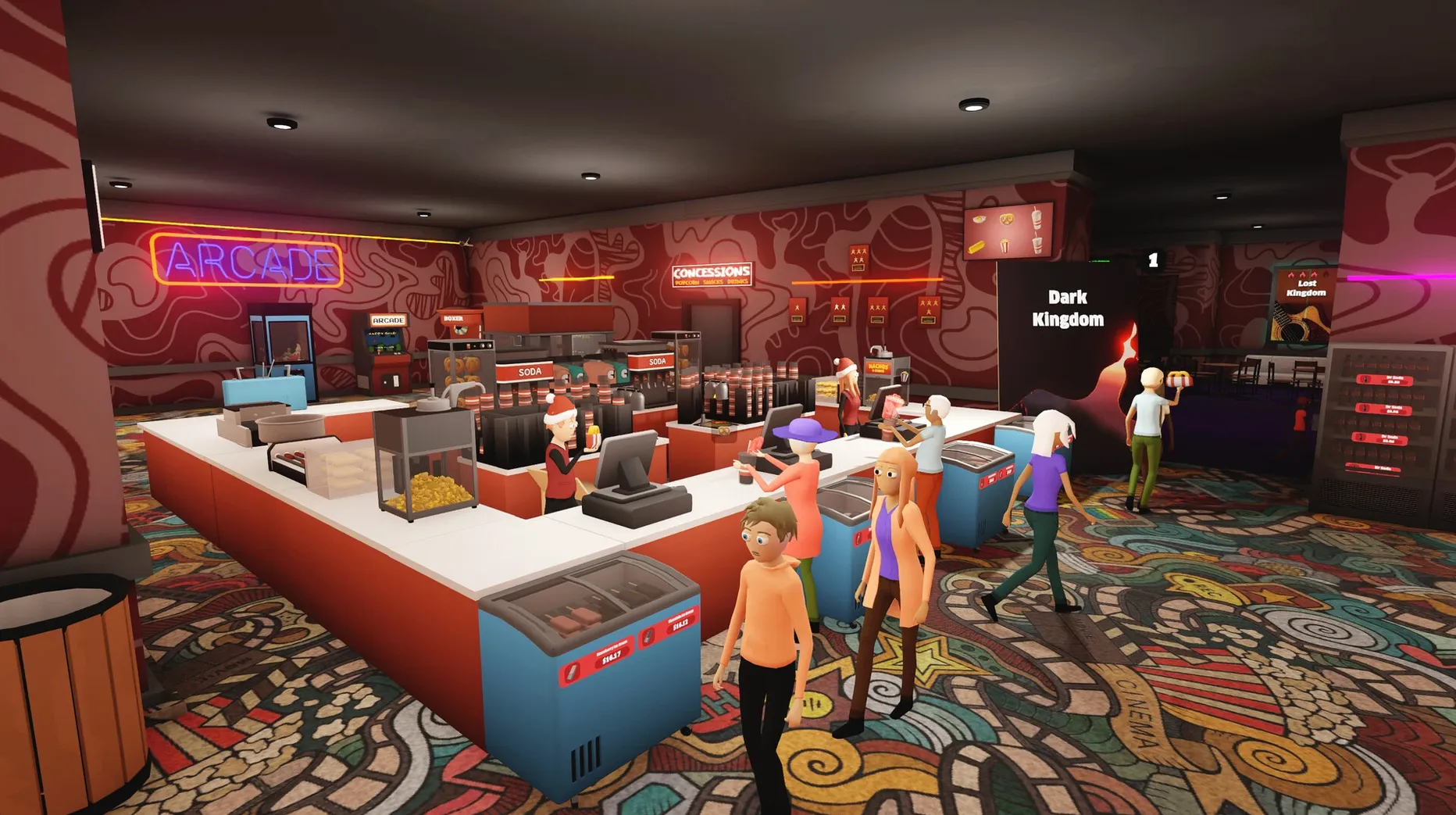
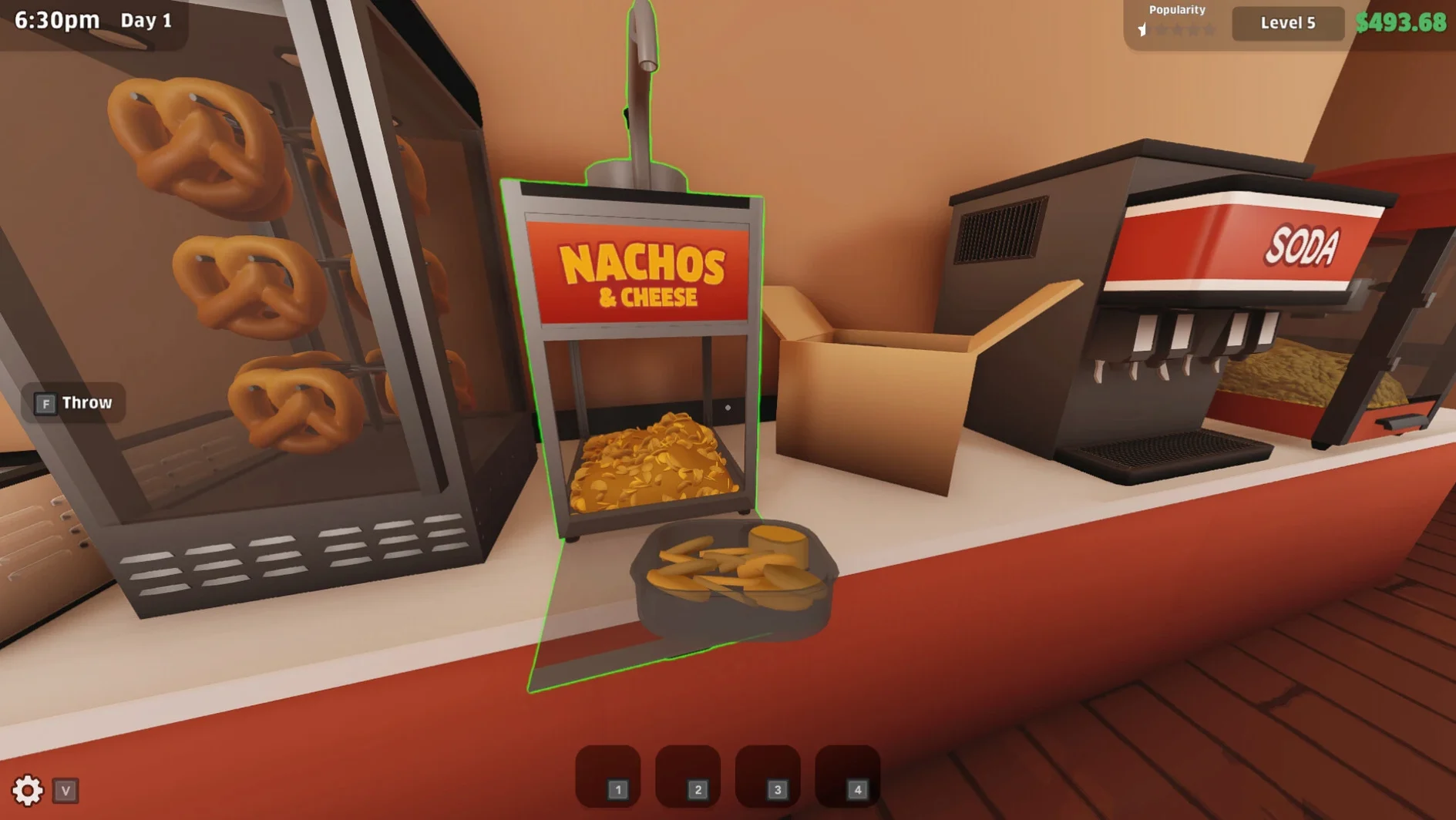
The game casts you as owner and floor manager: you screen films, sell salted pretzels and hot dogs from a counter you stock yourself, hire staff who may or may not keep their heads, and handle the small chaos that walks through the door with every ticket holder. Supplies run low, machines break, and a black-market dealer occasionally offers discounted movie tapes when the calendar trends in your favour.
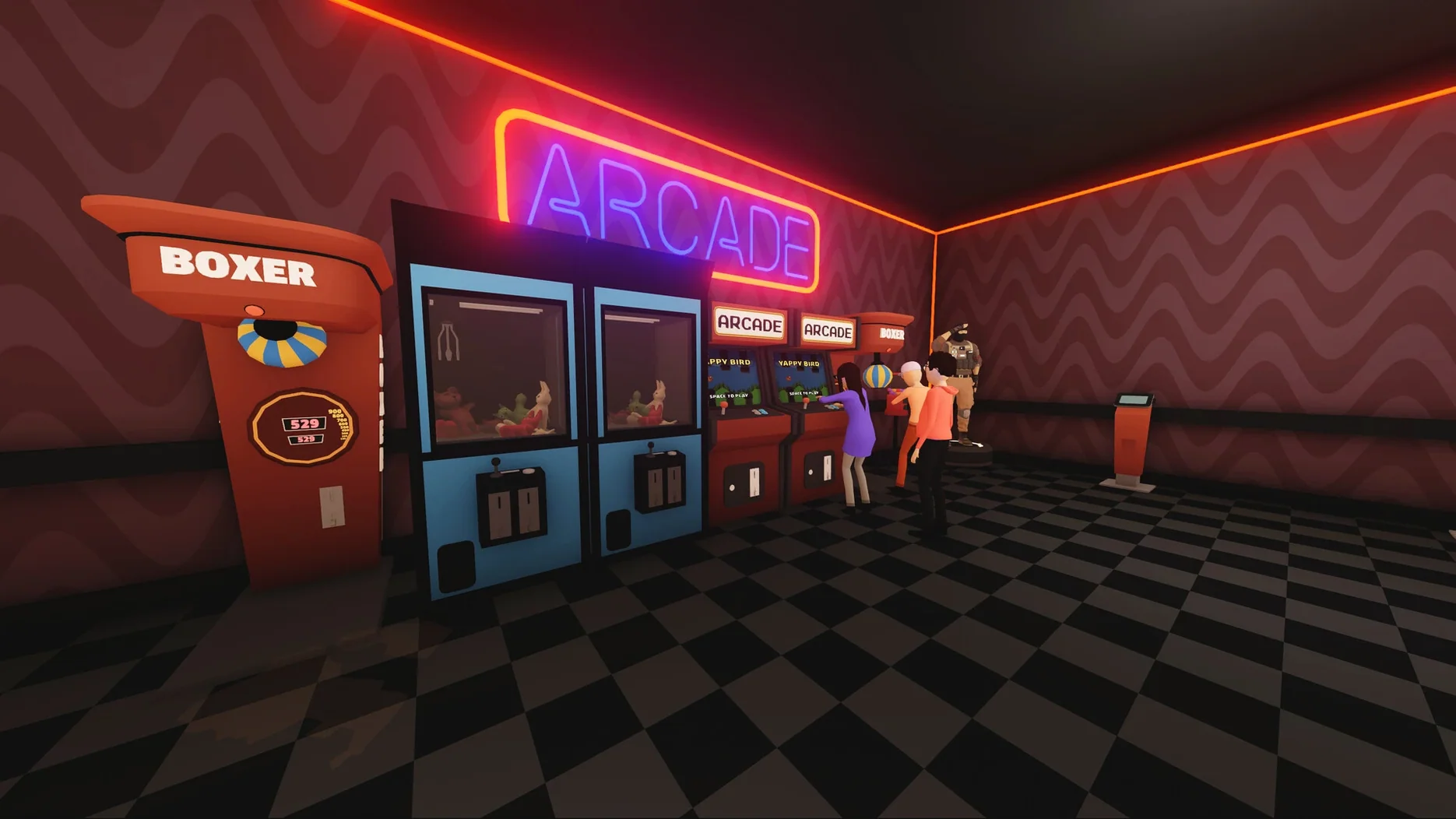
Version 1.4.0 expands the lobby into something closer to a small amusement hall. Rows of arcade cabinets — dancing games, Smash machines, motorcycle and car racing units — sit beneath new signs, surrounded by vending machines and plushies. The same update introduces a Sandbox Mode for building without pressure, and corrects a handful of achievements that previously refused to trigger.
Patient decorators and system watchers: three player types who thrive
The game does not rush the player, and that alone shapes its audience. People who enjoy laying out interiors at their own pace, then watching small systems interact, tend to settle into it immediately. If you have ever spent an hour choosing wallpaper in a life sim and considered the hour well spent, the cinema management loop will feel familiar and absorbing.
A second group are those drawn to light crisis response. A smoking customer in screen three, a child slipping past the ticket check, a cleaner who has mysteriously vanished — none of it is punishing, but it pulls you away from the concession counter just often enough to keep the rhythm alive. Players who liked the gentle disruptions in early-2000s tycoon games will recognise the tone.
The arcade expansion brings in a third audience: people who simply enjoy building an entertainment space with no financial weight. Sandbox Mode removes money constraints entirely, which makes the game a quiet design toy. You place racing cabinets, hang signs, and arrange plushies because the arrangement pleases you, not because a spreadsheet demands it.
Doors at six: an evening shift walkthrough
You unlock the front doors at six. The projector in hall one already has a reel loaded — something trending on the calendar, picked up from the dealer at a discount two days ago. Hall two needs a fresh tape, so you walk there through the empty corridor, the first-person camera swaying slightly, and slot it into place.
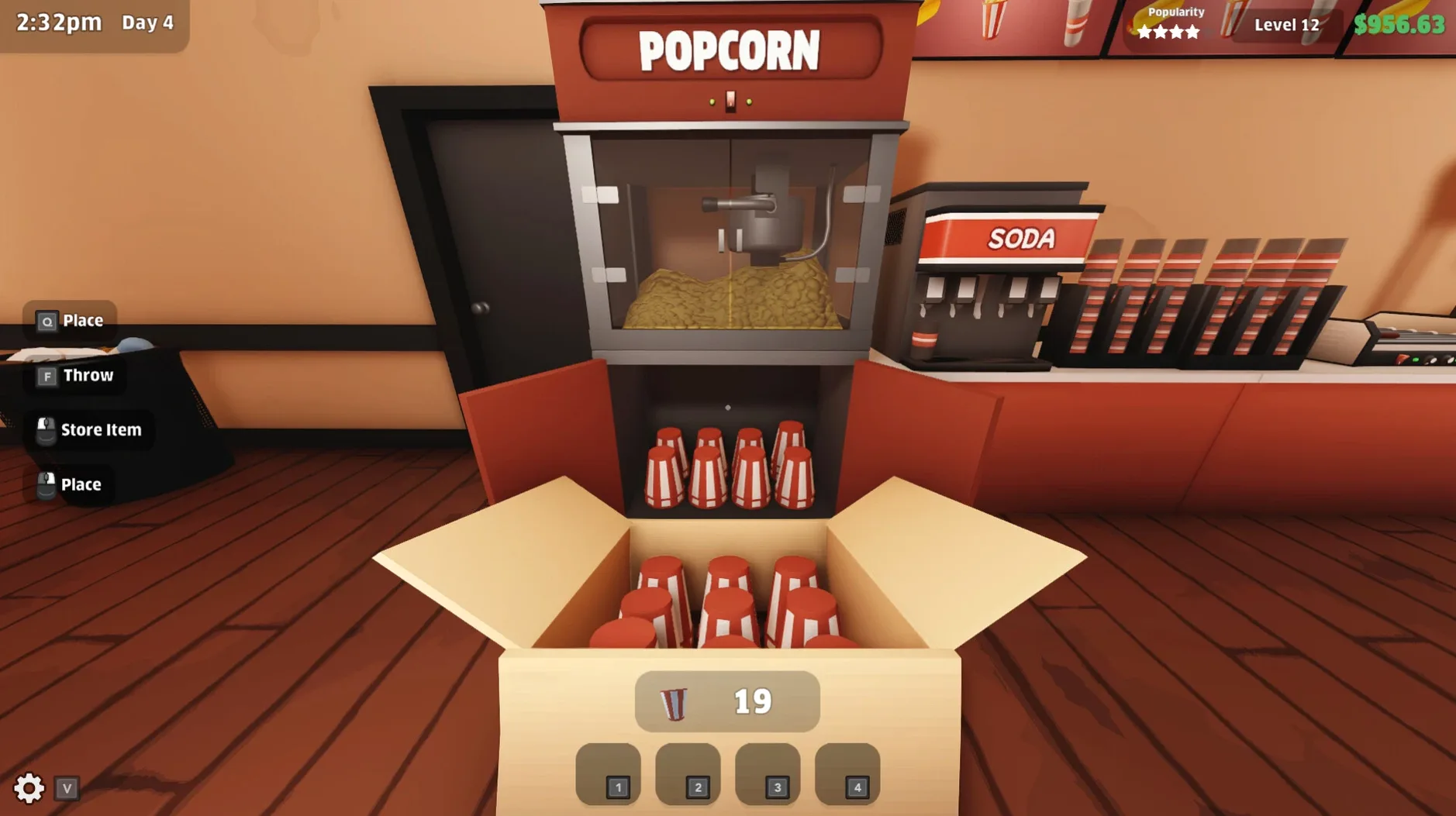
The cashier arrives for her shift. You check the snack counter: popcorn stocks are below a quarter, salted pretzels nearly gone. A quick order from the supplier menu tops them up, but delivery takes a few in-game hours, so you set out the remaining pretzels in neat rows to make the counter look less bare.
First screening starts. Fifteen people in hall one. Midway through, a red icon flashes: someone is recording the screen. You leave the counter, walk to the hall, and handle it. On the way back you notice a child ducking under the rope at hall three. The cleaner is mopping near the arcade cabinets, so you deal with the child yourself. By eight o’clock the lobby hums — racing machines pinging, vending machine dispensing, a short queue at the ticket counter. You unlock the arcade expansion door and step inside to adjust the sign placement you rushed earlier. It looks better now. The cinema feels full in a way that your decisions created.
By closing time, you have restocked twice, ejected one pirate, sold two dozen hot dogs, and earned enough to consider a third projector. The game saves. Tomorrow you might spend the whole session in Sandbox Mode, laying out an arcade you could never afford in the main campaign, just to see how it looks under the neon signs.
First days: practical notes
- Let the tutorial sessions breathe. The first few in-game days teach supply ordering and staff schedules without urgency. Resist the impulse to expand immediately — run two halls and a modest snack counter until the rhythm of restocking becomes automatic.
- Watch the calendar before buying tapes. The trend system added in version 1.4.0 means a genre that draws modest crowds one week might fill halls the next. Check the upcoming dates and buy accordingly, especially when the black-market dealer discounts a tape that aligns with a trend.
- Place arcade machines away from hall entrances. The audio from racing and dancing cabinets sits in the lobby soundscape; tucking them into the dedicated arcade expansion keeps the corridor outside screen three quieter and reduces the sense of clutter.
- Staff the cleaner early. A single cleaner covers a surprising amount of floor before the first expansion. Hiring one on day two prevents the slow visual decline of popcorn-strewn carpet that can make the cinema feel neglected even when finances are healthy.
- Use Sandbox Mode as a sketchpad. Before committing to an expensive layout change in the main campaign, switch to Sandbox, build the configuration there, and walk through it. The first-person perspective reveals sight-line issues that a top-down plan hides.
Ultimate Theater Simulator rewards a player who treats the first week as a dress rehearsal. Learn where the snack counter runs dry, how often a projector needs attention, and which arcade machines draw a crowd before the evening rush — then build outward with the confidence of someone who knows where the carpet gets dirtiest.
In short: a cinema sim that cares as much about the carpet as the screen.








Correspondence 0
Take a chair or join the table to send a letter.
No correspondence on this note yet. Letters are read before they appear.