 LeCoqRoti
Assembling the literature for a dissertation often means juggling scattered PDFs, half-remembered annotations, and a formatting deadline. A reference manager earns its place when it carries that weight from first search to final citation.
Gathering: notes that stay with the source
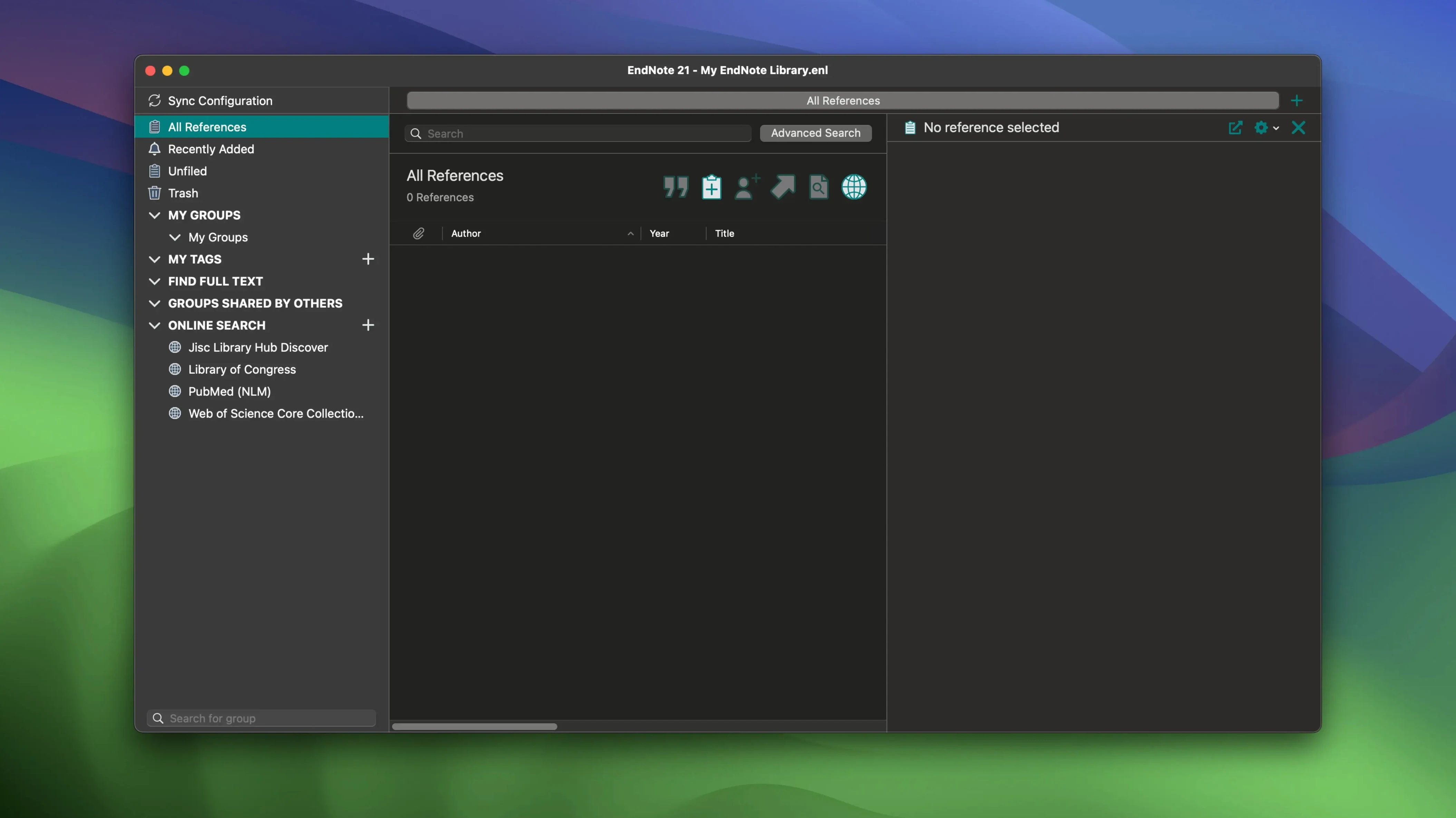
Start by importing the papers you have collected. EndNote keeps the PDF, your notes, and any highlights together as one reference. Adding color-coded tags lets you mark which studies support a method, which ones you are challenging, and which are simply background reading. Later, when a chapter needs only the supporting works, the tag list brings them forward without a fresh search through folders.
Citing: from margin to manuscript
With the reference open, the Cite While You Write integration for Google Docs places the citation where your cursor sits and builds the bibliography from saved references as you go. Should an edit go wrong, restoring a previous version of an individual reference means one mistyped field does not ripple through a finished chapter. The result is a manuscript where the citation list matches the text, formatted without a separate export step.
First days: four quiet habits
A reference manager turns into a second memory only if you let it. In the first week, do four things. First, decide on a single library file and keep it in a cloud-synced folder: the sync engine handles the rest across devices, but starting with one canonical library avoids the confusion of scattered copies. Second, import everything you already have — even the half-read papers from last semester. A reference with an empty notes field is still a reference you will not lose. Third, attach a short, plain-language note to each newly imported paper the moment you finish reading it. Two sentences written now save twenty minutes of rereading in six months. Fourth, settle on a small set of tags and use them from day one. Five or six colour-coded labels (method, counter-argument, background, to-read) are usually enough; a tag system with thirty categories tends to be ignored by its second week.
Settings: three changes worth your time
EndNote arrives with sensible defaults, but a few adjustments make the daily rhythm smoother. Open the preferences and look at the PDF handling: set the auto-import folder to watch your Downloads directory. Every paper saved from a journal site lands there, and the software pulls it in without a manual drag. Next, change the duplicate detection criteria to compare by DOI and title rather than author and year alone; a preprint and a published version of the same article then register as one source, not two. Finally, enable the sync option that includes PDFs and annotations. A library that lives on your Mac alone is fragile; one that mirrors itself quietly to the cloud means a lost laptop does not take six months of annotations with it.
A scenario: the doctoral student three weeks before submission
Imagine a PhD candidate in clinical psychology who has written four chapters across two years. Her library holds some eight hundred references, many tagged by theme and a few annotated heavily. Three weeks before submission, her supervisor asks her to restructure the discussion chapter so that intervention studies appear before observational ones — a change that will shift roughly forty citations. She creates a smart group based on her intervention tag, drags the group into the manuscript draft in the order she wants, and watches the bibliography rebuild itself in the required APA style. A reference that had been entered with an incomplete author list months ago shows the error in the formatted output; she opens the record, restores the version from two days prior, corrects the field, and the citation rights itself. The restructuring, which once would have meant an afternoon of manual renumbering and cross-checking, takes her under an hour.
Recent changes: what 2025.3 quietly fixed
The 2025.3 update brought a handful of corrections that affect the rhythm of writing rather than the feature list. The most noticeable is a bug fix for a crash in Word: when the Select Matching References dialogue appeared during a Cite While You Write session, the application would sometimes quit. That is now resolved, so inserting a citation mid-paragraph no longer carries a small risk of losing an unsaved thought. The release also added Simplified Chinese localisation, which matters if you collaborate with colleagues working in that language — a library can now display its interface elements in a second script without a separate install. Under the hood, the update addressed several smaller stability fixes. None of these changes rewrites the tool, but each removes a small friction that, over a long writing day, adds up to a quieter working session.







Correspondence 0
Take a chair or join the table to send a letter.
No correspondence on this note yet. Letters are read before they appear.