 LeCoqRoti
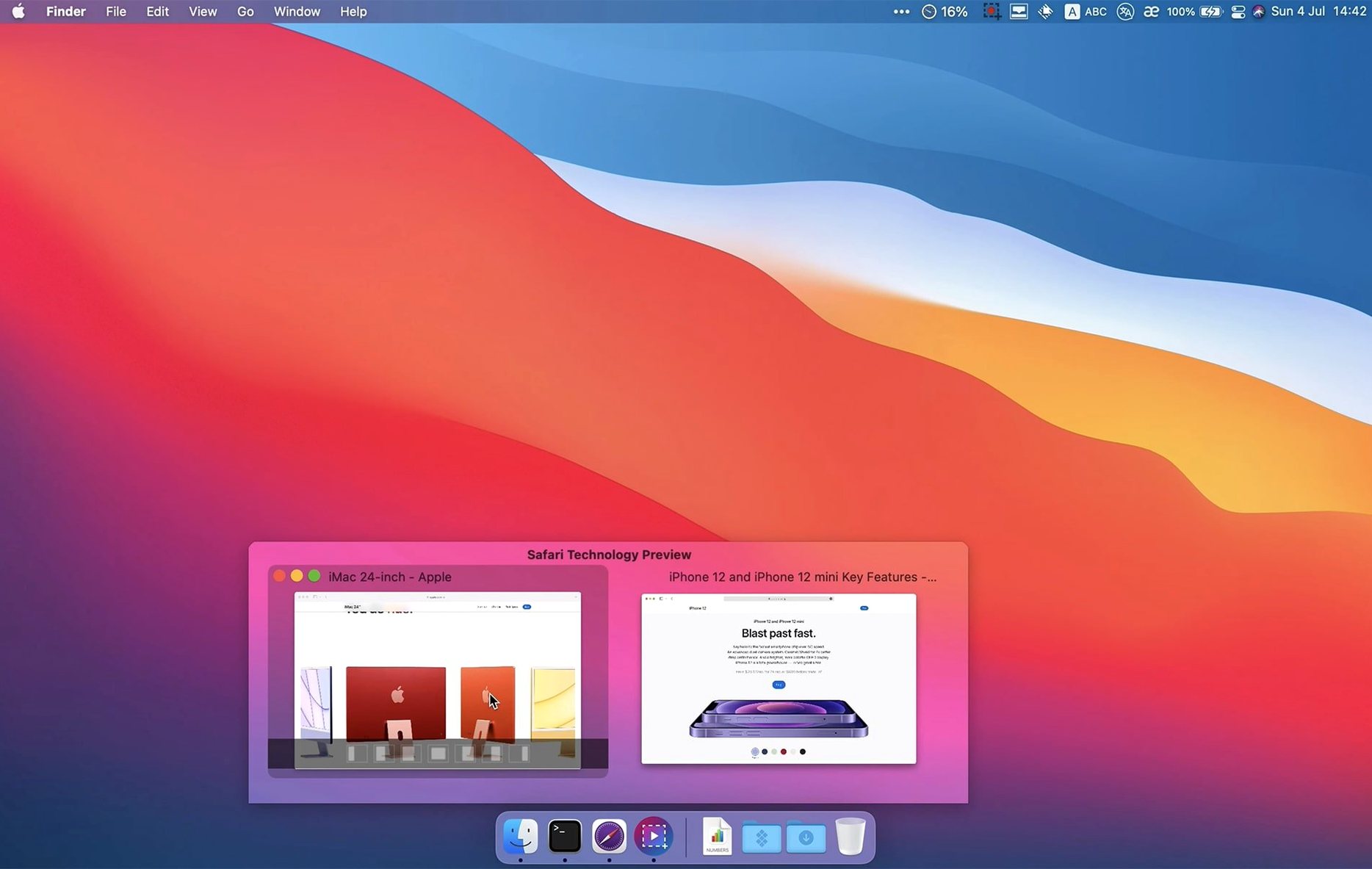
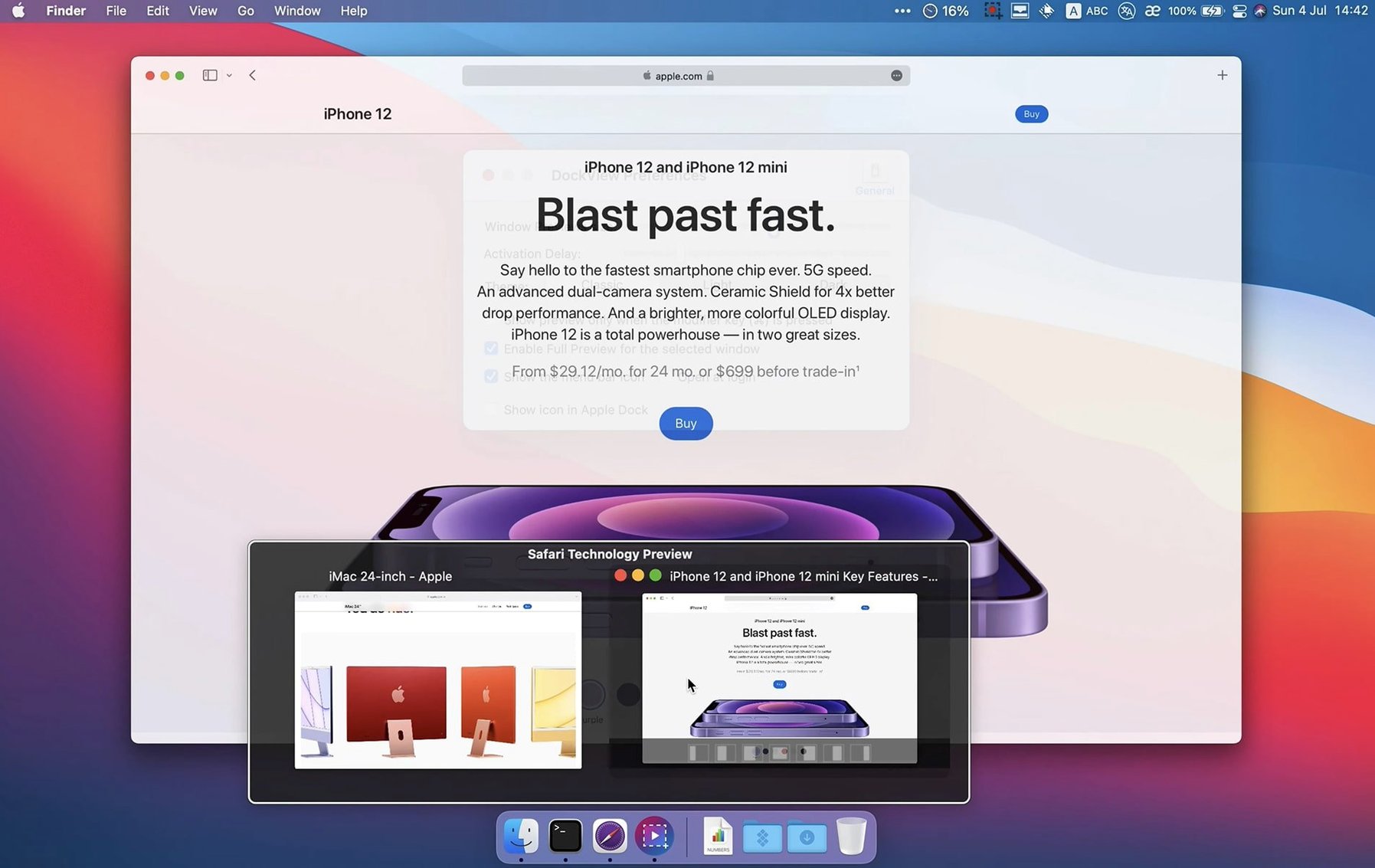
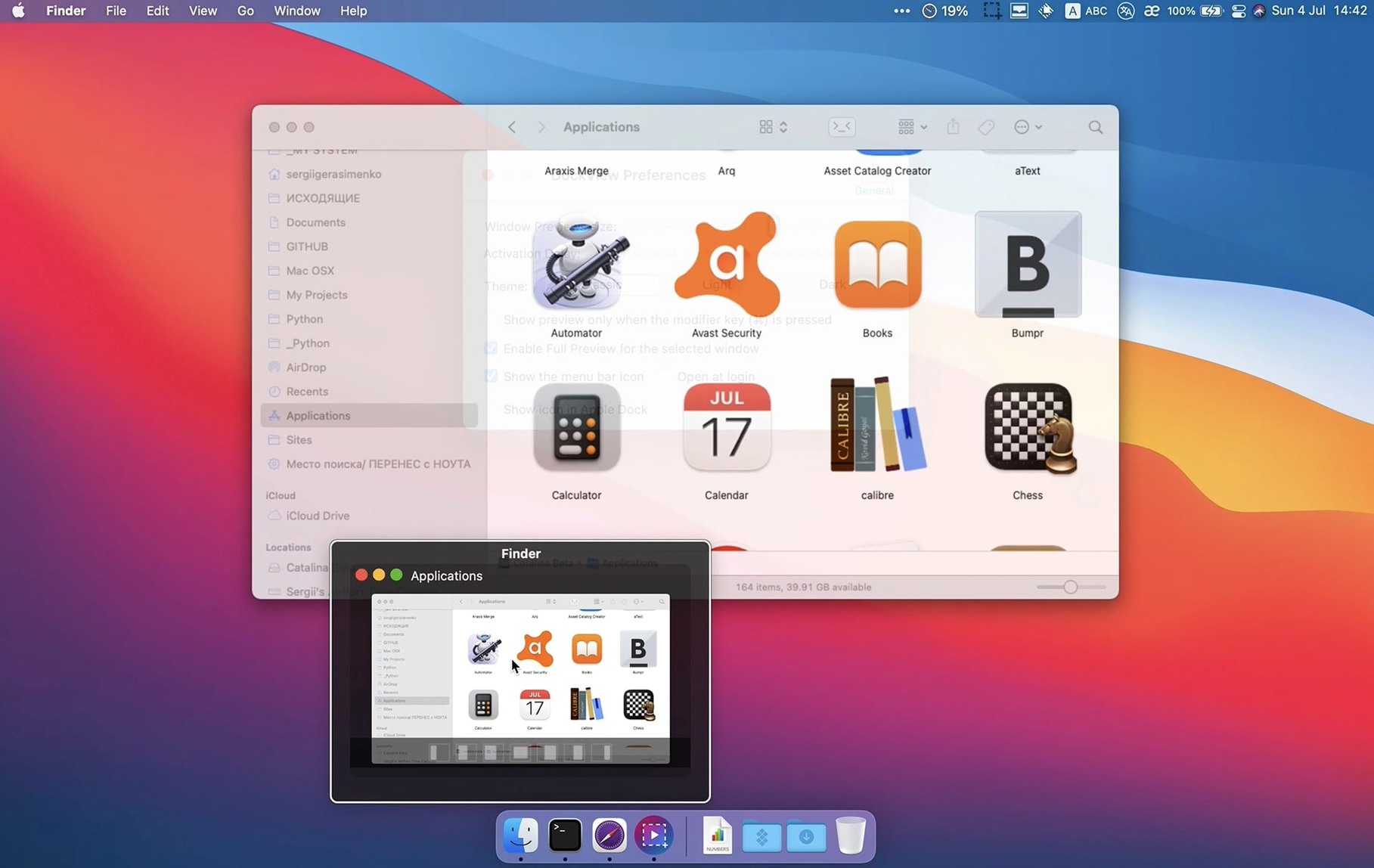
You have six Finder windows open and need the one showing your project folder. Instead of right‑clicking the icon and guessing from a list of names, you rest the pointer on the Finder icon in the Dock. A row of live thumbnails appears. You spot the project folder at a glance, click its preview, and carry on.
First steps: what to try after installing DockView
- Hover on a busy app. Choose an application with several windows — Safari, Finder, or Mail. Move the pointer over its Dock icon and pause. The preview panel opens with a thumbnail for each window, updating in real time.
- Click a thumbnail to switch. Tap any preview and that window comes to the front immediately. No extra clicks, no context menus.
- Use the Show All Windows button. In version 2.2.4, a button sits within the preview panel. Press it to reveal all the app’s windows at once, a direct parallel to App Exposé triggered from the Dock itself.
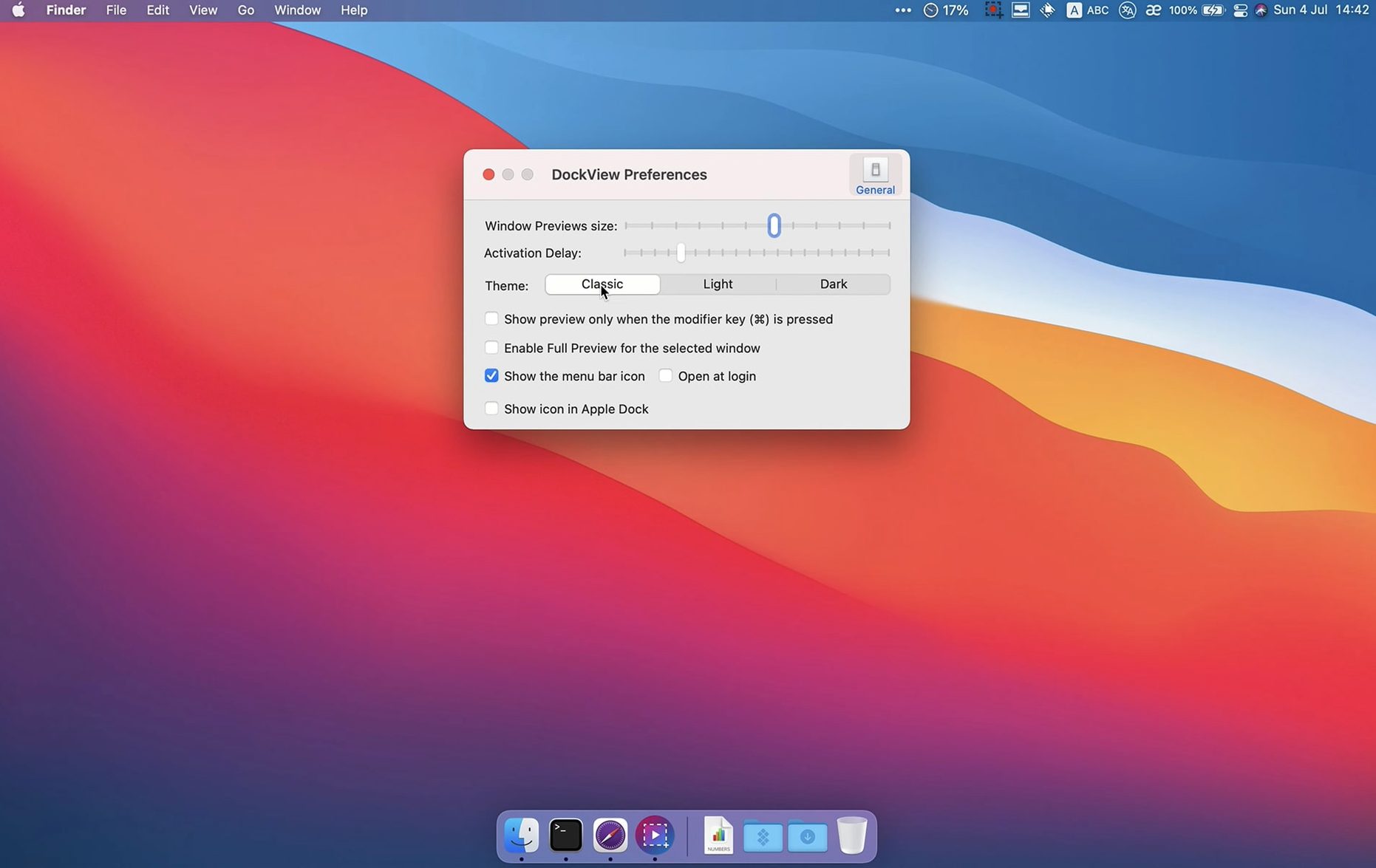
- Arrange your settings. Open the app’s preferences, now divided into Preview and Appearance tabs. Adjust thumbnail size, spacing, or which corner of the icon triggers the panel, so the display suits your screen and working rhythm.
DockView is designed as an addition to the Apple Dock, not a replacement. It asks for Accessibility permission to handle window switching and Screen Recording permission to draw accurate previews and window titles. Once granted, the behaviour feels native: a quiet extension that turns the Dock into a visual switcher without altering the way you already work.
Small conveniences: details worth noticing
Some of DockView’s most useful touches are easy to overlook in the first hour. Numbered shortcuts appear over the thumbnails while the panel is open; pressing a number key jumps to that window without moving the pointer. The same logic applies to quick layout actions, so a single keystroke can close or minimise a window from the preview itself. If you keep several apps open for long stretches, these small reductions in movement add up.
The hover action is deliberately quiet. A short pause over the icon is enough, and the panel dismisses on its own when the pointer leaves. There is no persistent overlay and no change to the Dock’s structure, which keeps the utility feeling light rather than attention-seeking.
Preview timing: set a delay that matches your pointer pace
- Set the trigger delay to match your pace. If previews appear too eagerly while you are moving between apps, increase the delay in the Preview tab. A slightly longer pause keeps the panel from interrupting quick pointer travel.
- Grant both permissions early. Accessibility handles switching, Screen Recording handles titles and thumbnails. Without the second, previews may appear blank or lack names, which makes window identification slower than it should be.
- Try it on a second display arrangement. DockView behaves identically whether the Dock sits at the bottom, left, or right. If you use multiple monitors, the panel follows the Dock’s position, so no extra configuration is needed.
- Use numbered shortcuts until they become automatic. For an app with three or four windows, pressing a number is often faster than moving to the thumbnail. After a few days, the habit becomes part of the muscle memory of switching.
The installer is a standard disk image: open it, drag DockView to Applications, then launch from Launchpad. If macOS blocks the first launch because of permissions, the app itself walks through the two required settings. For anyone installing dockview mac on a machine with both Intel and Apple Silicon builds available, the disk image contains the appropriate version for the hardware.








Correspondence 0
Take a chair or join the table to send a letter.
No correspondence on this note yet. Letters are read before they appear.