 LeCoqRoti
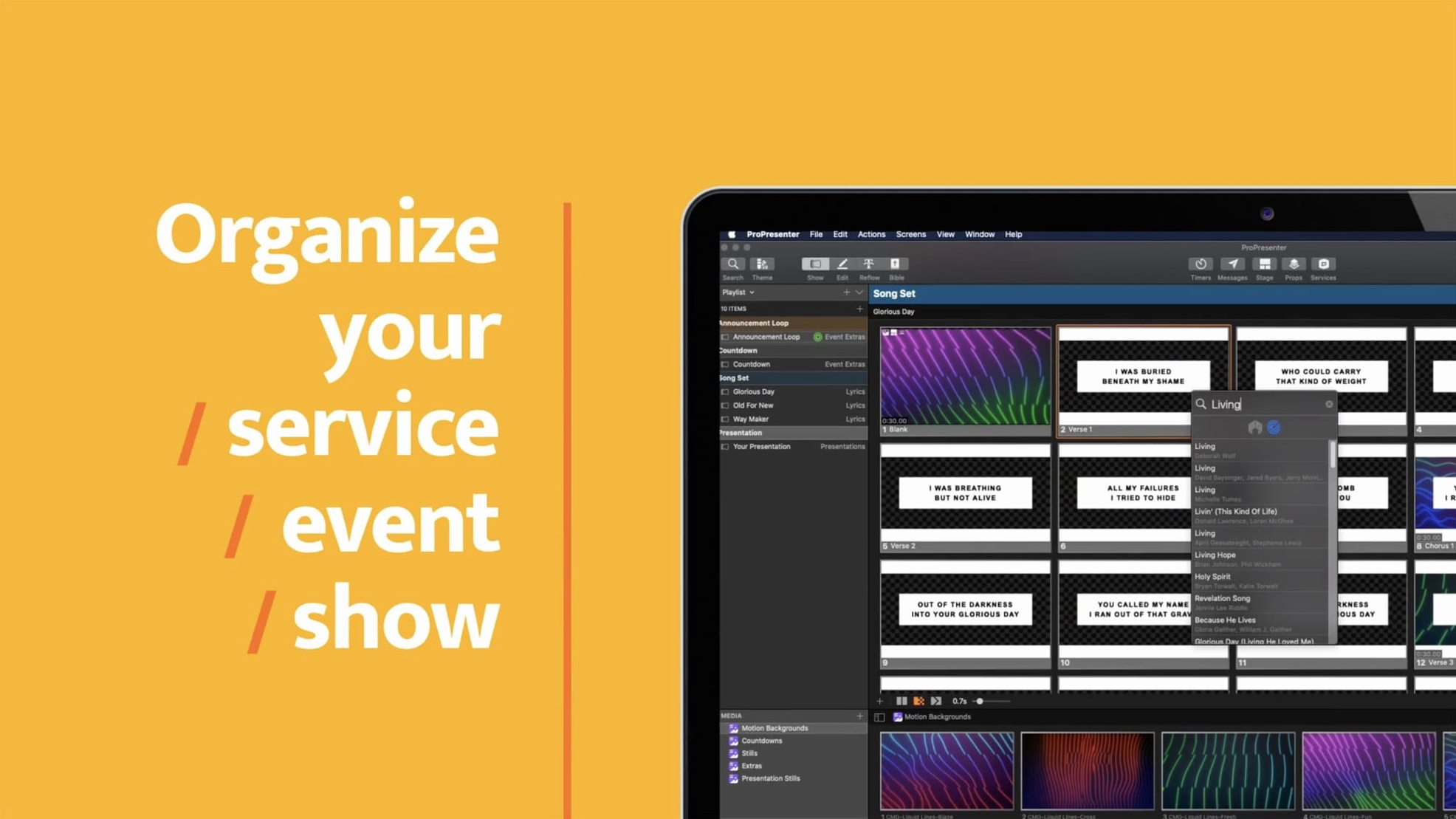
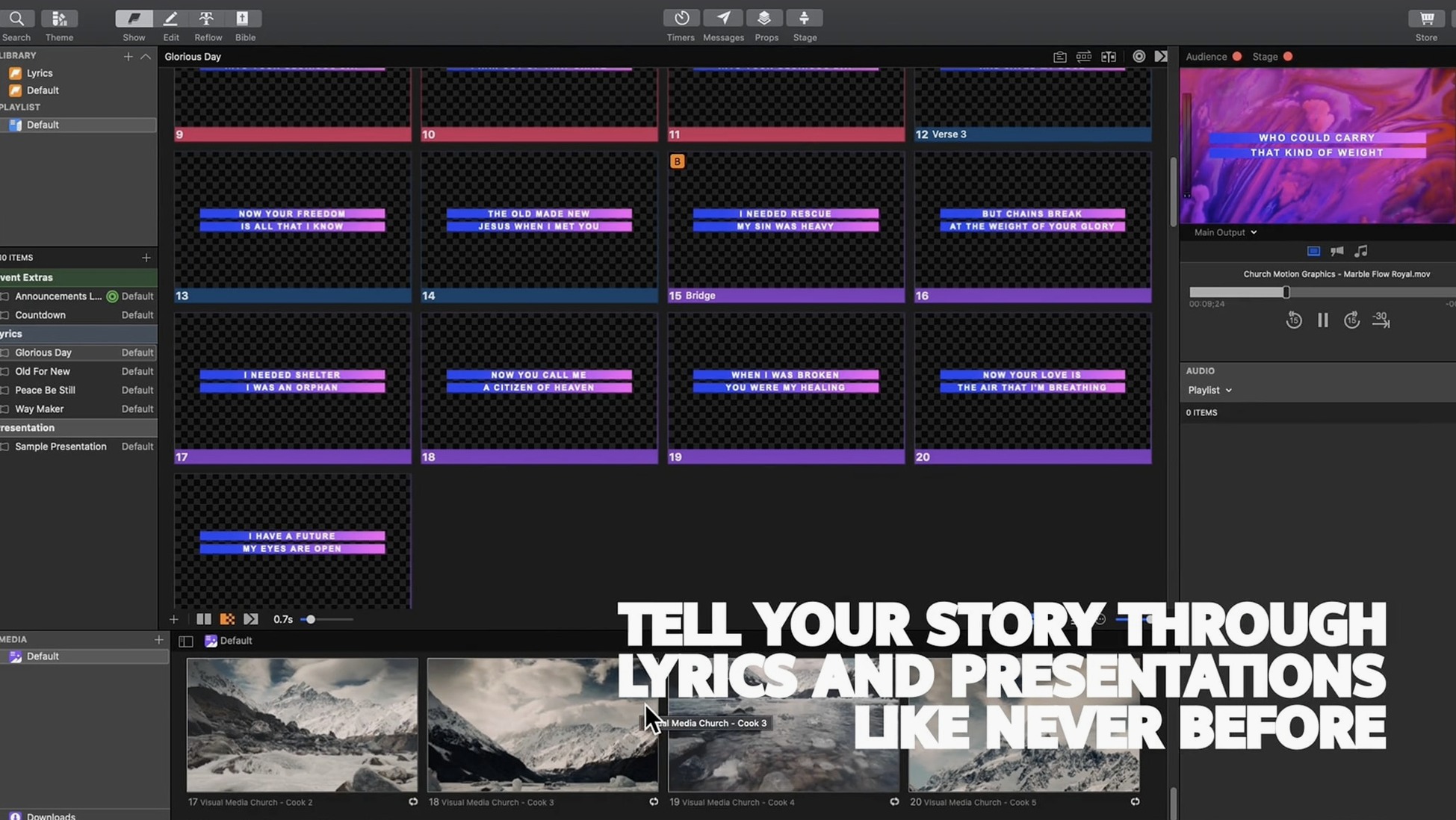
A quiet update to version 7.16.3 refines the stability of an application already trusted to run entire live events without a hitch. ProPresenter keeps its focus on the practical demands of a production booth: managing what the audience sees, what the stage sees, and what the operator needs to know next, all from one interface.
Signals for every screen: the core toolkit
The software treats a single presentation as a collection of independent outputs rather than one duplicated feed. This lets you set up:
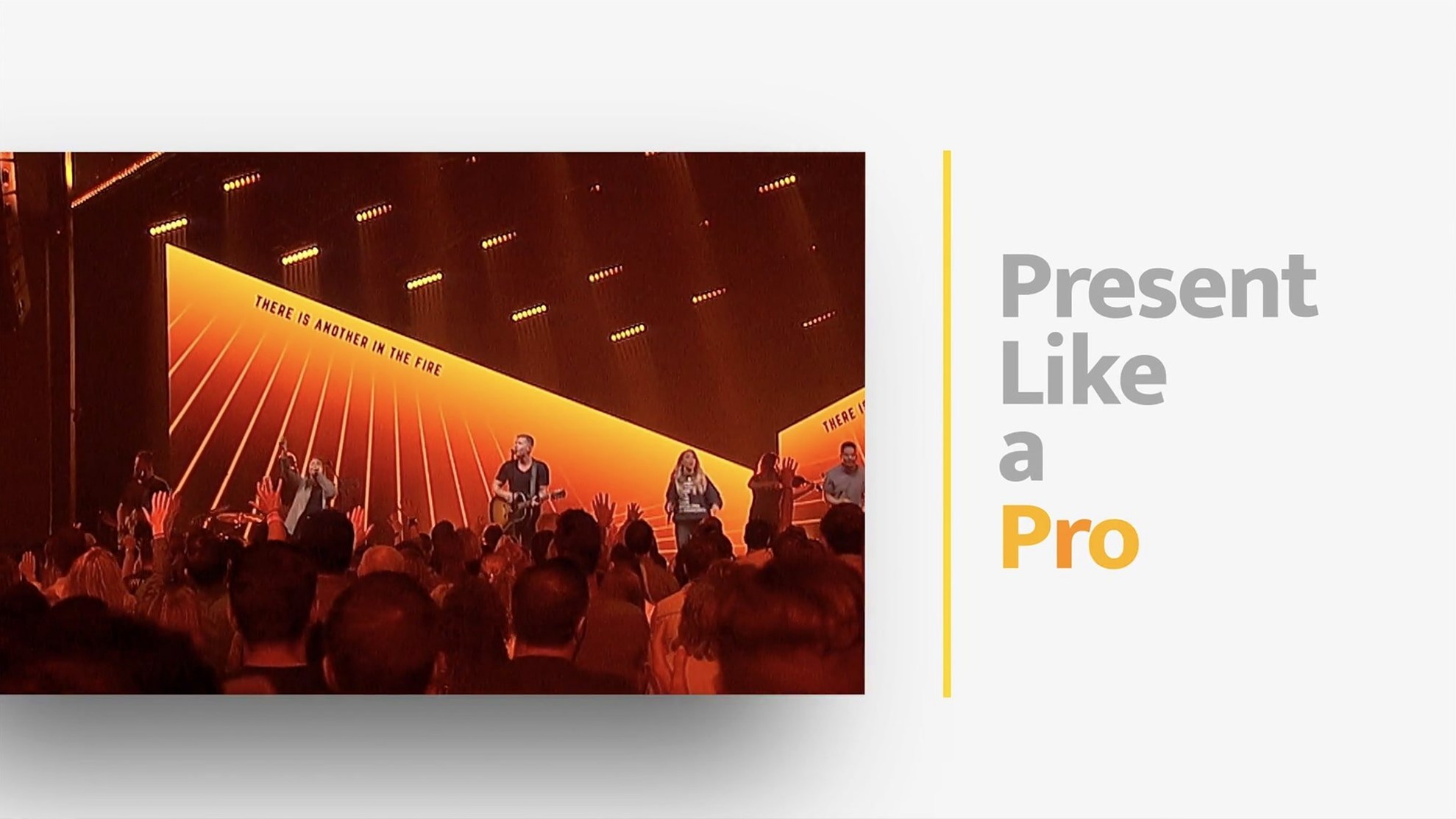
- A main projection or LED wall for the congregation or audience
- A confidence monitor facing the stage with a countdown timer for speakers
- A separate lobby feed welcoming late arrivals or directing people to overflow rooms
- A clean lower-third broadcast tie-in for an online stream
Content that adapts under pressure
Beyond distributing video, ProPresenter treats every slide as a live object. You can prearrange a scripture passage into a sequence of short phrases and then decide, mid-service, to show it as a single block quotation instead. A moderated social feed can be styled to match the event’s branding and displayed during a panel discussion, while a soundtrack and a series of HD video clips wait in a pre-cued playlist. The playback tools handle common production codecs without requiring a separate media server. In short: the software shifts the operator’s role from technician to director, giving them control over timing, layout, and content without switching applications.
Those arriving from simpler slideware often bring habits that work against them in ProPresenter. A few tendencies surface repeatedly in questions on production forums.
The first is treating the main output as the only output. Operators set up a beautiful slide and then discover the stage display shows the same thing, complete with lyrics and decorative elements, when all the speaker needed was a timer and a single line of notes. ProPresenter separates Audience and Stage screens from the beginning; the stage layout is its own independent canvas, and ignoring it leads to uncomfortable on-stage squinting. The second mistake is importing a finished video file and expecting it to pause on a frame, as one might in a non-linear editor. The playback engine treats video as a continuous event. The proper approach is to set an in-point and out-point, or to place a still slide immediately after the clip in the playlist for a clean hold. A third error is neglecting the library structure. Dragging media directly into a playlist without saving it to the library first means that media vanishes when the playlist is cleared; building a searchable library of backgrounds, stills and loops from the first rehearsal saves panic during a live event.
Default dissolve over hard cut: a 0.4‑second head start
Fresh from installation, a few preferences shape the entire operating experience. These are the ones worth visiting before you build anything substantial.
Switch the default transition to a simple dissolve of around 0.4 seconds. The factory cut is abrupt and, while it works for countdowns, it fatigues an audience during a forty-minute presentation. Under the Stage tab, enable the confidence monitor and set its layout to show the current slide, the next slide, and a clock. Speakers routinely mention how much this single change calms their delivery. In the Editor preferences, increase the default text box padding to at least 5% from the edges: text that looks fine on a laptop screen often feels cramped on a sixteen-metre LED wall. Finally, under Audio, set the default fade duration for audio cues to 0.8 seconds. A hard start on a background pad is jarring; a short fade masks the entry without drawing attention to the mechanism.
A working session: the ten-minute countdown
It is twenty minutes before a service. The operator sits down to a configured Mac, dual monitors stretching the interface across two screens. On the left, the library, the slide editor and the audio bin. On the right, the full-screen audience output, currently black.
The first action is selecting the pre-built countdown playlist. A five-minute looping video of drifting clouds fills the main screen and the lobby feed; the stage monitor, meanwhile, shows a large timer counting down from 4:59 in white text on a dark background, with the words “Five-minute warning” beneath. The operator double-checks that the stage display is not sending the cloud video to the pulpit. It is not.
With three minutes left, a keyboard shortcut advances to the next cue. The countdown continues, but the lobby feed now shows a welcome slide with the event title and a subtle motion background. The audio playlist fires a soft instrumental pad, faded in over 0.8 seconds as configured. No one notices the transition, which is precisely the point.
At thirty seconds, the operator’s right hand hovers over the space bar. The stage timer turns amber. At zero, a single press sends a black slide to the audience output, signals the streaming computer with a lower-third key, and switches the stage display to a “Welcome” note with the speaker’s first point. The whole sequence from countdown to live moment involved three keystrokes and no application switching.
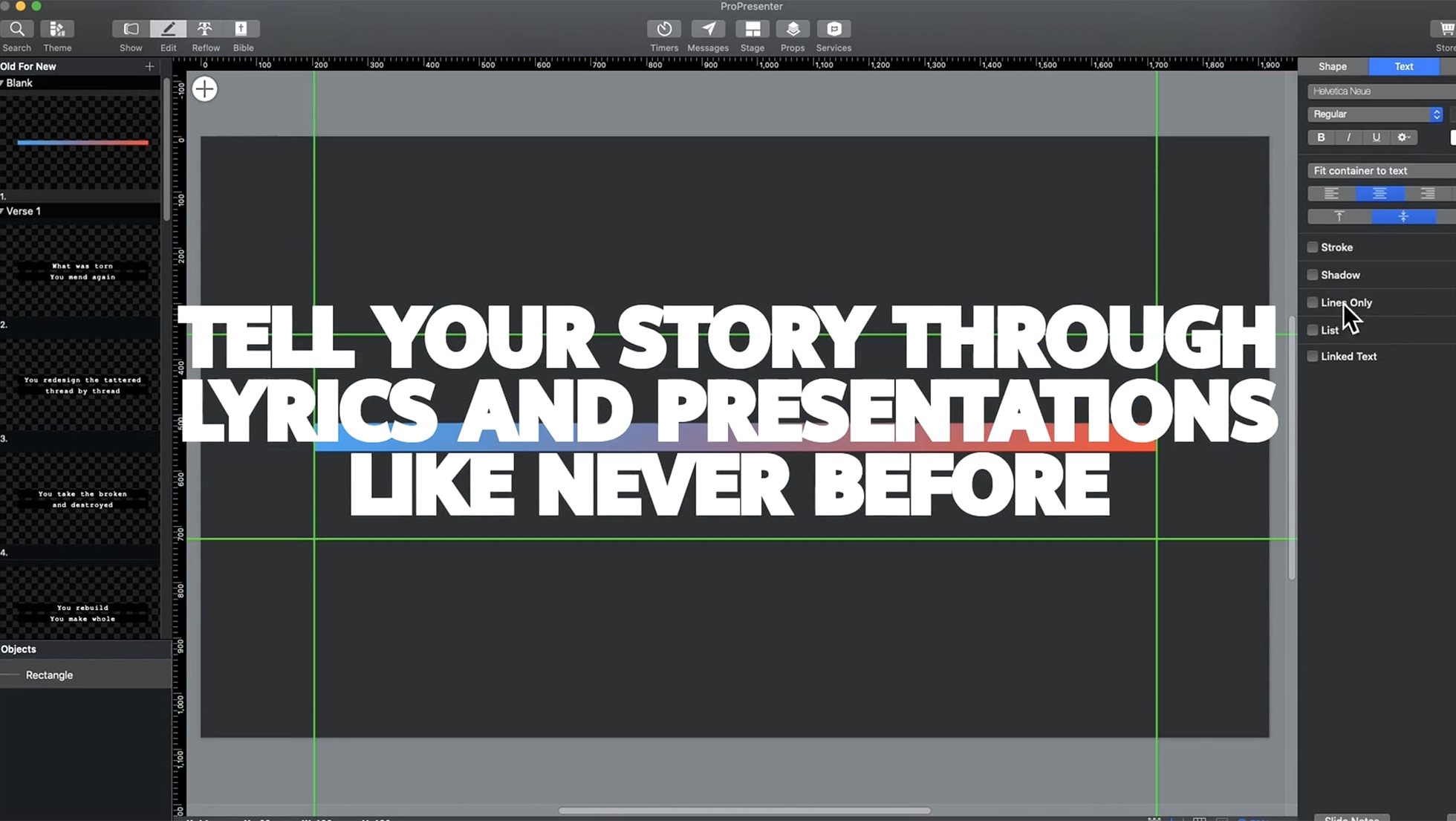
During the talk, a lyric slide needs an on-the-fly edit: the speaker has changed the wording of the third verse. The operator opens the slide in the editor, corrects the text in the text layer, and the change appears on the next advance without interrupting playback. Later, a video testimony plays from the playlist; it was dragged from the library, trimmed with in and out points during the rehearsal, and now runs with clean audio through the house system. When the file ends, the playlist automatically advances to a holding slide, preventing the audience from seeing the desktop.
Apple Silicon scrolls a thousand assets without a stutter
On Apple Silicon, the application opens in under four seconds and a typical library of a thousand assets scrolls without a stutter. Intel machines with a dedicated GPU handle the same load smoothly, though the fan may become audible during extended HD playback. Memory usage settles around 1.2 GB for a moderate production with two outputs and a handful of video clips; add a multi-camera streaming setup and that figure climbs toward 2 GB, which remains comfortable on any Mac with 16 GB of RAM or more.
Stability under sustained use is the application’s strongest practical virtue. A handful of operators report that searching for propresenter 7 crack or propresenter crack mac leads to builds where ensuring the media cache folder permissions are correctly set helps the app run smoothly, matching the experience of the signed 7.16.3 release. The same operators occasionally seek a propresenter torrent or pro presenter torrent for testing on a secondary machine, and taking a moment to verify the codec support and GPU acceleration settings allows such versions to perform reliably. In daily work, the most telling detail is this: once configured, ProPresenter can run a ninety-minute event without the operator opening a single menu. The interface fades into the background, and the machinery stays quiet.






Correspondence 0
Take a chair or join the table to send a letter.
No correspondence on this note yet. Letters are read before they appear.