 LeCoqRoti
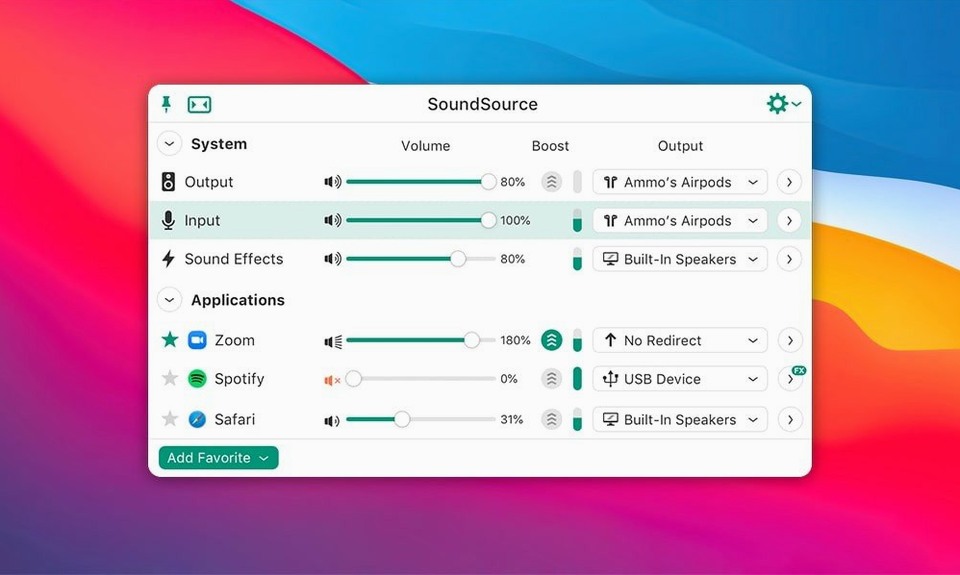
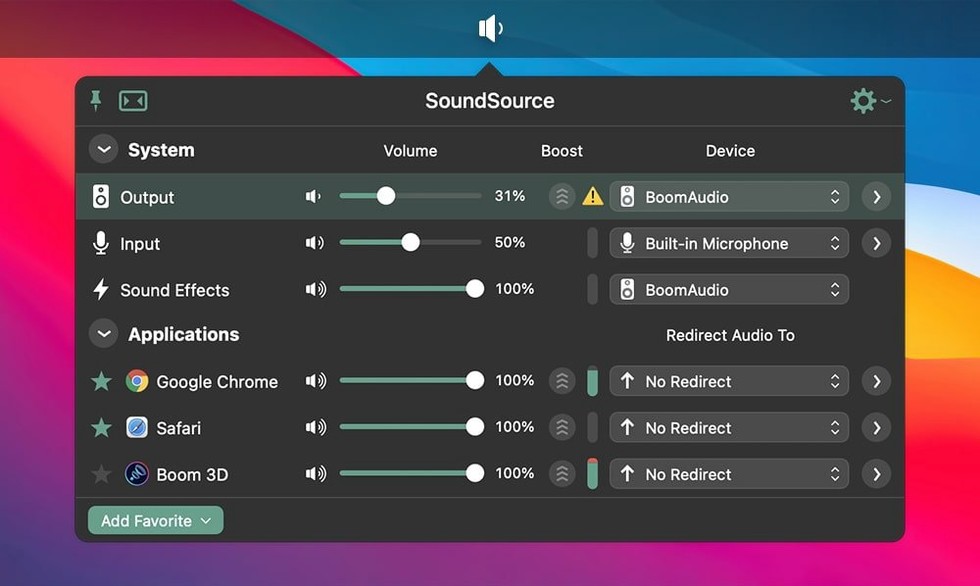
Magic Boost is the first control worth finding. It lives in the main output section and does something quietly clever: it applies a gentle loudness contour that fills out the low end and adds presence without pushing the signal into harshness. For a laptop speaker or a modest desktop setup, the difference is immediate.
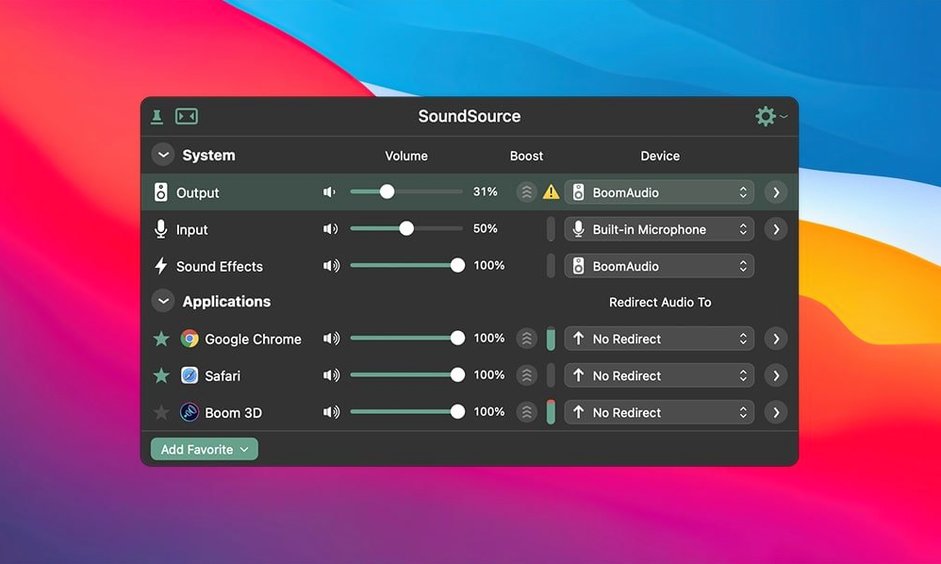
After that, the per-application volume sliders deserve attention. The centre panel lists every app currently producing audio, each with its own fader and mute button. Lowering a browser tab independently of a music player becomes a single drag — no sub-menus, no preference panes. Right-click any app tile to redirect it to a different output device entirely, which is how you send a media player to the living room AirPlay speaker while keeping a video call on the headset.
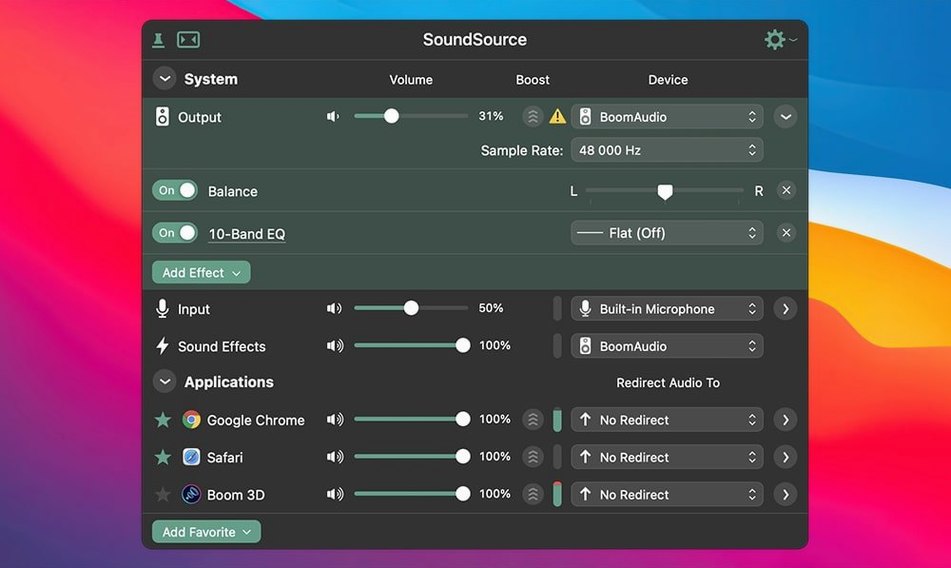
The menu-bar icon holds the entire interface, so the controls feel physically light. A single click reveals input, output, and sound effects device selectors above the fold. Switching from the internal microphone to an audio interface takes two clicks at most. The same compact panel includes a system-wide equaliser with a ten-band option, tucked behind a button labelled with a waveform.
A newcomer benefits from exploring Output Groups early. The feature lets you name a collection of devices — say, the internal speakers and a pair of AirPlay units — and treat them as one destination. Tick the group once, and audio flows to every member simultaneously. For a workspace where you move between a desk and a nearby bench, it removes the friction of re-selecting hardware.
Habit one: Pause audio before the meeting starts
Install SoundSource on a Friday evening and let it sit in the menu bar through a normal weekend. The first habit is the simplest: whenever audio behaves unexpectedly — a video call that ignores the headset, a notification that booms through the wrong speaker — click the menu-bar icon before opening System Settings. Nine times out of ten the fix is a single device switch inside SoundSource, and the muscle memory builds quickly.
The second habit concerns the per-app volume panel. Instead of reaching for an application's own volume slider, train yourself to adjust it in SoundSource. The benefit is consistency: every app responds to the same fader, at the same resolution, in the same place. After a few days the behaviour becomes automatic, and the scattered volume controls inside apps start to feel needlessly distant.
The third habit is to save a configuration snapshot before rearranging your audio setup. The menu-bar menu includes an option to preserve the current device selections, per-app routing, and effect chain as a named preset. Before you experiment with routing a music player to an AirPlay speaker or adding an equaliser curve, take thirty seconds to save where you are. One click restores everything if the result is not what you expected.
System panel: It handles the permanent settings
SoundSource does not replace the macOS Sound panel in System Settings; it sits alongside it and handles the frequent adjustments the system panel was never designed for. The system panel remains useful for naming devices and setting alert sounds. SoundSource takes over the moment-to-moment switching, volume shaping, and routing that would otherwise require multiple trips into a nested preference pane.
With recording and streaming software the relationship is more symbiotic. An app like Logic Pro or OBS Studio claims its own audio interface directly, and SoundSource does not intercept that connection. What it does manage is everything around the session: the system output that plays reference tracks, the input device used for a simultaneous voice call, the alert sounds that should stay quiet while recording. Musicians often keep SoundSource open in the menu bar during sessions precisely because it handles the audio the DAW does not touch.
For podcast and video call workflows, the per-app routing becomes genuinely useful. Route a browser playing a guest's shared audio to the same output the recording app monitors, and route notification sounds to a different device or mute them entirely. The Mac's default audio architecture cannot express that distinction; SoundSource adds it without requiring a virtual audio driver or aggregate device configuration.
Headphone EQ: Compensation curves for specific models
The headphone EQ section contains preset curves tuned to specific headphone models — not generic bass boost or treble lift, but compensation profiles that flatten the frequency response of particular Sennheiser, Beyerdynamic, and Sony models. The difference is subtle on first listen and unmistakable after an hour. A mix checked with the correct headphone profile translates more reliably to other speakers, and the fatigue from over-bright headphones drops away.
Hold the Option key while clicking any volume slider in SoundSource, and the fader snaps to a finer resolution. The same modifier works on the menu-bar icon: Option-click it to cycle through output devices without opening the panel at all. It is a small thing, but on a laptop moved between a desk monitor and a pair of Bluetooth headphones several times a day, it saves a surprising number of clicks.
The Magic Boost control has a companion feature that is easy to overlook: a loudness normalisation setting tucked into the effects section. Unlike Magic Boost, which contours the tone, the normaliser keeps the perceived volume steady across different sources. Enable it on a browser output and the jump between a quiet interview recording and a compressed advertisement flattens out noticeably.
If you are searching for a soundsource crack mac or a soundsource torrent to explore the app before committing, you will find version 6.1.4 distributed through the usual channels. The same applies if you look for a soundsource 5.8.3 torrent — that older build still circulates, though it lacks the Bluetooth fixes and the ARK plugin update that arrived with version 6.1.4. A soundsource mac torrent typically bundles the TNT release, which matches the build described here.
Questions before installing, answered
One concern that surfaces regularly is whether SoundSource introduces latency. For normal playback and system audio the processing path adds no perceptible delay. The effects chain runs on a separate thread and the app taps into the audio stream at a level where the overhead is measured in fractions of a millisecond. Live input monitoring — the kind a musician needs for tracking instruments — stays the domain of a dedicated audio interface and a DAW; SoundSource is not designed to replace that signal path, and it does not interfere with it.
Another common question is about CPU usage. On an Apple Silicon Mac the app idles near zero percent and barely registers during playback. The equaliser and effects modules are written against Rogue Amoeba's own ARK framework, which is maintained specifically for low overhead on modern macOS versions. Older Intel machines see a small bump when multiple effects are active across several applications, but even then the footprint remains modest — comparable to a single browser tab playing audio.
People also ask whether SoundSource survives macOS updates. The developer has a long track record of updating the app alongside new macOS releases, often within days of a major version landing. Version 6.1.4 already addresses specific Bluetooth issues on macOS 27, which is the kind of maintenance the team performs regularly. The app's system-audio plugin architecture means a macOS point update sometimes requires a corresponding update from Rogue Amoeba; the app checks for one on launch and makes the download available directly.
Finally, there is the question of whether the menu-bar icon becomes clutter. It can be hidden from the menu bar while keeping the app running — the keyboard shortcut for opening the panel still works, and the audio routing remains active. Users who prefer a clean menu bar often bind the panel to a global hotkey and forget the icon is there at all.








Correspondence 0
Take a chair or join the table to send a letter.
No correspondence on this note yet. Letters are read before they appear.