 LeCoqRoti
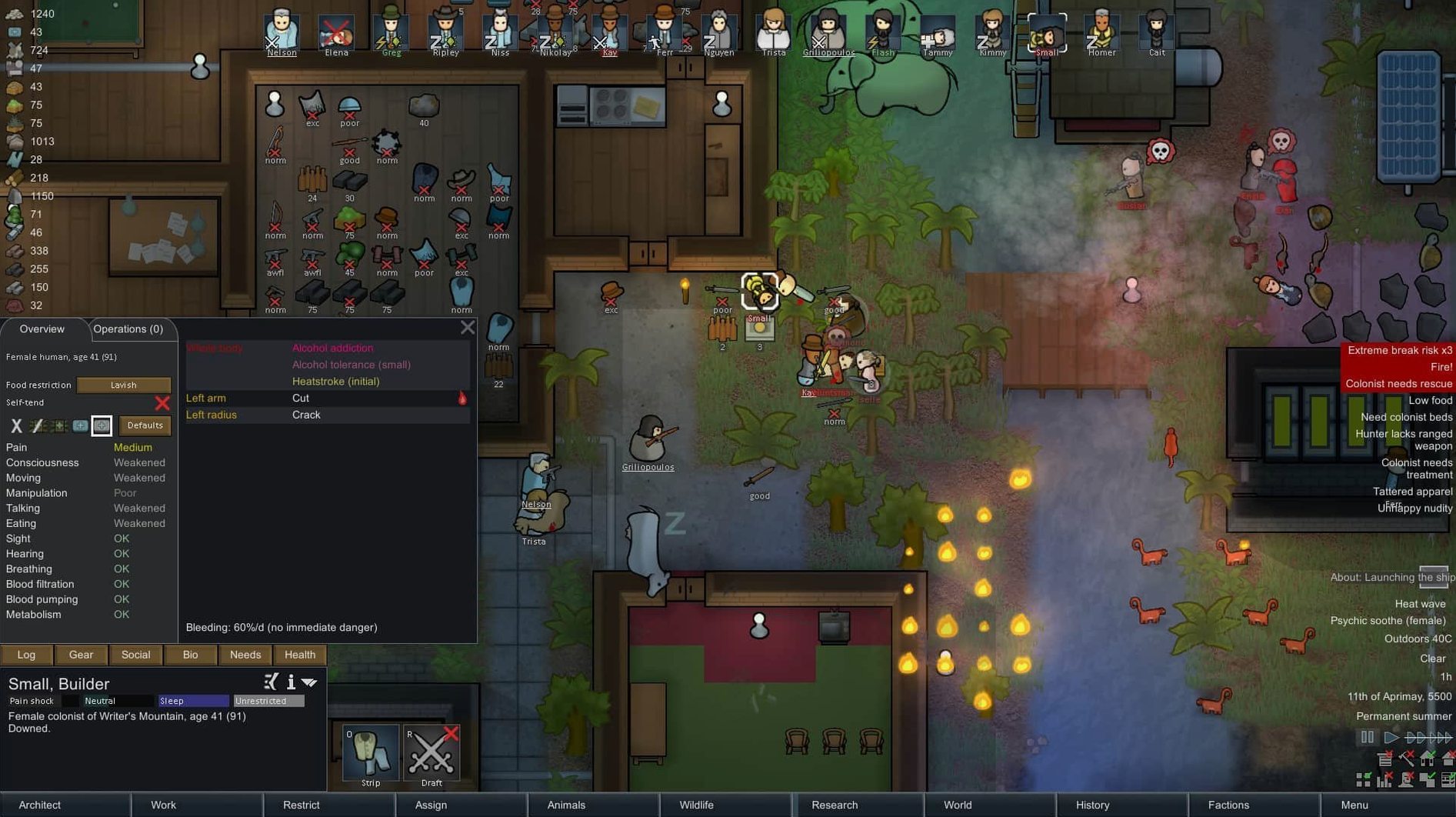
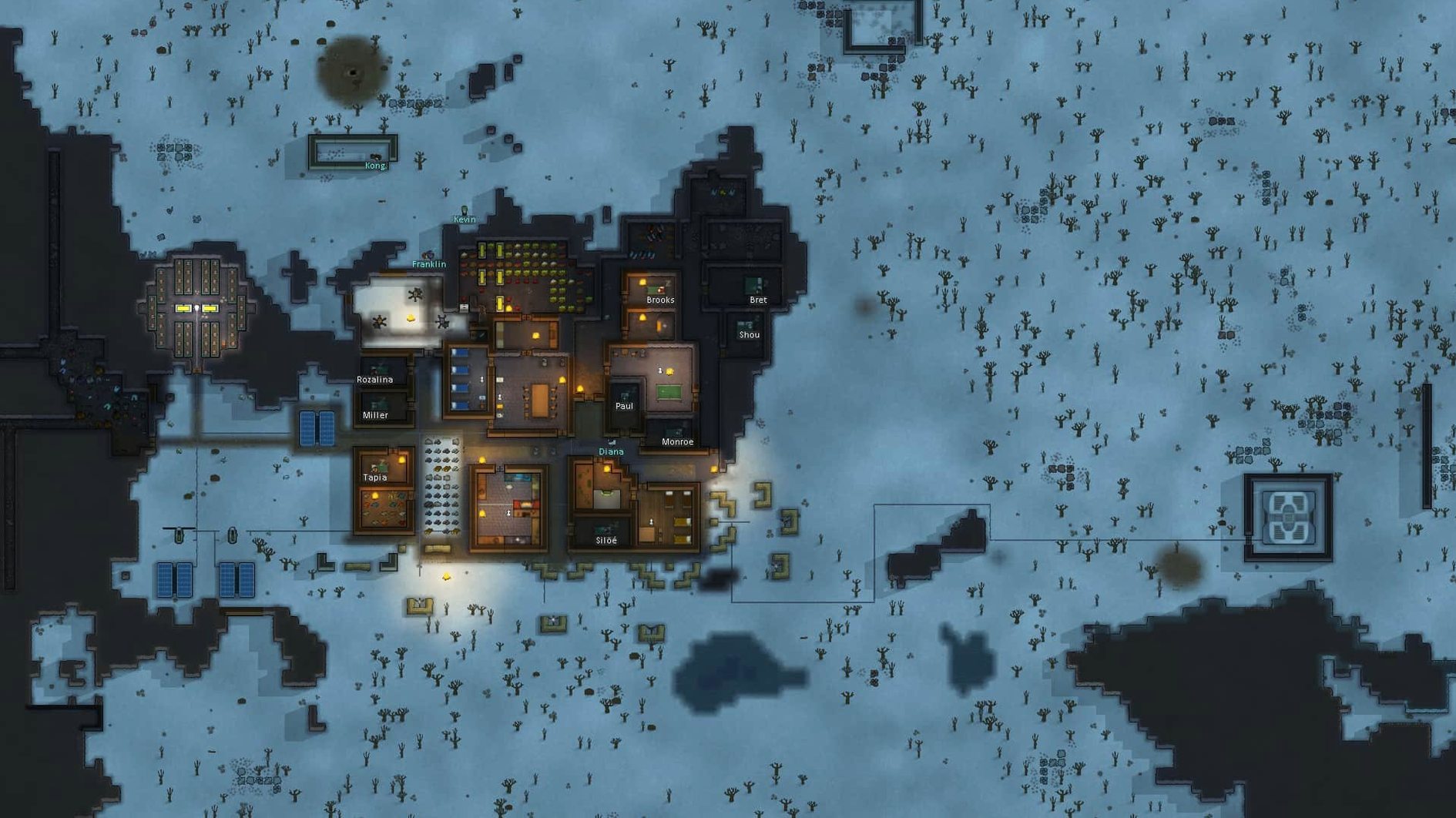
A medical student, an engineer, and a farmhand wake in the wreckage of their starship, scattered across a boreal mountainside. The local squirrel population eyes the packaged survival meals with quiet menace. From this unassuming start, a colony takes shape — one room at a time, one carefully assigned work priority at a time.
World generation: biomes and biographies
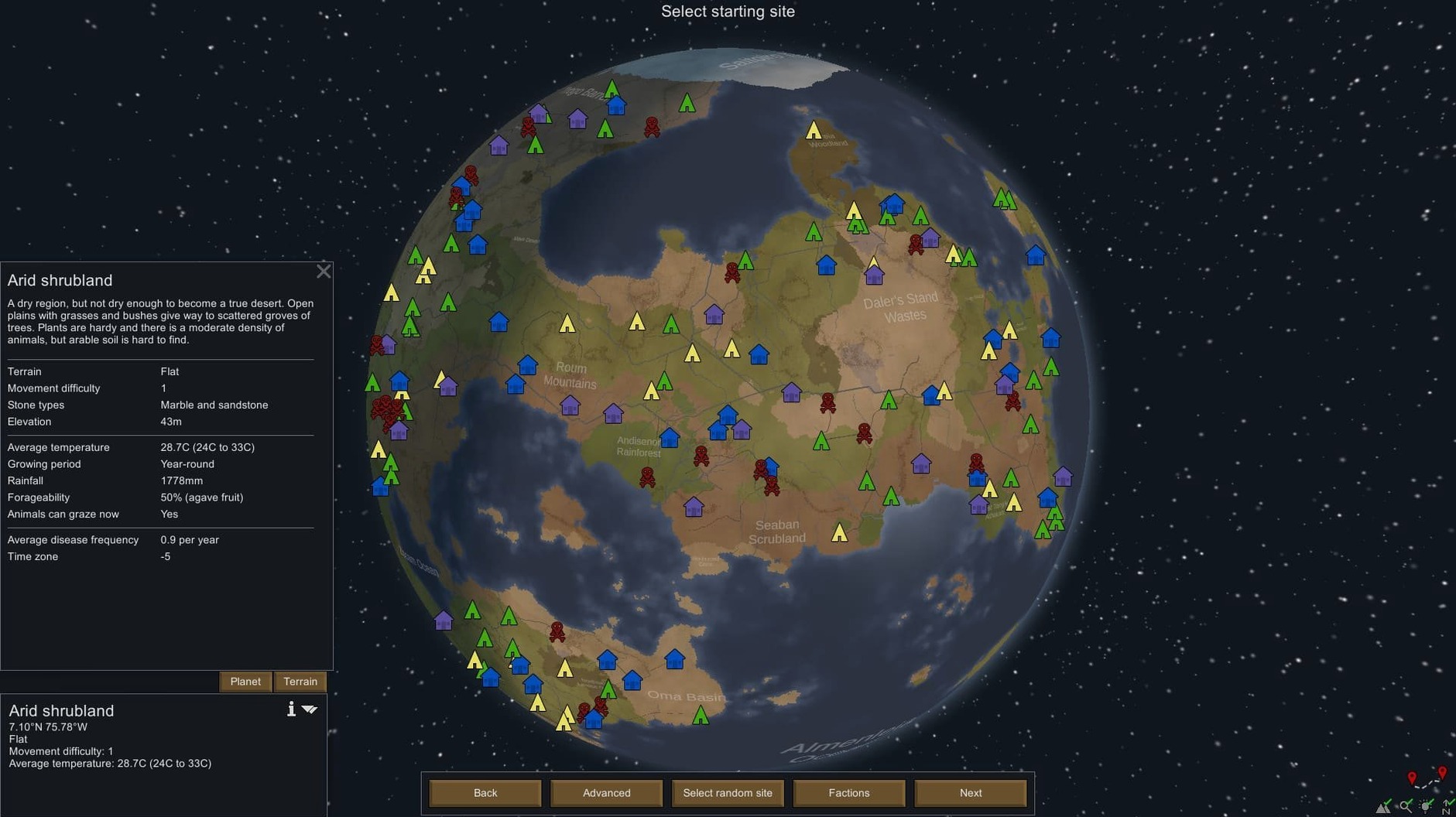
The game builds entire planets on request, offering a sweep of climates from equatorial desert to frozen tundra. You choose a landing site and the simulation hands you three survivors, each with a distinct past, a set of traits — neurotic, steadfast, psychically sensitive — and a skill chart that dictates who plants the rice and who researches geothermal power. Their backstories are fixed but their future is not; a pacifist medic can still be driven to a berserk rage by the death of a bonded terrier.
Storyteller AI: adapting the pressure
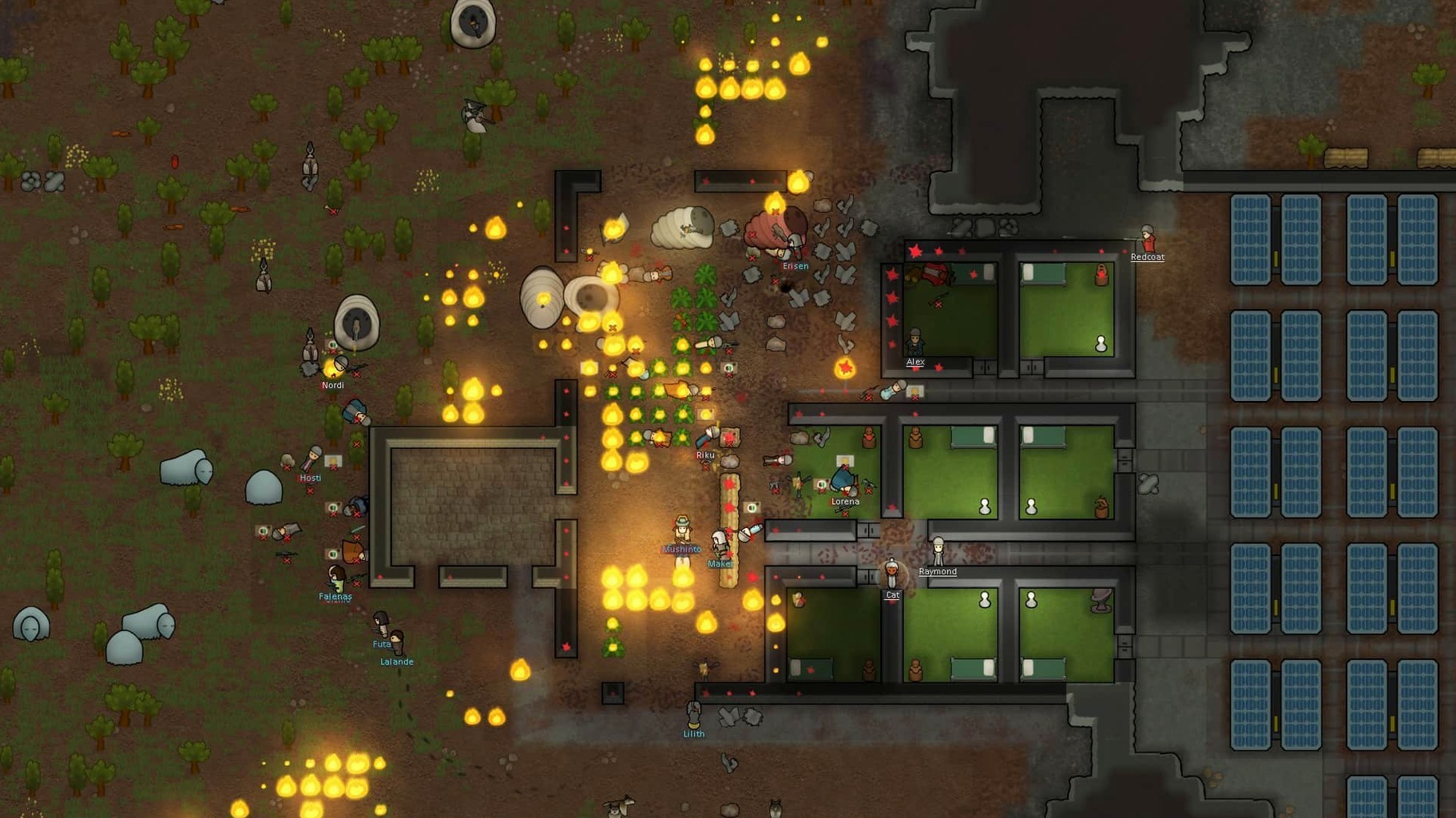
Beneath the base-building layer sits the real director: an AI storyteller tuned to a chosen narrative mode. On a peaceful setting it sends gentle challenges — a blight in the potato crop, a lone raider with a shoddy knife. Crank the difficulty and the algorithm escalates, seeding psychic drones, toxic fallout, and sieges that unfold while a colonist’s wedding party is still in progress. The system learns how you play and adjusts the tension, pulling the colony toward dramatic collapse or quiet prosperity without ever resorting to a fixed script.
What the 1.6 update changes in a typical session
The jump to version 1.6 tightened several systems that affect every playthrough. Bookcases and bookshelves now genuinely improve research speed when placed near a workbench, which makes the layout of a laboratory feel more intentional. Medical tending received a modest rebalance: infections are slightly less likely to become lethal overnight, but the quality of the hospital bed and the cleanliness of the room now matter more conspicuously, pushing players to scrub the tiles before surgery rather than trusting a sleeping spot on the dirt. Wall lamps arrived as a compact lighting option, freeing floor space in narrow corridors — a small change that reshapes early-game base planning more than one expects.
Threat scale: dial down early raids for breathing room
A few menu tweaks repay themselves within the first hour. In the gameplay options, the threat scale slider governs the raw size of raids and events independently of the storyteller difficulty; lowering it slightly creates breathing room for new colonists without neutering the drama entirely. The auto-pause on events toggle, buried in the interface tab, is worth switching on for every letter marked urgent — nothing ends a colony faster than missing a maddened muffalo alert while zoomed in on the freezer layout. Turning on a custom difficulty preset also unlocks an oft-overlooked percentage control for colonist instant kills, which can be dialled down to avoid a favourite builder dying to a single unlucky arrow.
Mac build: DRM-free and mod-ready from day one
A question that keeps reappearing is whether a rimworld for mac free download runs identically to the Windows version. The macOS build is feature-complete and ships without DRM; modulation support and the full workshop of community mods function as they do on other platforms. Another frequent query concerns performance on Apple Silicon: the game runs natively on ARM and handles colonies of twenty pawns smoothly on a recent Mac mini, with only the late-game animal herds pushing the frame rate. People also ask if the learning phase is punishing. The AI tutor introduces systems in layers — a raid is explained only after a stockpile has been taught, and the first winter arrives as a manageable problem rather than a silent colony wipe. For those searching for a rimworld download mac that respects a slower pace, the peaceful storyteller setting strips out major threats entirely, leaving only weather and mood to master.







Correspondence 0
Take a chair or join the table to send a letter.
No correspondence on this note yet. Letters are read before they appear.