 LeCoqRoti
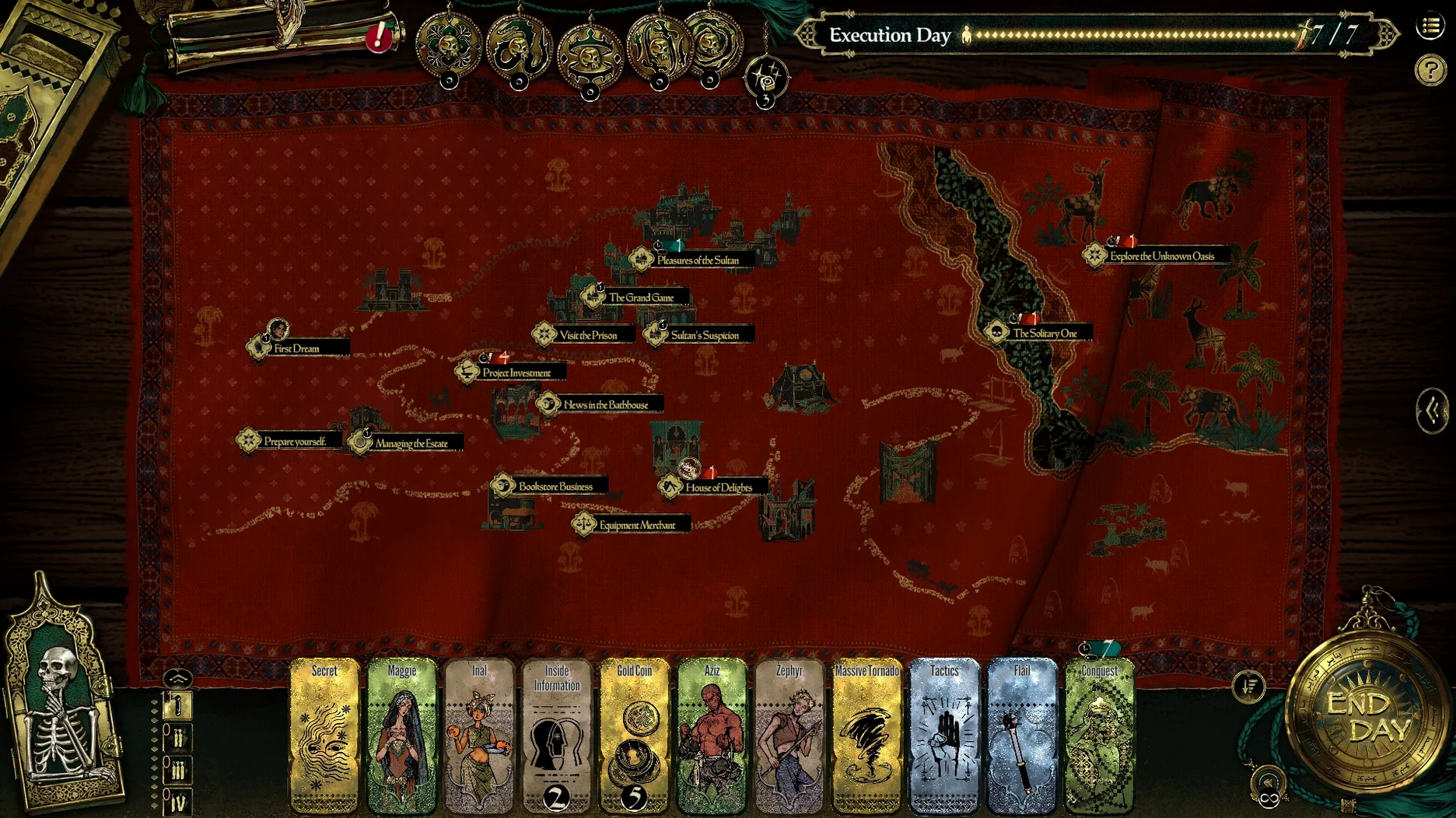
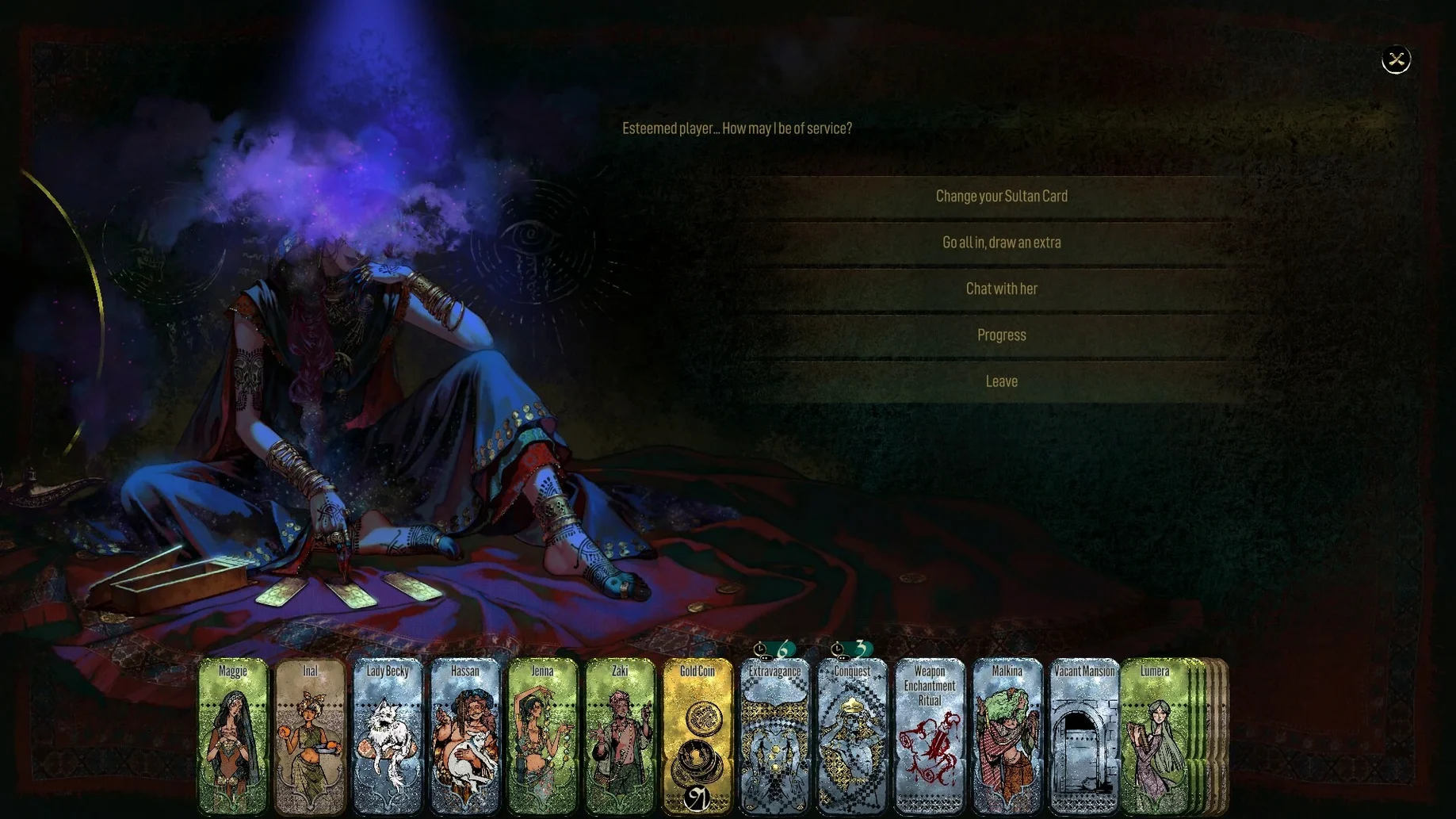
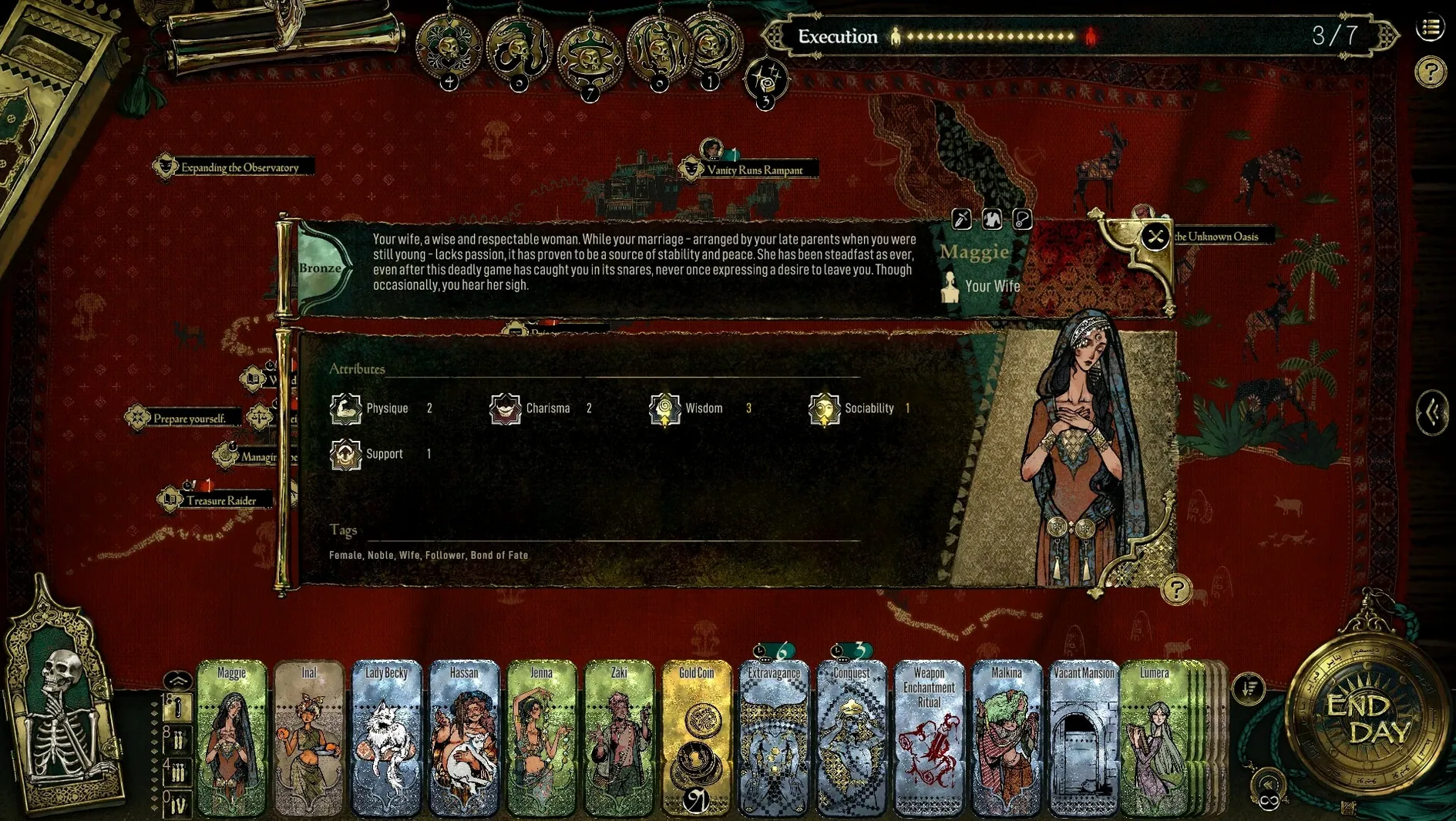
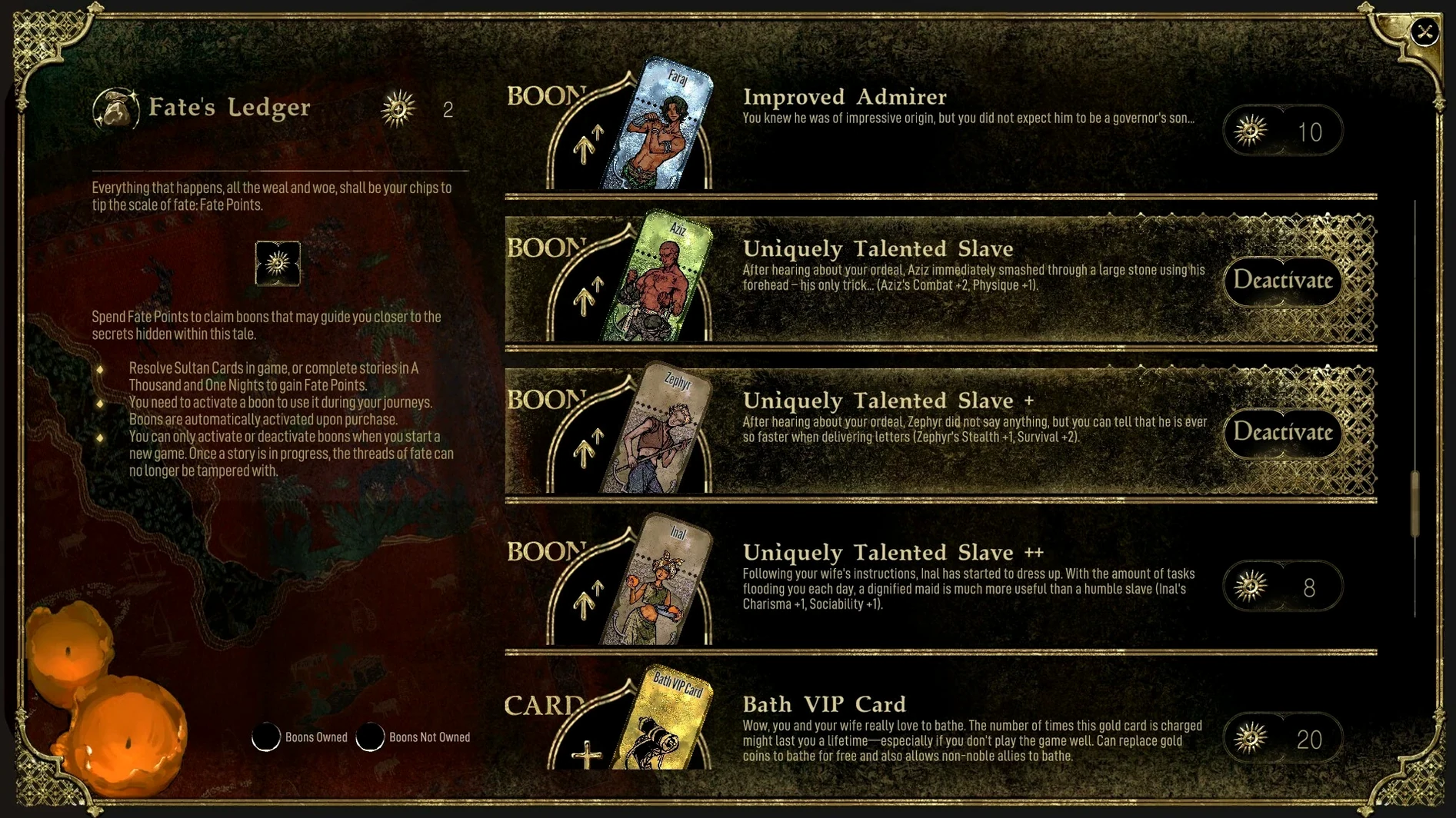
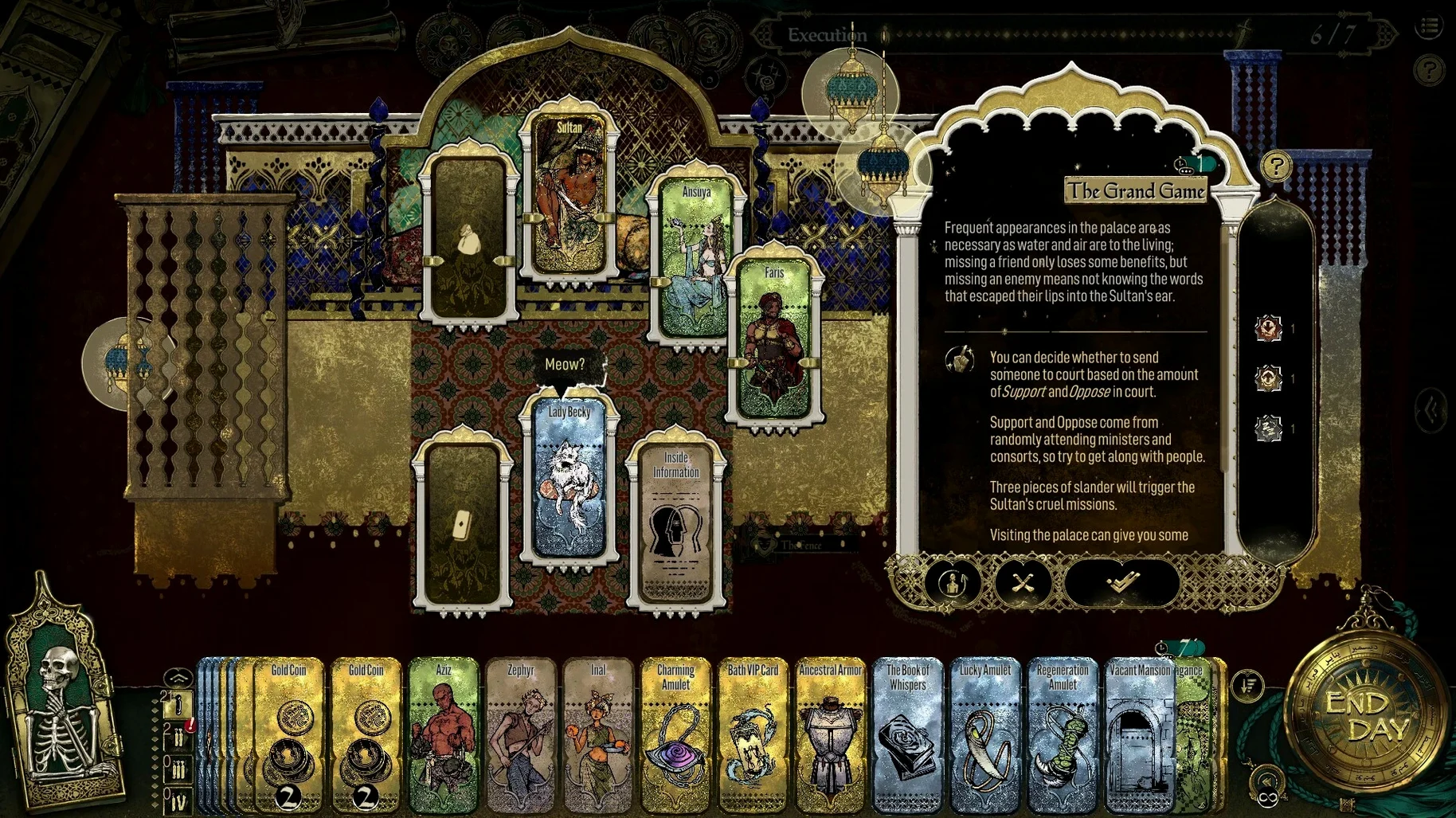
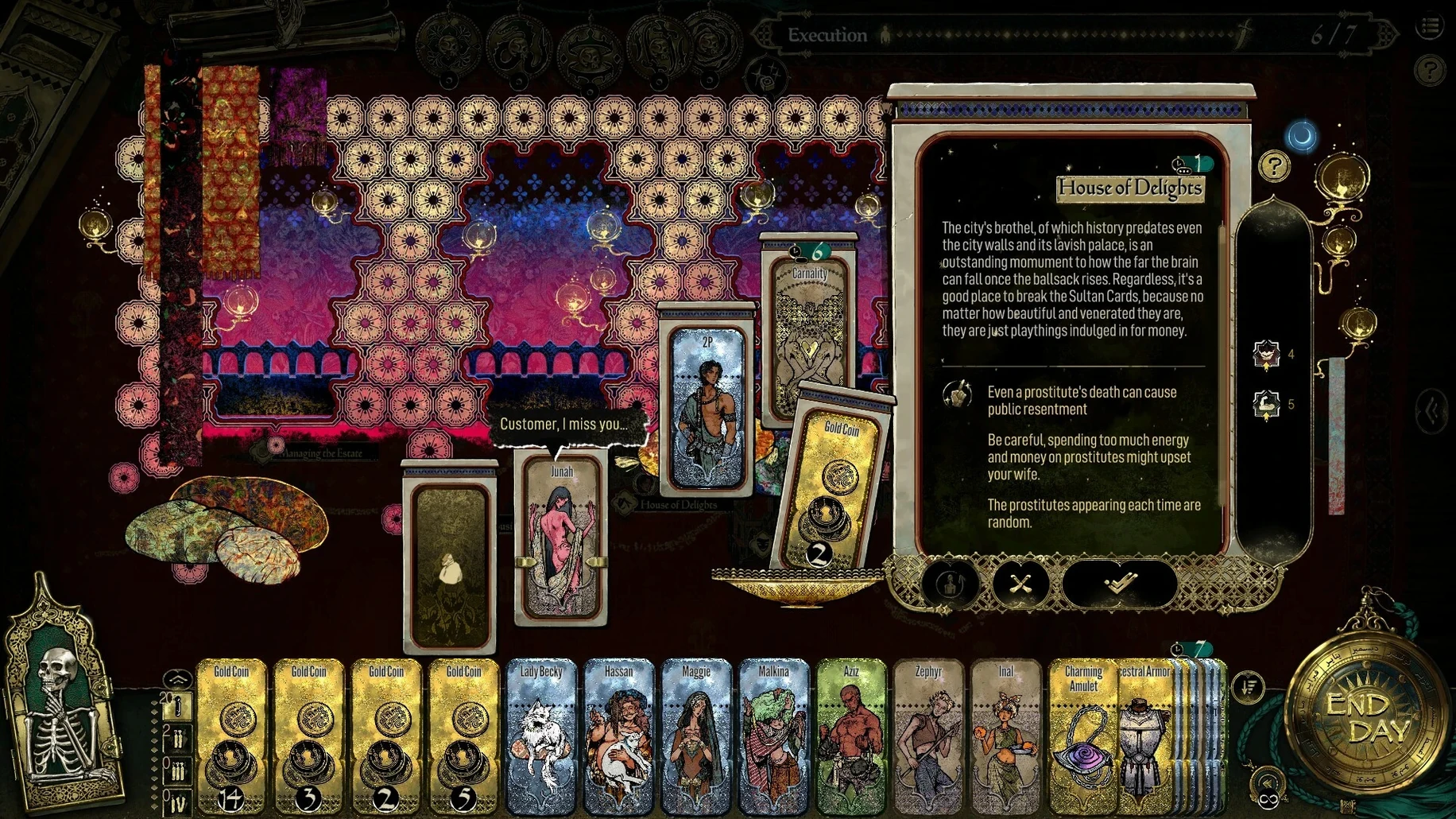
A player who enjoys weighing small, sharp decisions against an unforgiving clock will find a natural home here. You are a vizier in a court where the Sultan's mood is a shuffled deck, and every card you draw is a task that must be resolved within a single week. The pressure is not theatrical; it is structural.
- Answer the draw: each run shuffles the Sultan's deck into a random order. Cards belong to one of four types — Flesh, Luxury, Conquest, Blood — and define the crisis or opportunity that now occupies your days.
- Spend your week: a drawn card gives you seven turns. You allocate time, gold, and influence across a branching set of choices, knowing that delay is rarely free.
- Manage a fragile ledger: resources are tight and every action pulls on them. Gold funds your moves; political capital opens doors or closes threats.
- Court the court: NPCs offer quest lines that can turn rivals into allies. Completing these builds your faction, tilting the balance of power in a room where loyalty is a currency.
- Face the Sultan: the deck order changes every run. A strategy that worked once may fail the next time, because the sequence of demands is never quite the same.
The interface stays out of the way: text-led, card-forward, with four language options including English and Japanese. It ran cleanly on an M1 Mac under macOS Sequoia. In short, the game asks you to read a room, spend a week, and hope the next card is kinder.
A session: dusk in the palace
You open the game on a Thursday evening, intending to play for an hour. The Sultan draws first — a Conquest card, demanding a show of military strength. You have little gold and fewer soldiers. The seven-day counter appears and the weight settles in.
Day one: you assign an action card to the Spymaster, trading influence for information about a provincial rebellion. Day two: the Treasurer’s action card converts a modest gem reserve into coin, enough to hire mercenaries. By day four you face a choice — crush the rebellion outright and risk the Sultan’s suspicion that you are becoming too capable, or negotiate and appear weak. You negotiate. The card resolves with a narrow success, and the Sultan’s displeasure meter ticks upward by a single notch. You exhale.
The second draw is Blood. The court physician is implicated in a poisoning. You spend the next seven turns interrogating servants, reading letters, and ultimately sacrificing a valuable ally to protect a more useful one. The story branches feel less like a tree and more like a tightening knot. When you finally close the game, two hours have passed and the Sultan’s deck still holds cards you have not seen.
Before the Luxury card hits: securing the Merchant Guild step by step
Suppose a player wants to secure the Merchant Guild as a permanent ally. The goal is to complete three interlinked NPC quests before the Sultan draws a Luxury card that could bankrupt the guild and close the path.
Phase one — intelligence: assign action cards to the Spy network for two turns. You learn which nobles hold debts with the guild and which courtesan has the Guildmaster’s ear.
Phase two — leverage: spend gold to buy a minor noble’s debt. Use the resulting favour to gain an audience with the Guildmaster. The dialogue system offers three approaches; the humble one costs political capital but preserves the relationship for later.
Phase three — the ask: complete a fetch task for the courtesan, which unlocks the final quest. You donate a rare Luxury resource to the guild’s festival, sealing the alliance. The guild now provides a steady trickle of gold each week and a new action card appears in your hand.
The entire chain took fourteen in-game days and left you vulnerable to a Blood card that arrived on day ten. That trade-off — progress on one front, exposure on another — is the game’s quiet engine.
Roguelike patience meets literary dialogue: the player who thrives here
The game suits a particular cast of mind. Strategy players who enjoy Slay the Spire’s deck manipulation but want something slower and more literary will take to it. Narrative RPG players who read every dialogue box and keep mental notes on NPC relationships will find the court intrigue rewarding, because the writing assumes attention rather than demanding it.
Mac users with an M1 or Intel machine benefit from a build that runs without translation layers or workarounds. Those who prefer turn-based pacing — where a decision can be set aside and returned to — will appreciate the week structure, which functions as a natural save point. Players seeking a complete sultans game mac full version that does not phone home for activation also find what they need here.
It is less suited to someone who wants real-time combat or a power fantasy. The Sultan remains in charge, and the best outcome is often survival with your reputation slightly bruised. That is the design, not a flaw.








Correspondence 0
Take a chair or join the table to send a letter.
No correspondence on this note yet. Letters are read before they appear.