 LeCoqRoti
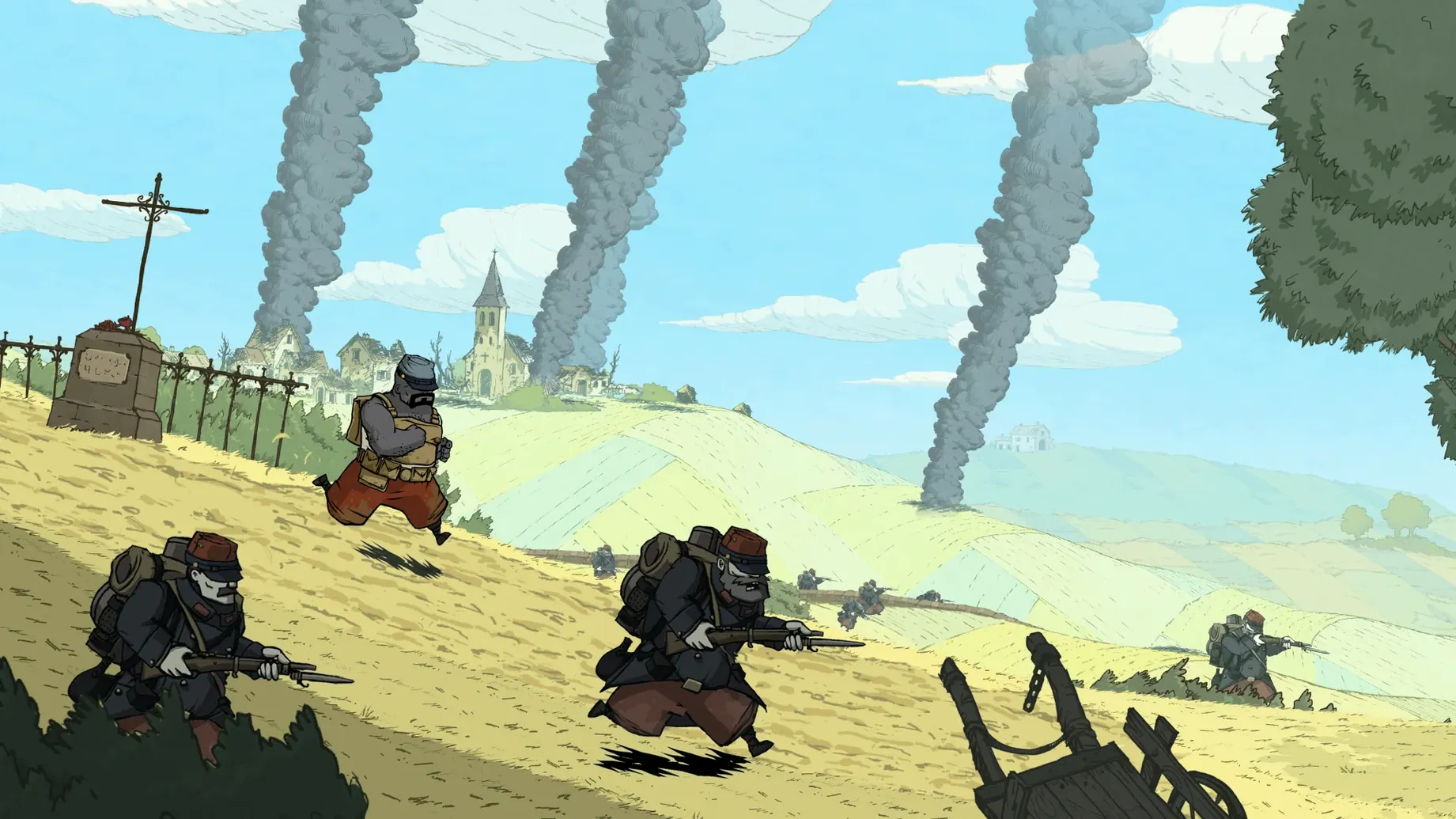
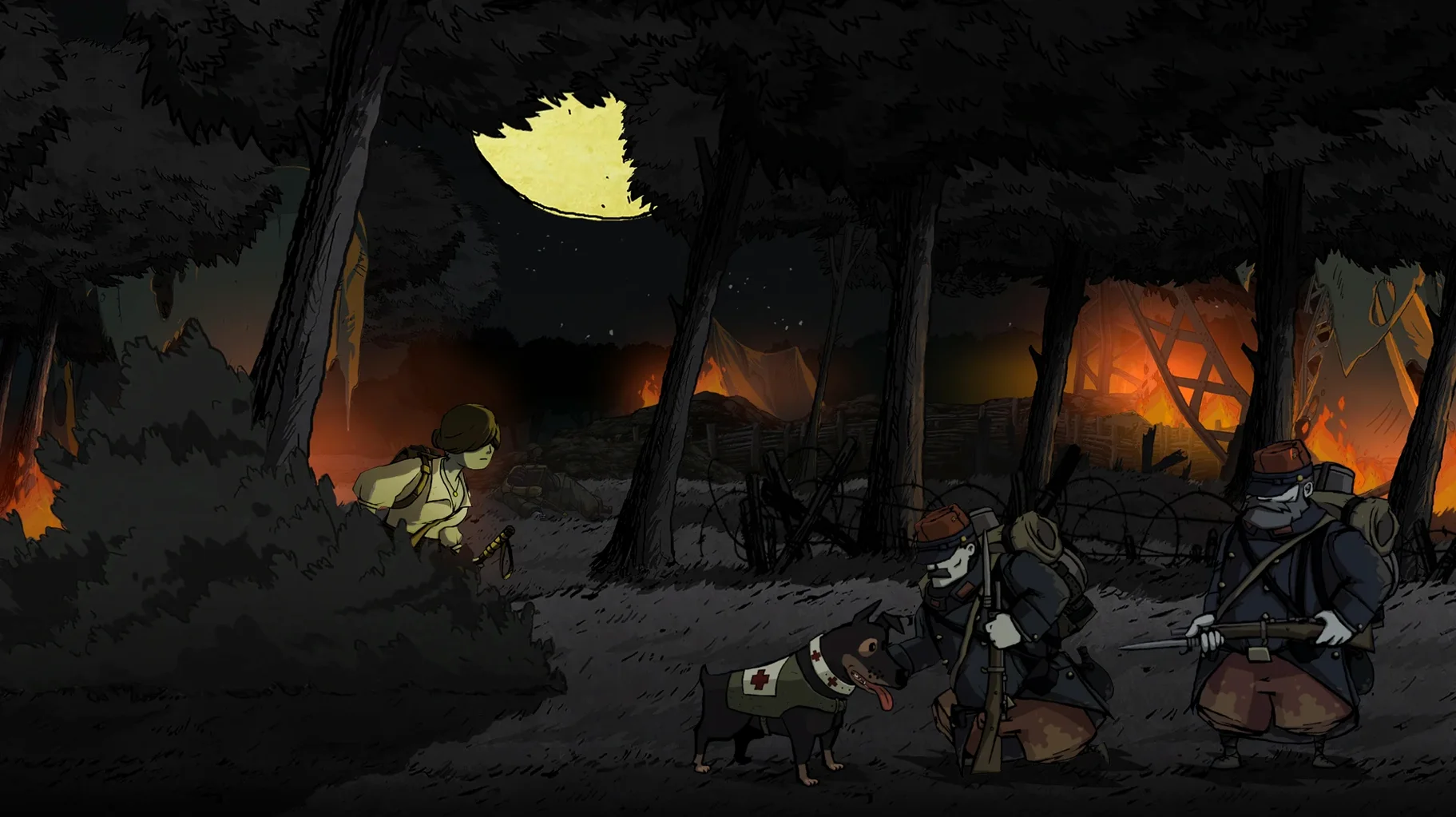
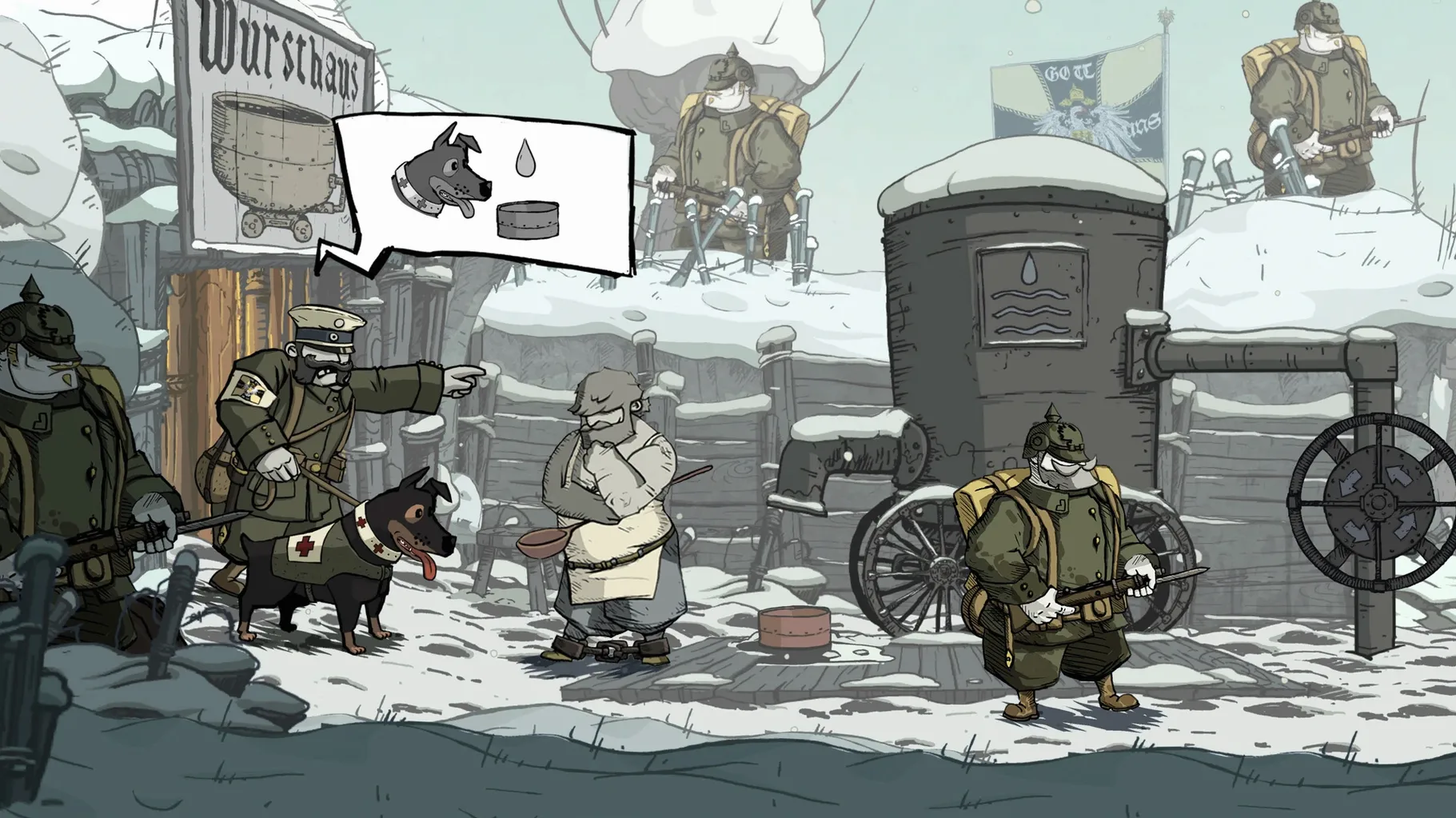
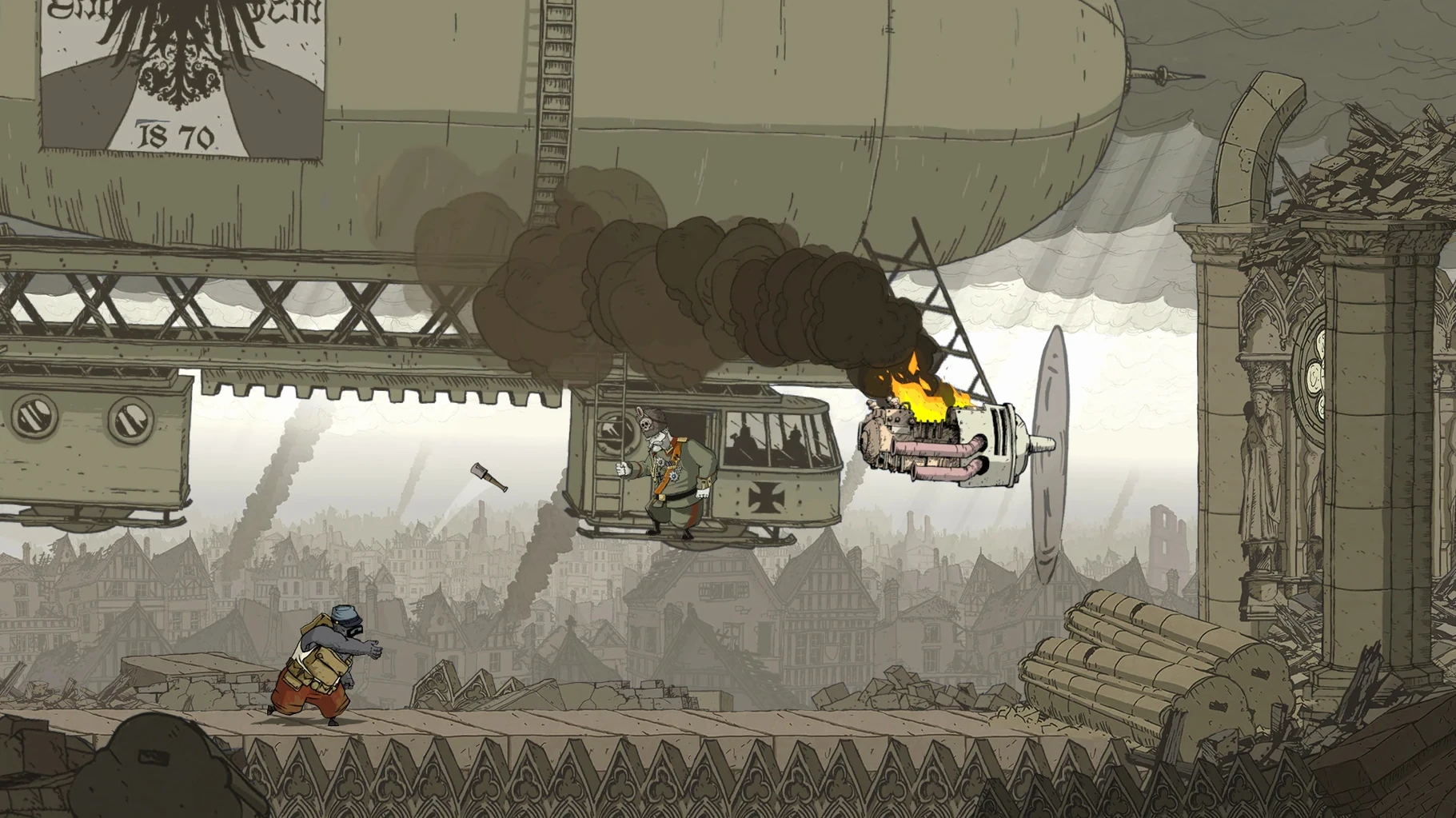
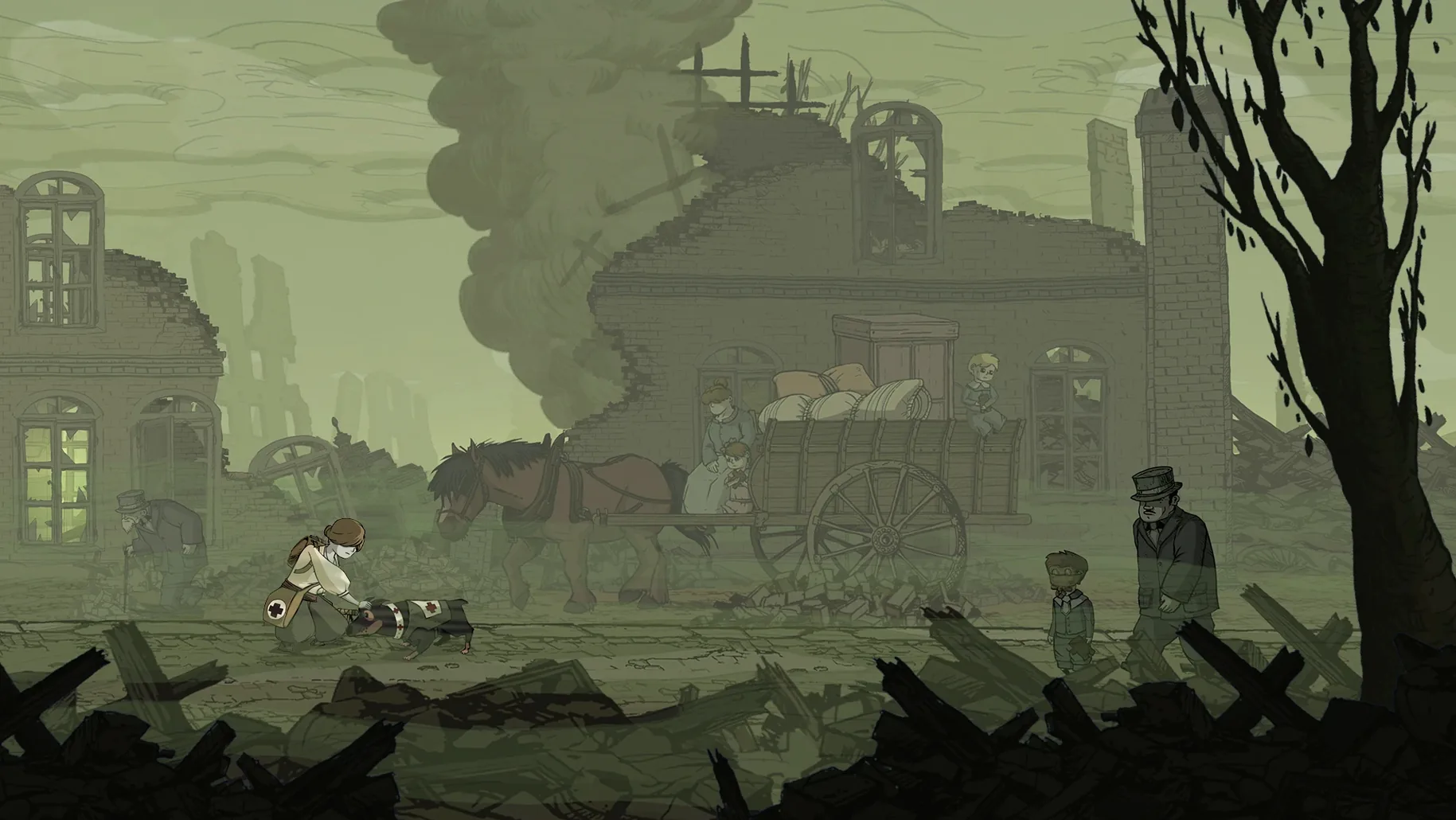
Valiant Hearts: The Great War is a 2D puzzle adventure that traces the fates of four strangers drawn together by the First World War. Across painted backdrops of Reims, Monfaucon and the trenches, you switch between characters whose paths cross in unexpected ways, each driven by a dogged companion — a field dog who helps dig, fetch, and slip past danger.
Minute to minute, the game moves between three kinds of play. Most of the time you solve physical puzzles: shifting crates, cutting barbed wire, timing a dash through machine-gun fire, or using a character’s unique tool — an engineer’s shovel, a medic’s bandages — to open a blocked route. The second layer is stealth: creeping through enemy lines, reading patrol patterns, and hiding in the shadows when a searchlight sweeps past. The third is a series of brief, rhythm-driven sequences set to a classical score, where taps on the keyboard re-enact a barrage, a vehicle repair, or a frantic escape.
The puzzles never feel abstract: each one is rooted in the logic of a war-torn world. You might drain a flooded dugout by breaking a pipe, or distract a guard with a thrown bottle before crawling under barbed wire. The dog, loyal and ever-present, becomes the quiet centre of the story — pulling levers, squeezing through gaps, and staying close when the shelling starts.
Between the action, collectible diary entries and historical photographs add a documentary layer, grounding the fiction in real places and events. The story moves at a steady pace, never loud, always weighted by the cost of every small decision.
A mission walkthrough: crossing no-man’s land at the Somme
A late Somme chapter pairs Emile with the dog and Anna, the Belgian medic. The goal is simple on paper — reach the field hospital on the far side of a shelled village — but the sequence demands all three puzzle types in tight succession. Start by guiding the dog under a collapsed beam to retrieve a shovel from a dead sapper’s kit. With the shovel, Emile clears a buried lever; pulling it drains a flooded crater so Anna can cross. Switch to Anna, bandage a wounded soldier propped against a sandbag wall, then take the bottle he drops and toss it toward the ruined church to draw a patrolling soldier away from the path. The timing here is tight: wait for the searchlight to pass, count three seconds, then throw. Once the guard moves, Emile slips through the gap and signals the dog to pull the church door chain from inside. The final stretch is a rhythm sequence — a hurried field amputation under shellfire — that leaves Anna’s hands shaking and the screen quiet. No dialogue, just the dog pressing its head against her leg.
Small conveniences: gestures and cues that hide in plain sight
A few details repay close attention. A double-press of the crouch key makes Emile drop flat, useful when a sniper’s line of sight shifts faster than expected. The dog will bark softly when it detects a collectible item off-screen, a cue easy to miss if the volume is low. Holding the interact key over a puzzle element — a crank, a loose plank — often triggers a brief animation that hints at the correct tool or character. In any stealth section, your walking speed affects guard alertness: a slow creep past a dozing soldier buys an extra two seconds before he stirs. The inventory wheel can be opened mid-animation to queue a tool swap, a small efficiency that cuts a few frustrating retries from the timed sequences. Lastly, the background music in rhythm sections is not merely accompaniment: the downbeat always lands on the required input, so watching the conductor’s baton on screen is slower than trusting the ear.
In short: these quiet affordances turn what might feel like trial and error into a game that rewards patient observation, and the Somme crossing is a concentrated lesson in how its systems knit together under pressure.







Correspondence 0
Take a chair or join the table to send a letter.
No correspondence on this note yet. Letters are read before they appear.