 LeCoqRoti
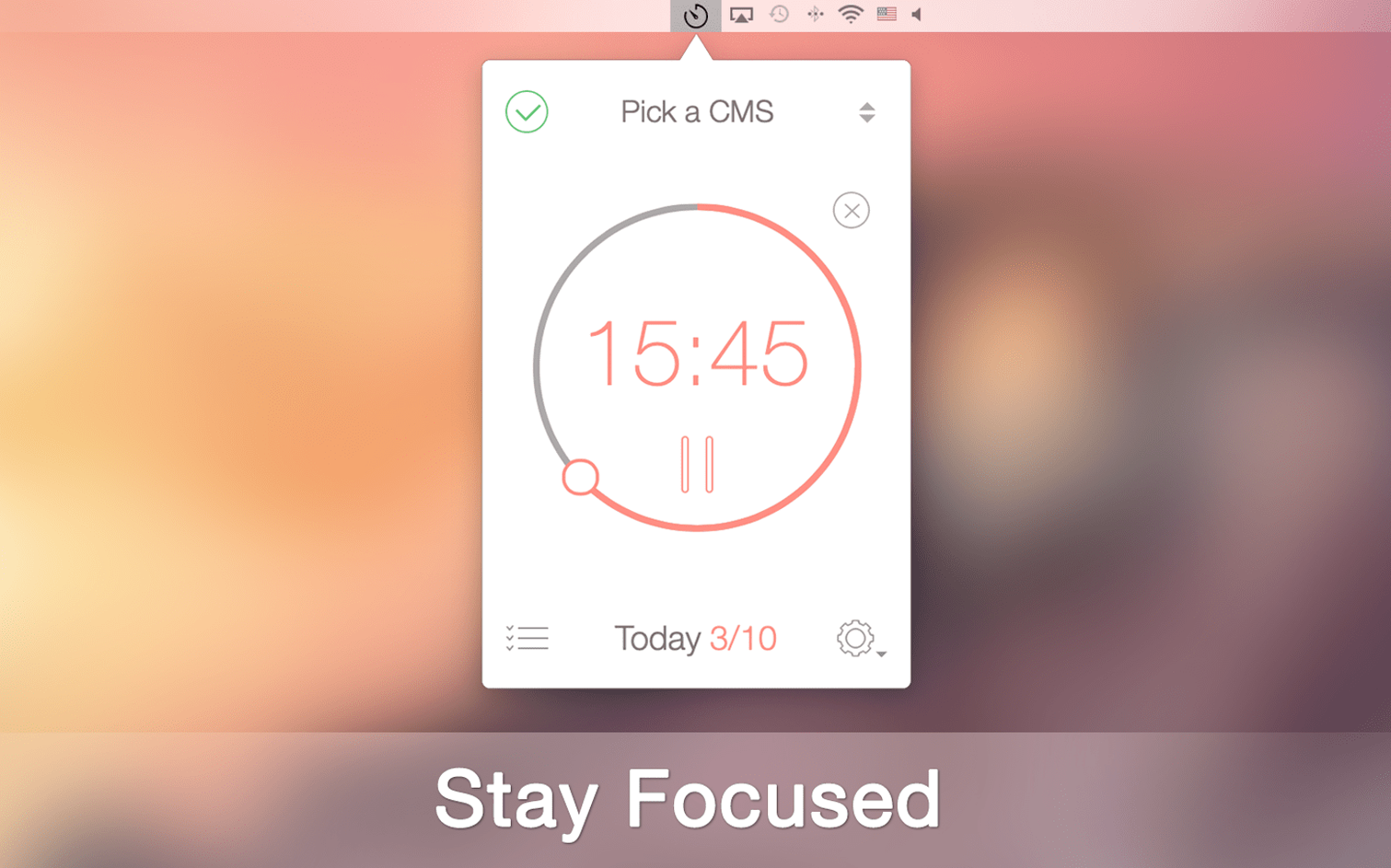
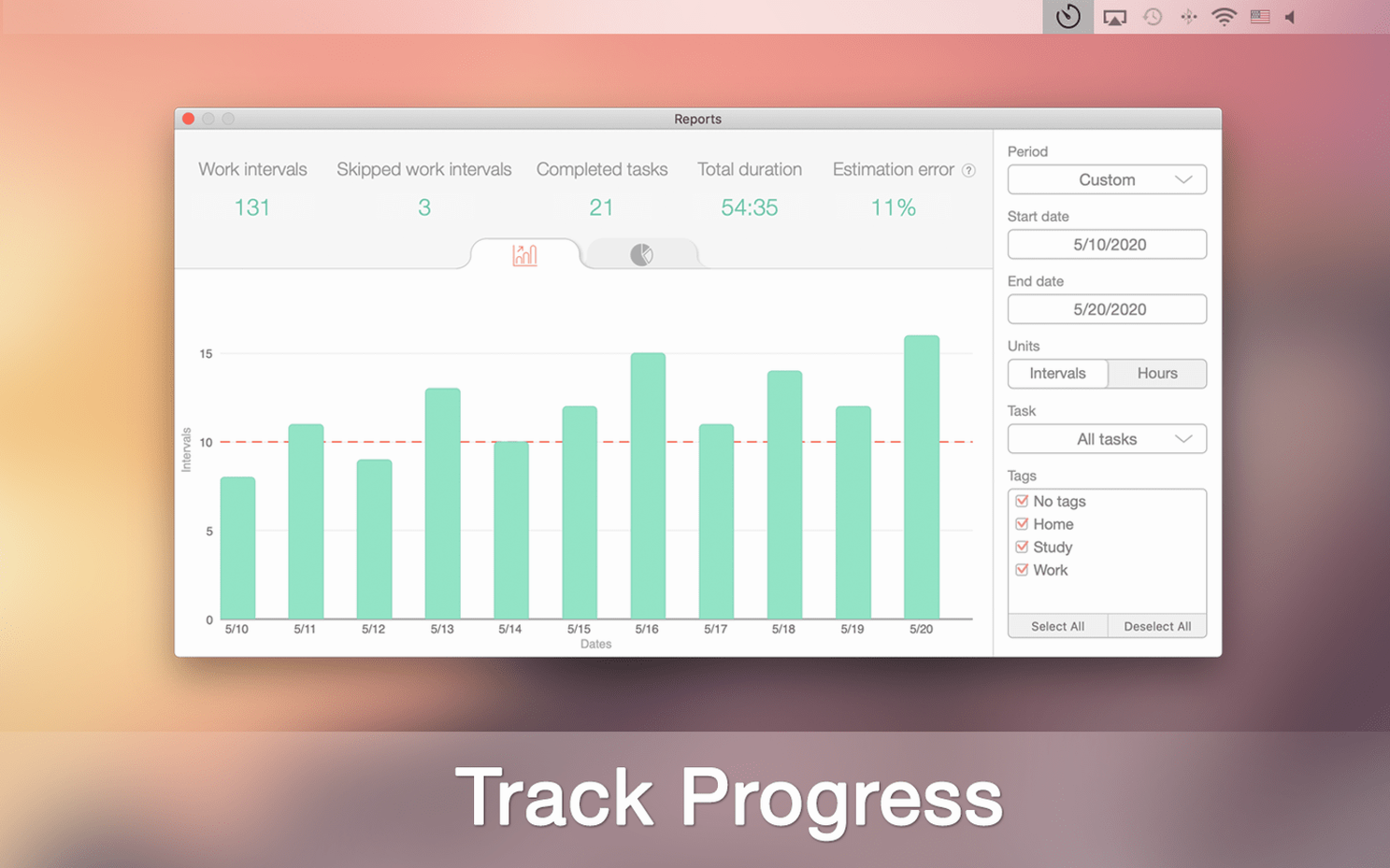
The timer defaults to a 25-minute work interval followed by a 5-minute break: the classic rhythm for anyone who finds attention slipping after a long stretch.
Work intervals — timed focus blocks that structure a task into manageable sprints.
Short breaks — the pause between intervals, just long enough to stand up or glance away.
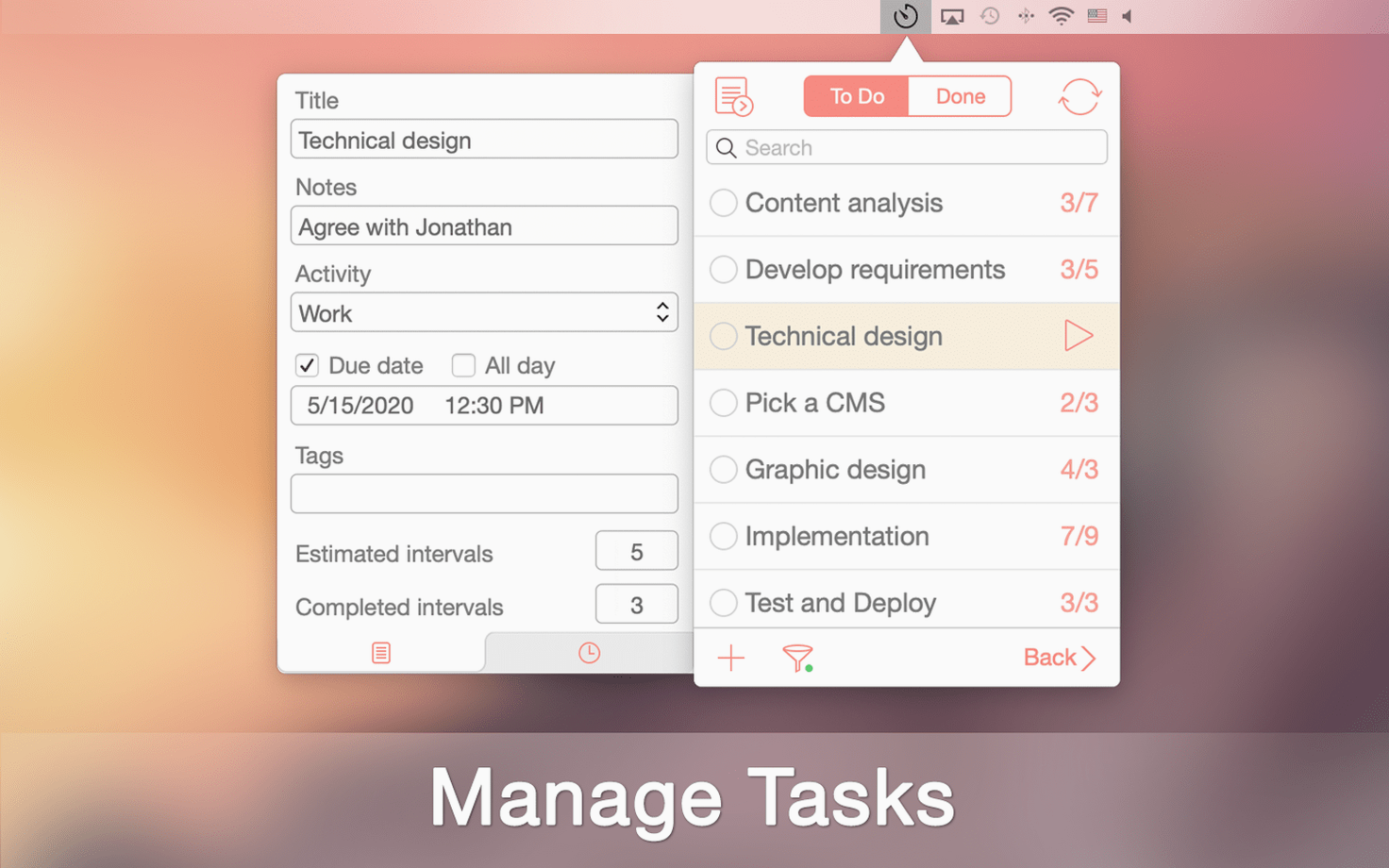
Task manager — a built-in list for creating and ordering tasks, so the timer always knows what you are working on next.
Goal tracking — progress measured by day, week, month, quarter, and year; useful for seeing whether today's effort is part of a larger pattern.
CSV export — a plain data file of completed work, for anyone who keeps their own records.
Focus Matrix — an optional companion app that sorts tasks by the urgent/important principle; Be Focused Pro integrates with it directly.
Opening the compact dashboard: timer and today's tasks in view
You open the app. The main window is compact, closer to a dashboard than a document. A timer sits at the top, and below it the task list shows what you planned for the day. You select the first task — revising a presentation deck — and press Start. The timer counts down from 25:00 in a clean, unadorned typeface. No animation, no encouragement. Just the numbers.
When the interval ends, a gentle notification appears. You stand up, refill water, glance out the window. Five minutes later, another chime calls you back. You press Start again. After three cycles, the app triggers a longer break. By midday you have logged four completed intervals against two tasks. The progress bar for the day sits at about half. That is the session: quiet, steady, unbroken by decisions about when to stop or start.
Beyond a kitchen timer: tasks, rhythm, and the four-interval cycle
Does it do more than a simple kitchen timer? It does. A kitchen timer beeps after 25 minutes but knows nothing of your tasks, your daily rhythm, or the four-interval cycle that earns a longer rest. Be Focused Pro ties each work block to a specific task in your list and tracks totals across weeks and months. That connection — timer to task — is the difference between one afternoon of focus and a visible record of several weeks of consistent work.
Will it interrupt me if I am in the middle of something? Only gently. The notification at the end of an interval is a quiet chime and a banner. If you are deep in a paragraph and need two more minutes, you can ignore it, pause the timer, or let the break start and return early. The app does not lock the screen or block applications. It suggests a rhythm; it does not enforce one.
Can I adjust the lengths? Yes. The default 25‑minute work and 5‑minute break are sensible starting points, but you can set any duration that suits your attention span. Some people work better in 50‑minute stretches with 10‑minute pauses. The settings panel lets you define the work interval, short break, long break, and how many intervals trigger the long break. These preferences apply globally, though you can always skip or extend a break during a session.
A workflow: clearing an inbox to zero
Email triage rarely benefits from an open-ended afternoon. Here is one way to approach it with Be Focused Pro.
First, create a task called Clear inbox to zero. Estimate how long it will take — perhaps three intervals for a backlog of forty messages. Set the task in the app. Then start the first interval and apply a single rule: every email gets either a quick reply, a deletion, or a move to a folder labelled Requires longer reply. No composing of three‑paragraph answers; that is for later. When the timer ends, you stop mid-message if necessary. The break is a genuine break — you close the mail window.
During the second interval, you process the next batch. The rhythm by now feels familiar. By the third interval, the inbox count drops to single digits. You finish with one minute to spare, mark the task complete in Be Focused Pro, and glance at the day’s progress bar. The app has recorded three intervals against the task, and the CSV export will carry those entries if you want to review the week’s patterns later. The Requires longer reply folder becomes a separate task for tomorrow, with its own estimated intervals. What began as a vague, slightly anxious intention turned into a measured series of sprints with a clear finish line.
An iPhone and iPad version syncs with the Mac, so a session started at the desk can continue when you move.




Correspondence 0
Take a chair or join the table to send a letter.
No correspondence on this note yet. Letters are read before they appear.