 LeCoqRoti

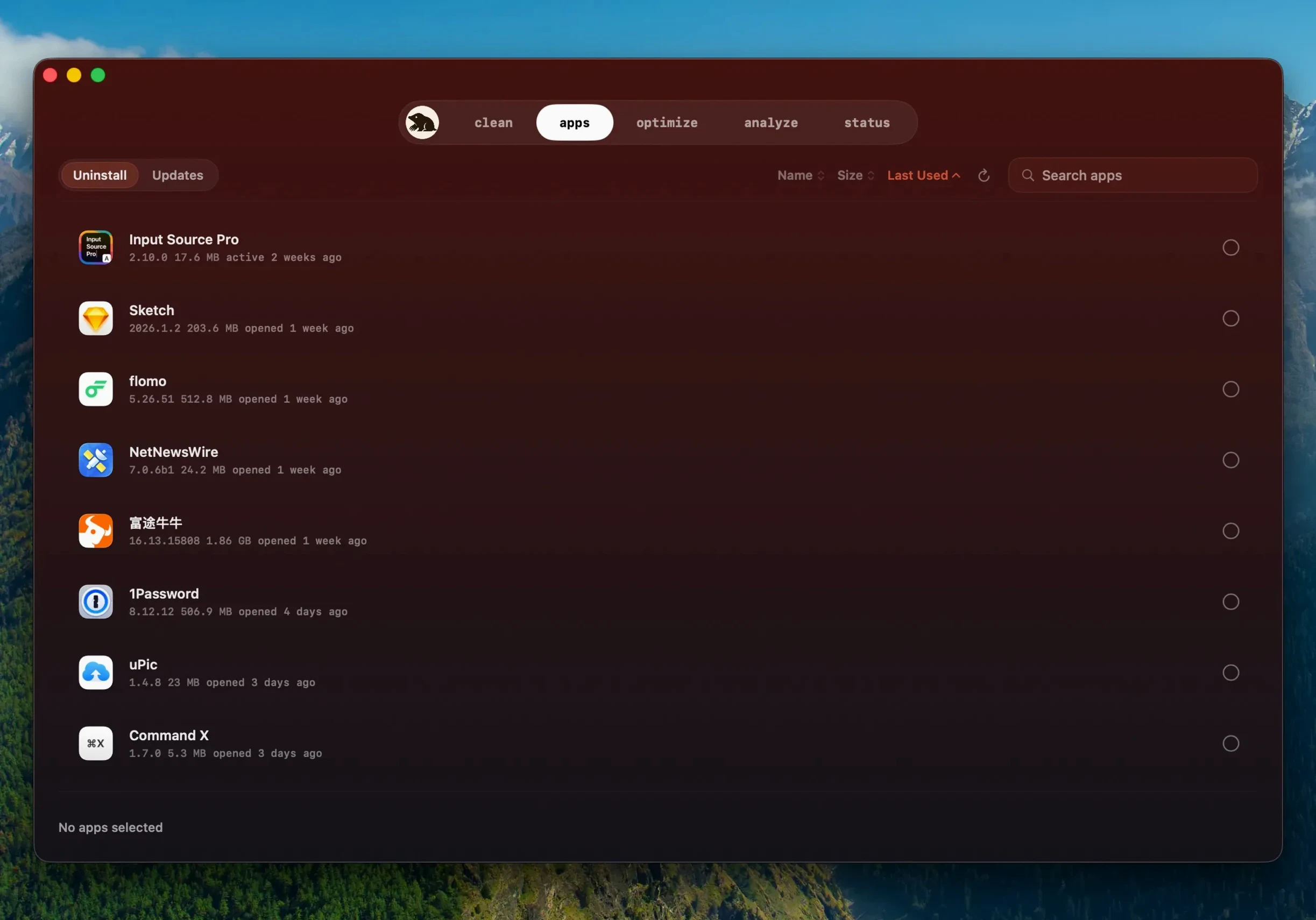

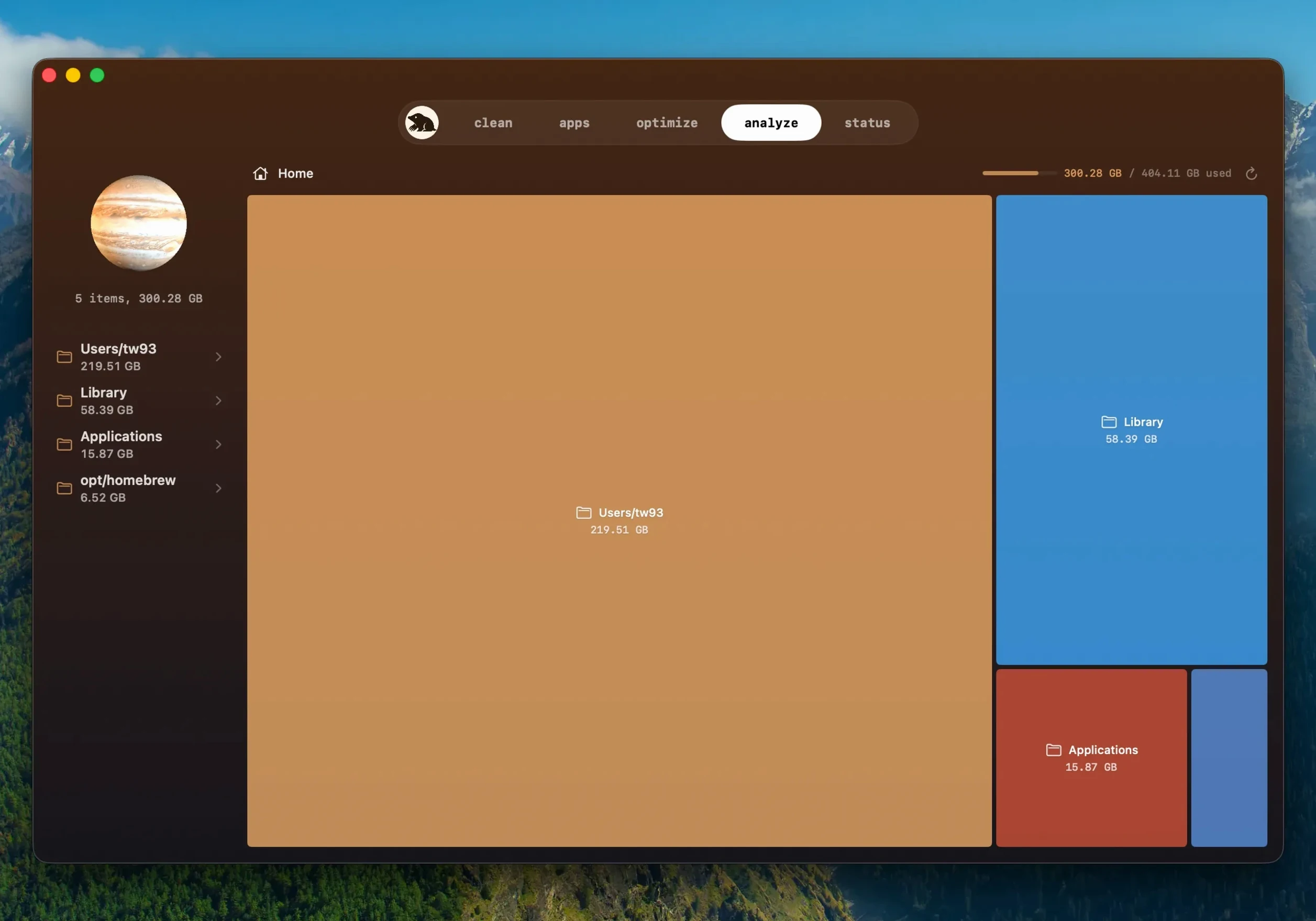
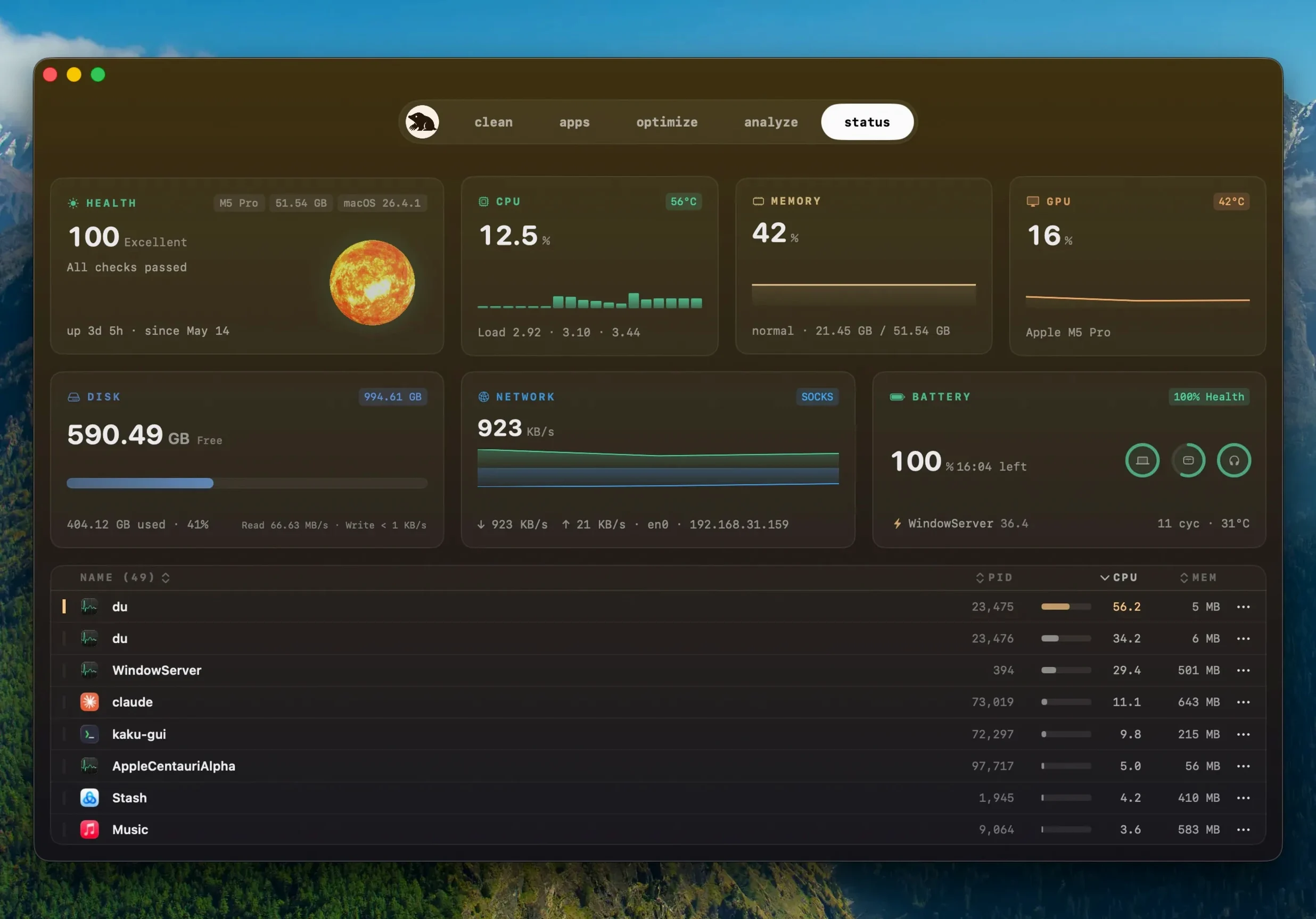
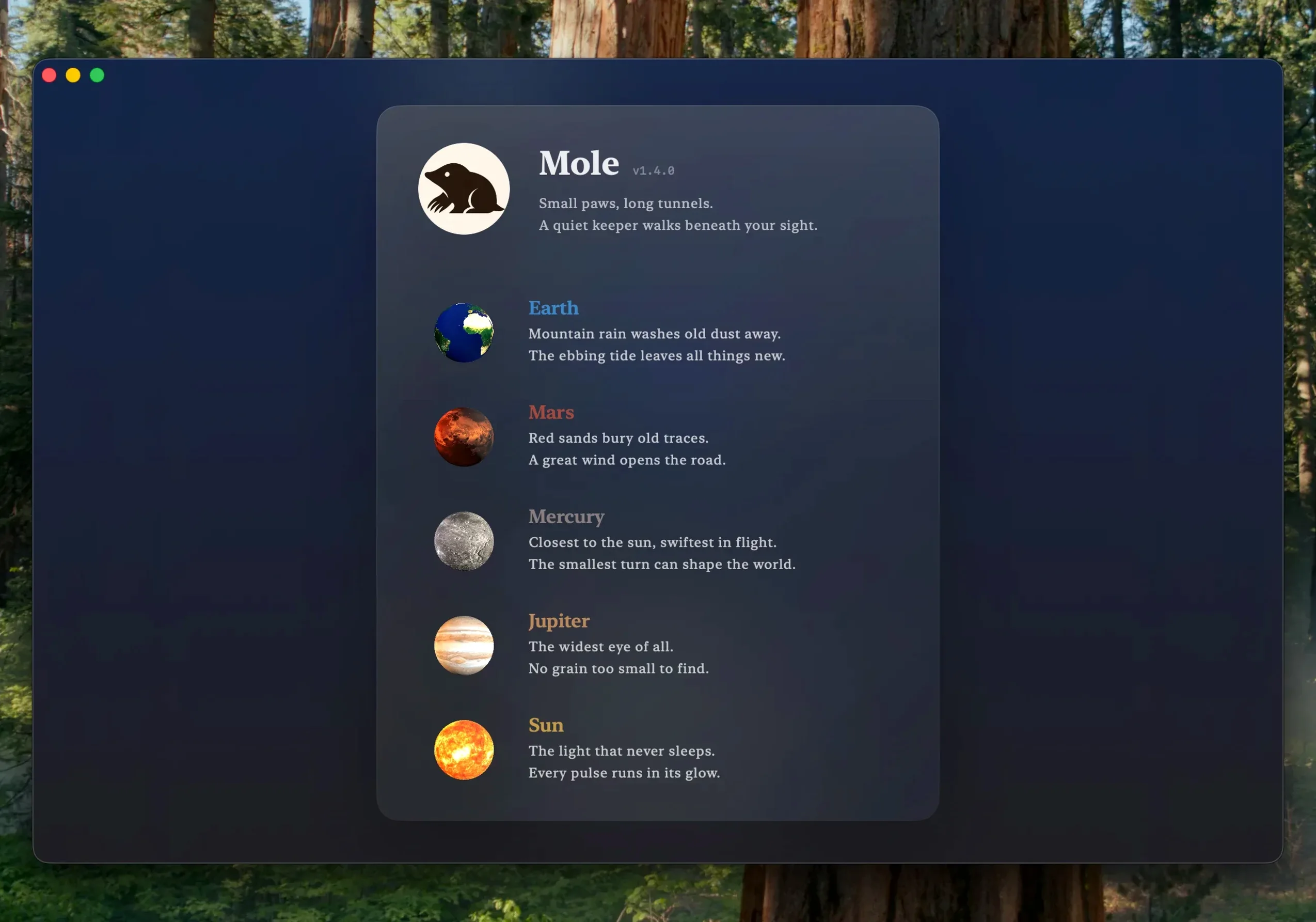
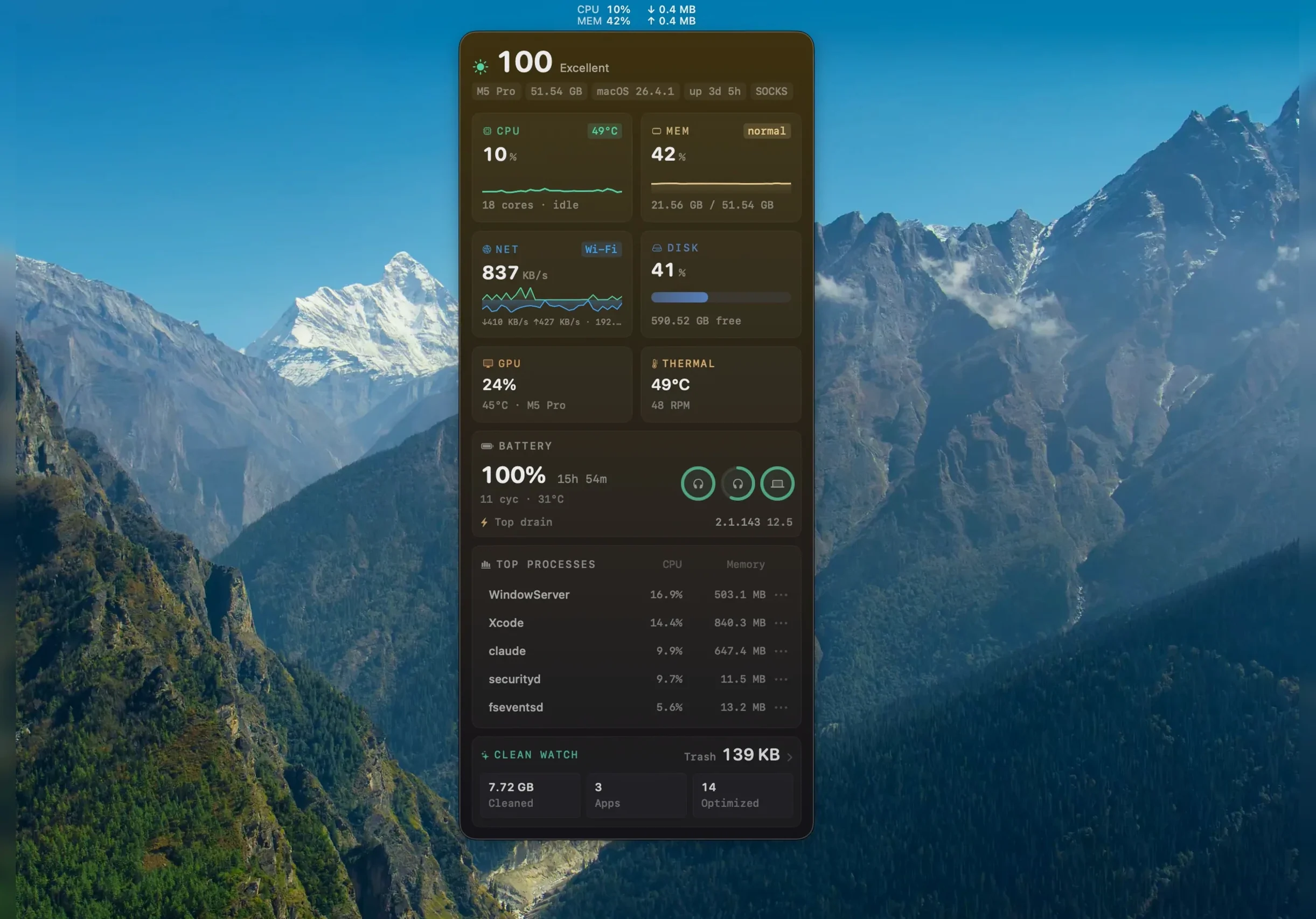
You open Mole after a week of heavy use, and the dashboard gives you an immediate read on what is consuming resources: a memory figure that has crept up, a CPU core sitting warmer than expected, a handful of launch agents you forgot were there. The scan is thorough when you grant it full disk access, yet nothing happens without a deliberate confirm step. That restraint has always defined the tool, and version 1.14.0 refines it further without disturbing the quiet, graphic-led interface that fits naturally into a designer’s dock.
- Software updates for apps downloaded outside the App Store now run inside Mole; the app reuses a finished download instead of fetching it again when an update cannot proceed.
- A newer build of the same version is detected, so you are not left wondering whether a silent refresh fixed something important.
- Before quitting a running app to install its update, Mole asks; after installation, it reopens the app for you.
- Real-time sensors continue to show CPU, memory, GPU, disk, network, battery charge and temperature in a single calm panel.
- Startup items lingering in the Dock can be removed with a single action, always after confirmation.
- The interface speaks nine languages, including French, Japanese and Simplified Chinese, keeping the tool accessible across the studio.
The download is a separate Mac app, distinct from the CLI project, and it stays close to the metal: no accounts, no background daemons you did not ask for. In a category that often rewards noise, Mole remains a tool that asks permission and then gets out of the way.
Calming the menu bar: users who dislike unexplained disk activity
Mole suits a particular temperament. The user who glances at the menu bar and feels a quiet irritation at unexplained disk activity will find it calming. So will the designer who collects large asset libraries and wants to know, precisely, which project folder has swollen overnight. Developers who juggle Docker containers, node modules and Xcode caches appreciate the tree map view because it makes the invisible visible without a terminal command. And anyone who has inherited a Mac from a previous user—or from a past self who installed too many utilities—will reach for the leftover removal first. The tool does not lecture; it presents facts and waits for a decision. That small politeness makes it especially welcome on machines shared between work and personal accounts, where a rushed cleanup could do real damage.
Second-screen vigil: watching disk temperature after a long export
A typical session begins with the system status panel open on a second display. CPU load sits at twelve per cent, memory pressure in the green, but the disk temperature nudges above forty degrees after a long video export. You switch to the cleanup tab and run a standard scan. Mole lists caches from Adobe apps, browser temp files, and a handful of logs from a screen recorder you uninstalled months ago. Each entry shows its size. You uncheck the browser cache—you will need those sessions later—and confirm the rest. The cleanup finishes in under ten seconds.
Next, you open the disk analysis view. The tree map reveals that an old Final Cut library, one you archived but never actually moved to external storage, occupies eighty-three gigabytes. You drag it to the external drive yourself rather than letting any tool touch a project file; Mole simply showed you where the weight was. Finally, you check startup items and remove a Dock helper that a chat app installed without asking. The whole routine takes four minutes, and the machine feels lighter afterwards, though you suspect part of that lightness is psychological. Knowing is half the quiet.
Early missteps: what to watch for
New users sometimes grant full disk access and then scan with a kind of abandon, treating every found item as clutter. A cache is not waste by default; it exists to speed up an application the user actively runs. Deleting every cache indiscriminately trades a few gigabytes of free space for slower launch times and repeated downloads. The better approach is to read the paths Mole shows: a cache inside ~/Library/Caches/com.adobe.Photoshop is doing real work, while one from an app removed six months ago is fair game.
Another common mistake is treating the tree map as a to-do list rather than a map. A large node_modules directory looks alarming, but deleting it by hand breaks the project it belongs to. Mole shows the size; the user should understand the context before acting. The tool also skips suspicious items when it lacks certainty, and overriding that caution without investigation—especially on system paths—can create problems that are harder to trace than the original clutter. In short: let the confirmation step mean something. If you are unsure about an item, leave it unchecked and research it later. Mole will still be there.








Correspondence 0
Take a chair or join the table to send a letter.
No correspondence on this note yet. Letters are read before they appear.