 LeCoqRoti
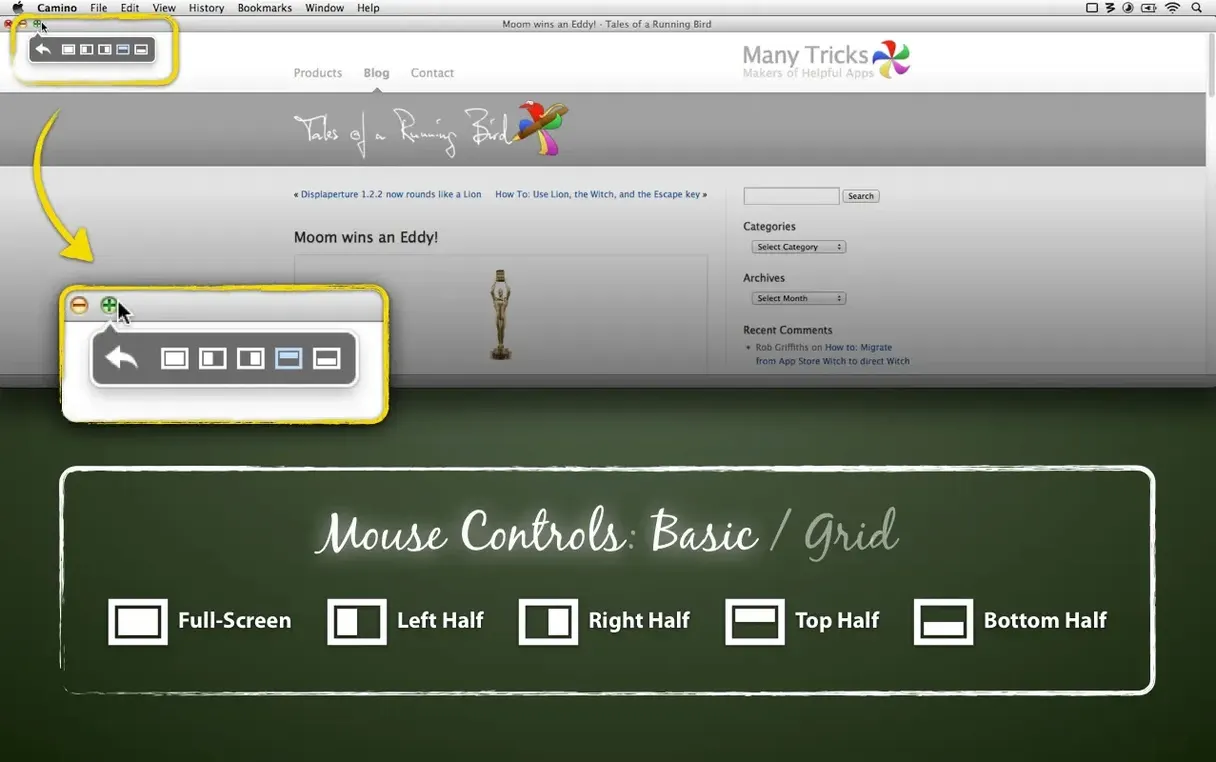
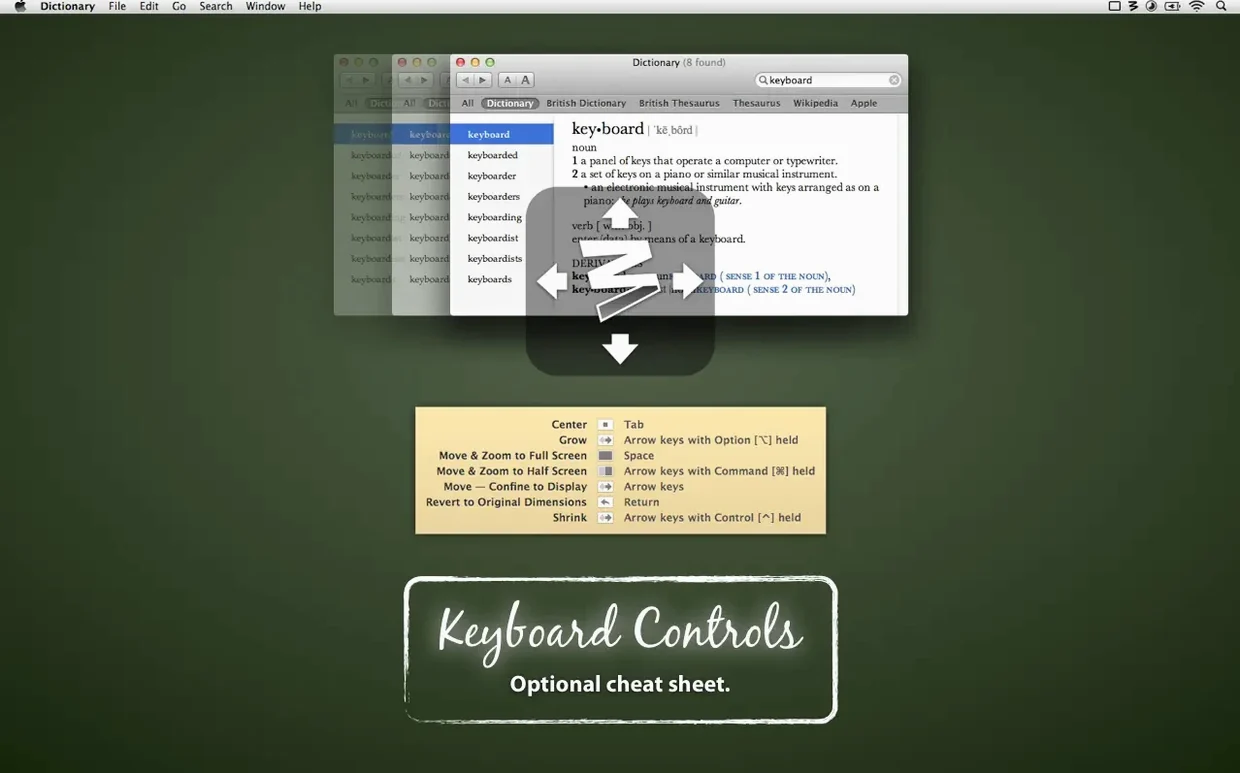
Where Mission Control deals in spaces, Moom deals in rectangles: the exact position and dimensions of every open window. It has been a quiet constant in the Many Tricks catalogue for years, a set of precise controls grafted onto the familiar red, yellow and green traffic-light buttons.
What version 4.6 quietly improved
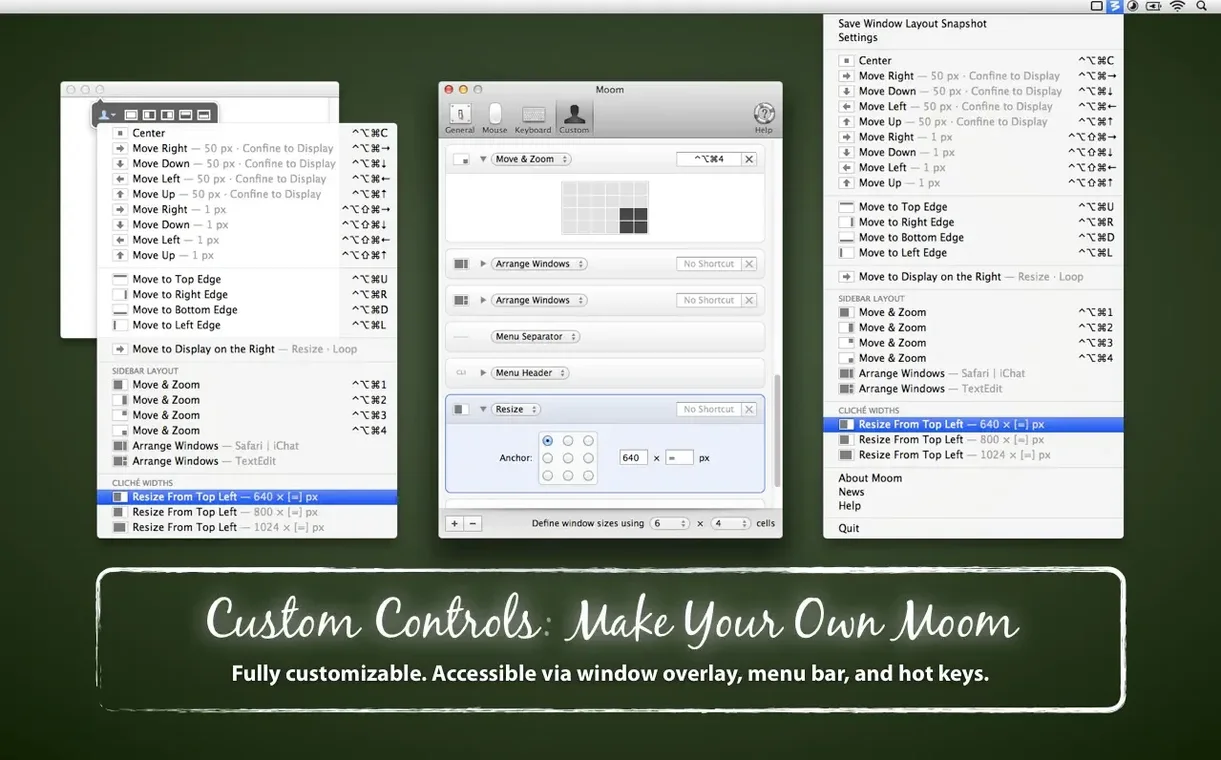
The core behaviour is unchanged: Moom still moves, zooms and resizes windows through a grid overlay, edge-snapping and a keyboard-accessible palette. What this update addresses is the reliability of saved layouts. Window layouts can now be assigned by proximity alone, or by proximity among the expected number of frontmost windows — a small shift that makes preset arrangements feel less rigid. A long-standing macOS oddity, where hidden applications would refuse to land in their designated positions within a layout, has been worked around. Layouts restricted to the active display also skip minimised and hidden apps, so recalling a setup no longer drags ghosts back into view.
What remains the same
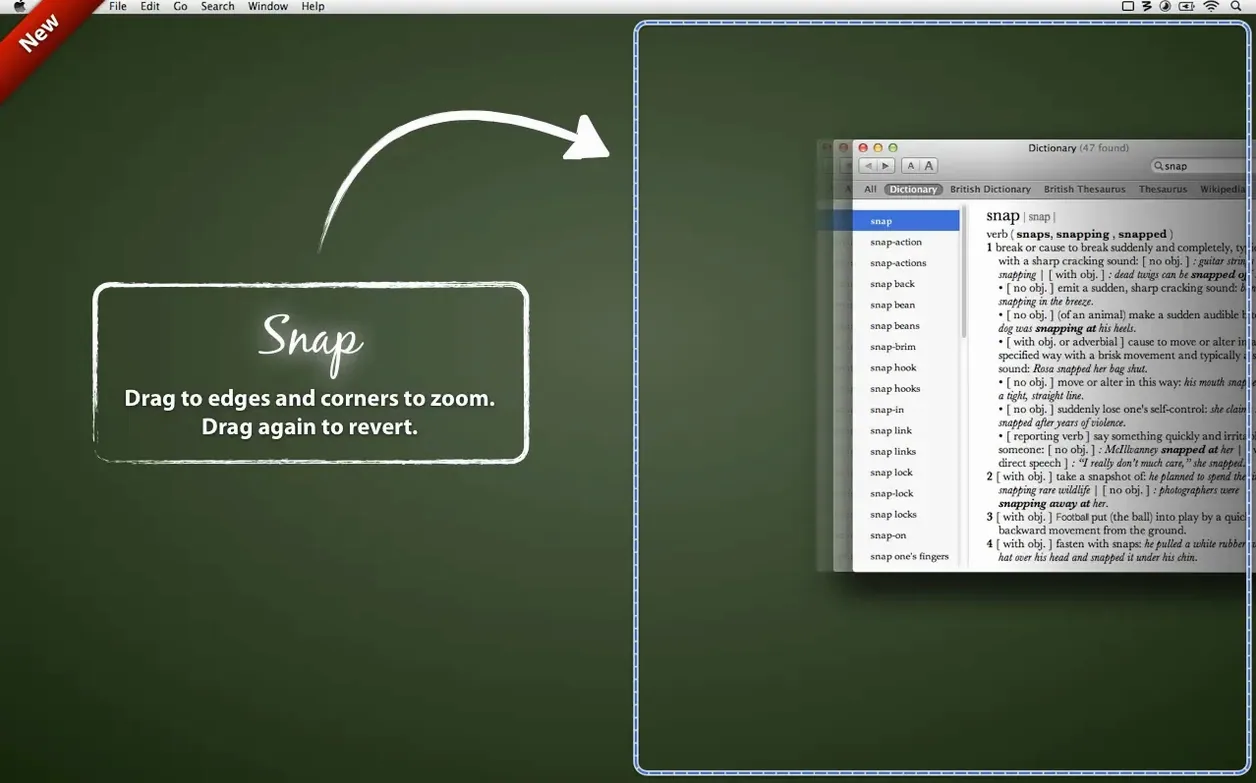
The feature set that makes Moom a reference among window managers is intact. A single click on the green zoom button still expands a window to fill the screen; hovering reveals the pop-up palette for half-screen tiling, quadrant placement and custom actions. The move-and-zoom grid remains the most direct method for setting a window’s exact frame by dragging. Mouse-based snapping to screen edges and user-defined drop zones is as responsive as it has been in previous releases, and the whole tool still requires macOS 10.13 High Sierra or later. In short: a maintenance-minded update that strengthens the parts people rely on most.
Tiling alongside Sequoia: no conflict, just pick your shortcuts
People often ask whether Moom conflicts with the window-tiling features Apple added in macOS Sequoia. It does not. Both systems can run side by side, though most users settle on one set of shortcuts to avoid muscle-memory confusion. The app is a lightweight background process: no menu bar icon clutter unless you choose to show one, and no perceptible CPU footprint on Intel or Apple Silicon machines. Another recurring question concerns multi-display setups. Moom handles them natively — layouts can be scoped to the active display, and the move-to-next-display action respects your physical screen arrangement as set in System Settings.
First days: practical adjustments
Begin by opening the preferences and noting three things. First, decide whether you want the pop-up palette to appear on hover or on click of the green button; the hover delay is adjustable, and reducing it by half a second makes the palette feel noticeably quicker. Second, assign keyboard triggers to your two most-used actions — half-left and half-right are obvious candidates, and the grid mode benefits from a global shortcut that many users map to ⌃⌥⌘M. Third, create two saved layouts early: one for your writing setup and one for a browser-plus-notes arrangement. Even if you refine them later, the act of saving and recalling a layout teaches you the rhythm of the tool faster than any manual can. The move-and-zoom grid feels awkward for the first hour; after that, it becomes the fastest way to place a window precisely without touching an edge.








Correspondence 0
Take a chair or join the table to send a letter.
No correspondence on this note yet. Letters are read before they appear.