 LeCoqRoti
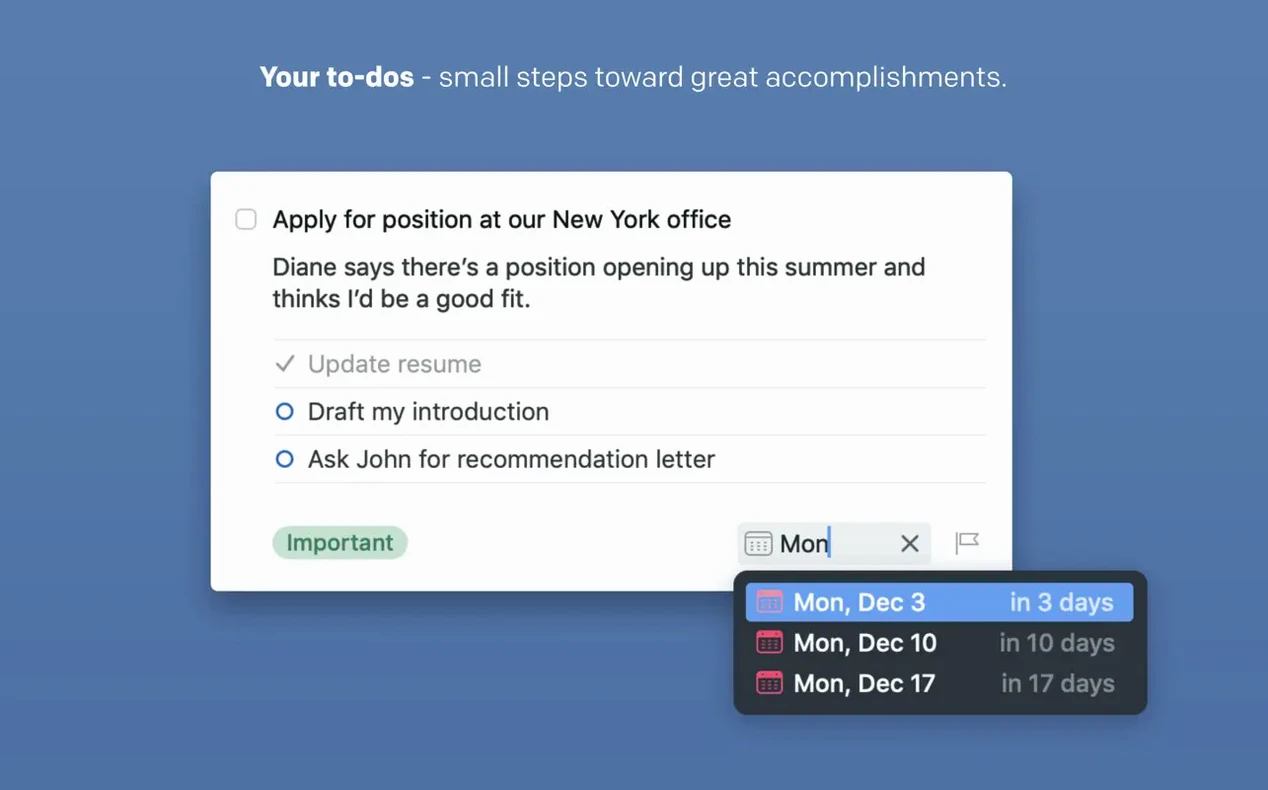
A mole of half-formed ideas is growing in your notes, your mail and the margins of a notebook. You open Things, capture each one into the Inbox with a quick keyboard shortcut, and the pressure lifts before it ever really settled. The app does not pretend to manage your whole life. It organises work that has a clear next step, and it leaves the rest alone.
Place to think: no gamification, just calm structure
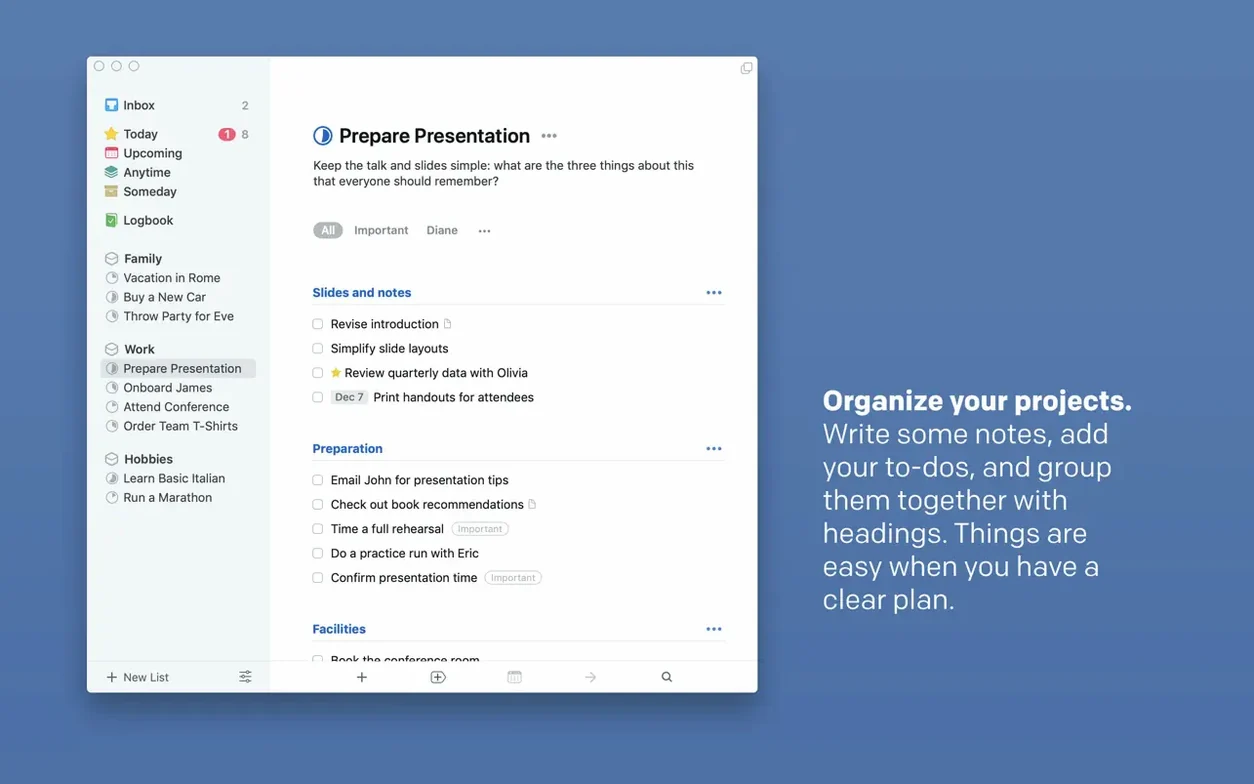
It suits anyone who has tried keeping tasks in their head and found it exhausting. The structure — Inbox, Today, Upcoming, Areas — is calm enough that you actually return to it. There is no gamification, no social features, no dashboard full of red numbers.
How it handles the day: a timeline that shows calendar events too
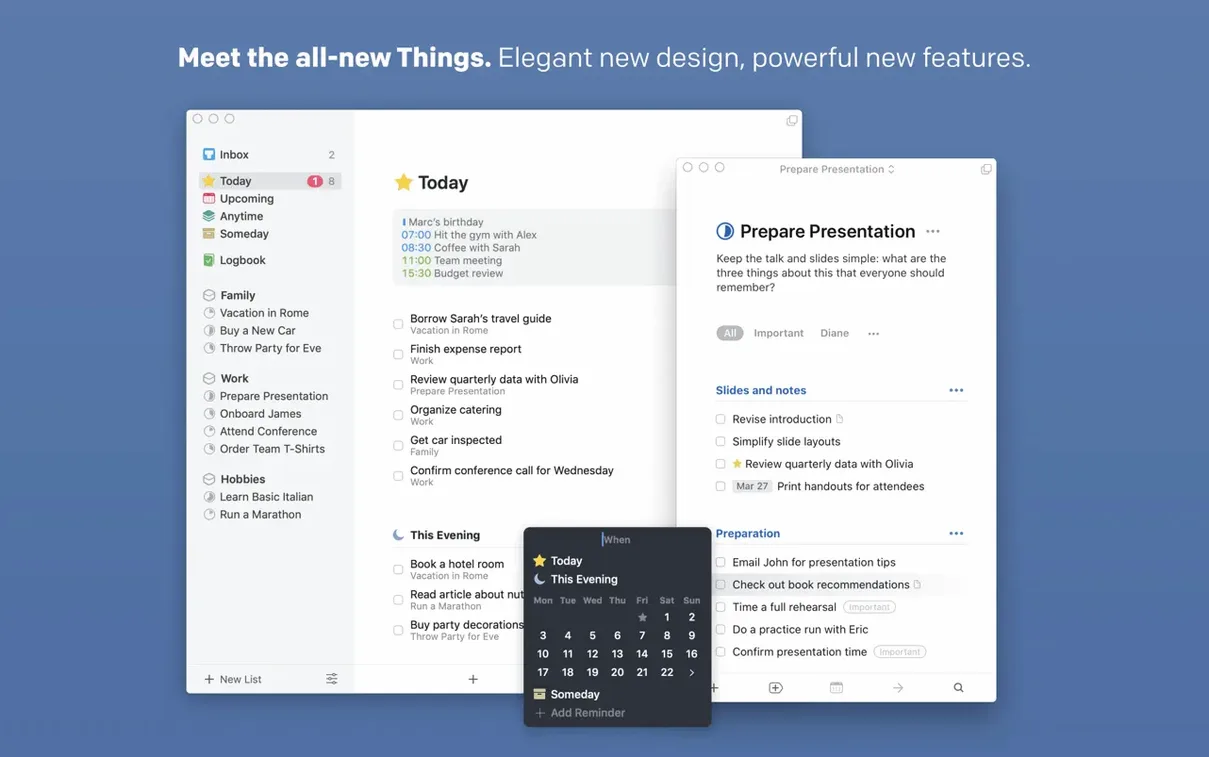
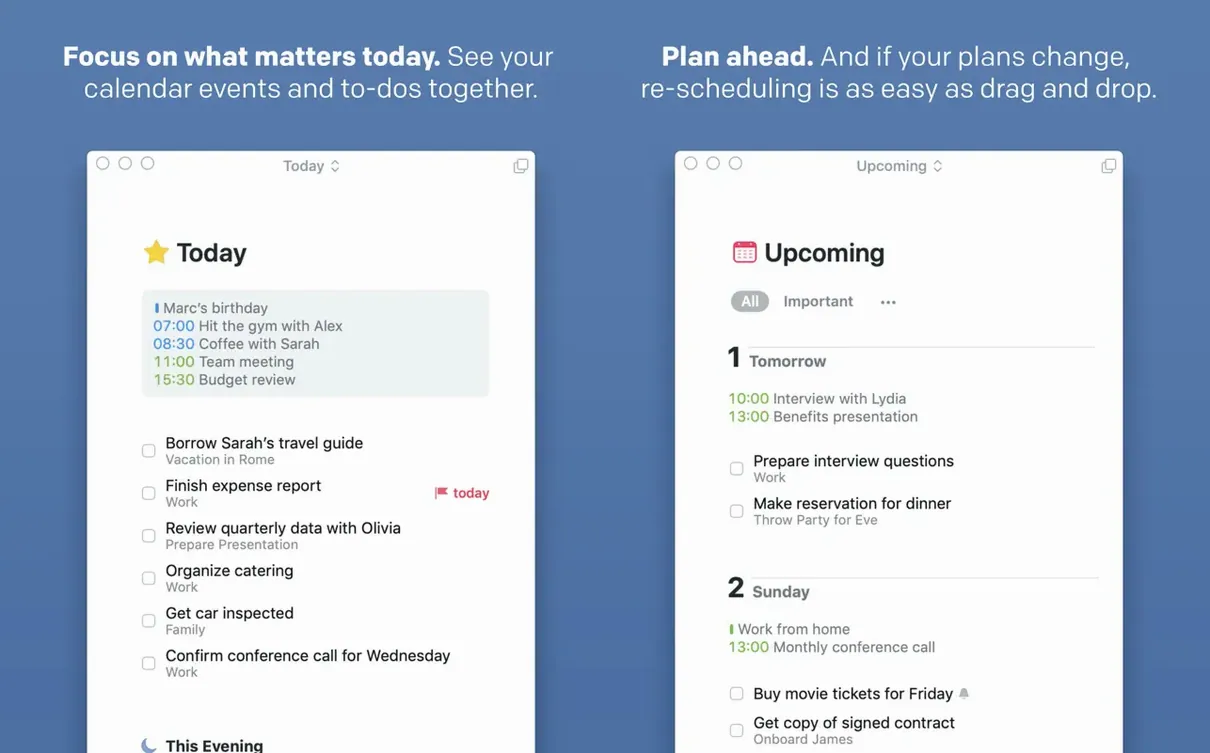
The Today list can display calendar events and Things tasks together in one chronological strip, so you see meetings alongside the actions they depend on. Repeating tasks and Siri voice capture mean routine work and sudden thoughts are both covered.
Organisation: tags and areas, not folders
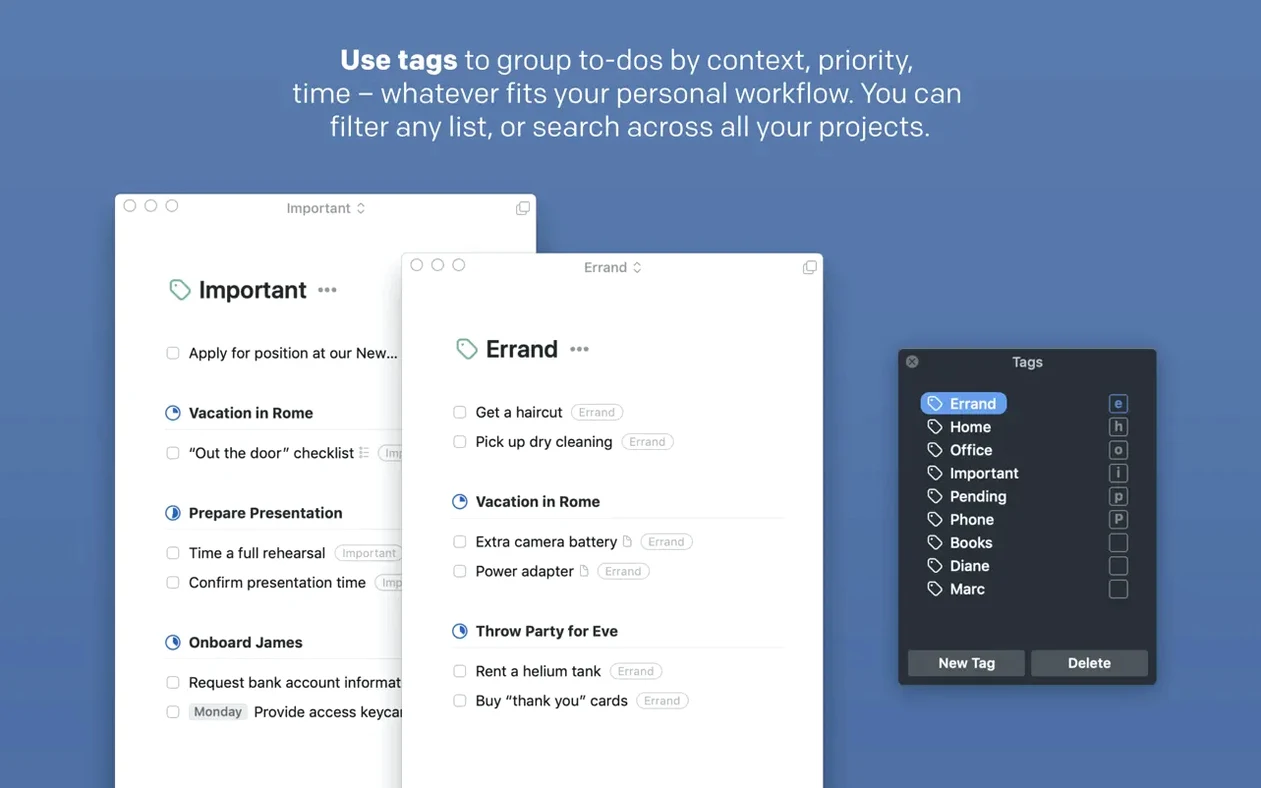
Tags let you filter across projects, and Areas hold the big commitments — work, home, a side project — without burying everything in nested hierarchies. The result is a flat, searchable system that Spotlight can now index directly.
Sync pitfall: Things Cloud needs an account made in-app
Even a well-designed tool has a few corners where new users lose their way. The most frequent one involves sync. Things Cloud is the only sync method, and it needs an account created from inside the app. People sometimes install the Mac version, start adding tasks, and only later realise their iPhone app is not receiving anything. The fix is simple: open Preferences, sign into Things Cloud on both devices, and let the initial merge complete before adding more items.
Another recurring snag concerns the Inbox. It is meant to be a temporary holding pen, not a permanent home. Users who treat it as a long-term list eventually find it stuffed with fifty half-formed thoughts, and the Today view no longer reflects what is actually actionable. The habit that sorts this out is a daily two-minute sweep: give each Inbox item a project, a tag, or a date, or delete it if it is no longer relevant.
A quieter issue appears with repeating tasks. When you set a repeat interval on a task that already has a due date, the repeat rule takes over from that date forward. People sometimes expect the repeat to count from the completion date instead, and they end up with tasks popping up earlier than intended. The setting is under "Repeat" in the task editor, and switching from "Fixed" to "After Completion" changes the behaviour to what most people actually wanted in the first place.
Beginner mistakes: small habits that cause friction
The biggest mistake beginners make is skipping tags entirely. They rely on Areas and projects alone, then wonder why they cannot pull up all the tasks that involve reading, or all the small items they could handle during a phone call. Adding even three or four tags — quick, deep, waiting, errand — changes how the whole list feels. You filter by context instead of just by topic.
Another early misstep is over-scheduling. Someone sets a due date on every task they enter, including vague ambitions like "research planting season." By Wednesday the Today list is a wall of red overdue badges, and the stress of looking at it discourages opening the app at all. Deadlines should be reserved for tasks that genuinely have consequences. For everything else, the When date (which hides the task until that day) is a softer, more honest way to plan.
A third beginner error: ignoring the Quick Entry shortcut. People open the full app window every time they remember they need to buy toothpaste. The global shortcut — Control-Space by default, configurable in Preferences — opens a small floating window that captures the thought and files it in the Inbox without breaking focus. Once that becomes muscle memory, the Inbox fills with far less resistance.
Freelance editor: Areas for Editorial and Admin with nested projects
Consider a freelance editor juggling three manuscript deadlines, a handful of article pitches, and the ordinary admin of running a small business. She keeps an Area called Editorial and another called Admin. Inside Editorial, each manuscript is a project. Within a project, she uses headings to group tasks by phase — structural notes, line edits, author queries — and she tags the ones she can do on her iPad while commuting with a blue mobile tag.
She does not put due dates on the editing steps. Instead, she sets a deadline on the project itself and a When date on the tasks she wants to surface next Monday. Her Today list on a Tuesday morning shows two editing tasks, one invoice reminder, and a calendar block for a client call that Things pulled in from Calendar.app. She can see at a glance that the afternoon is clear for deep work, and she drags the invoice task to the evening slot just to get it out of the morning's mental space.
Twice a week she opens the mobile tag to see what she can clear during a train ride. The Quick Entry shortcut catches stray thoughts — a quote for a potential client, a book recommendation from a podcast — and she processes the Inbox every evening with a cup of tea. Nothing in this setup is elaborate. It is simply the app doing what it was built to do: holding the structure so she does not have to.







Correspondence 0
Take a chair or join the table to send a letter.
No correspondence on this note yet. Letters are read before they appear.