 LeCoqRoti
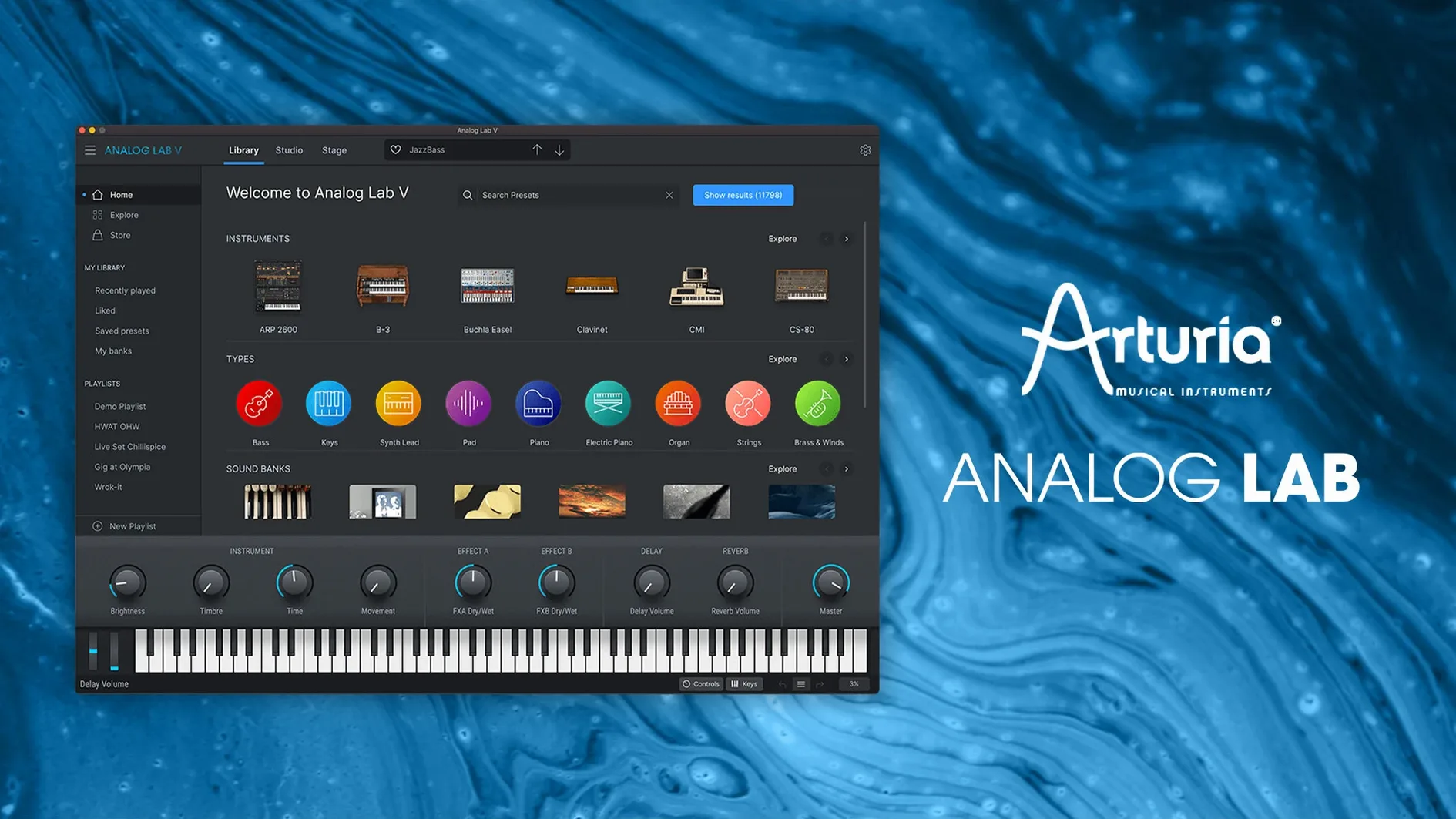
Browsing: presets without the clutter
Version 5.12.0 keeps the focus on sound selection. The intelligent filter narrows a large preset library by instrument type, style, and character, so finding a particular texture takes less time than scrolling through folders.
Playing: a performance instrument
It runs as a standalone application or inside a session via Audio Units, AAX, VST2, and VST3. Musicians can use it for quick sketching as easily as for a finished arrangement.
Integrating: projects stay intact
Existing projects open with the same sounds, which makes it a practical choice for revisiting older sessions. The instrument supports instant integration on macOS 11.0 and later, on both Intel and Apple Silicon machines.
Preset lag: loading a patch mid-transport
A handful of irritations surface often enough to deserve a mention. The first is preset loading lag. On larger libraries — particularly when browsing while the transport is running — a patch can take a second or two to fully settle. The workaround is simple: pause playback before changing presets during critical listening, or keep the browser closed once a sound is chosen. The instrument reads from disk each time, and mechanical drives amplify the delay; an SSD makes a measurable difference.
Another recurring issue concerns the macro controls. The four assigned knobs and sliders on the main panel do not always map to the parameters a user expects. Brightness might control filter cutoff on one patch and an EQ band on another. This is by design, not a fault, but it catches people out. The fix is to treat the macro panel as a starting point and open the full instrument view — available when a V Collection licence is present — for deeper editing. Without that licence, the macros remain the only adjustable layer, so learning to scan them quickly before playing saves frustration.
Authorisation hiccups also appear. The software occasionally forgets its activation state after a macOS point update or a change in audio hardware. Re-running the standard installation procedure usually restores things without further intervention. Keeping the Arturia Software Center installed helps, though it is not mandatory for daily use.
A subtler snag: the plugin can flood a DAW's automation parameter list. Analog Lab exposes every possible destination from every loaded engine, which means hundreds of entries in the automation lane dropdown. Most hosts allow filtering or hiding parameters; enabling that early keeps sessions navigable.
Stock effects: when to send to a convolution reverb
Analog Lab pairs naturally with a DAW's stock effects. The instrument's own reverb and delay are serviceable but limited to the macro assignments; sending a patch to a bus with a dedicated convolution reverb or tape echo opens the sound considerably. In Logic Pro, the combination of Analog Lab's core tone with Space Designer or ChromaVerb yields results that feel closer to the full V Collection instruments.
MIDI controller integration is straightforward. The software recognises Arturia's own KeyLab controllers instantly, mapping the macro knobs and preset browsing to physical controls without configuration. Third-party controllers require manual MIDI Learn, which works reliably for the four macro slots but cannot address deeper parameters unless the full instrument view is unlocked.
On the macOS side, the plugin respects system-level audio routing. It appears correctly in Aggregate Devices and multi-output setups, and the standalone application switches sample rates cleanly when the Audio MIDI Setup changes. A minor convenience: the standalone app responds to media keys on a Mac keyboard, so volume adjustments do not require reaching for the interface.
For those using notation software or scoring environments, the AU and VST3 versions load without issue in Dorico and Sibelius, though the preset browser's keyboard shortcuts can conflict with the host's own bindings. Remapping either set solves it in under a minute.
Library location: moving sound content after install
After running the standard installation, a few early decisions shape the experience. The first is where to place the sound content. The library weighs several gigabytes; moving it to an external drive after installation requires pointing the Arturia Software Center to the new location. Doing this before building a favourite list avoids broken references later.
The second task worth tackling immediately is creating a shortlist. The intelligent filter is effective, but its real value emerges once personal tags and star ratings are applied. Spending twenty minutes rating presets by type — bass, pad, lead, keys — builds a custom catalogue that loads faster than the full browser and reflects individual taste rather than the factory categories.
A third practical step: test the plugin in every host format early. Some DAWs handle the VST3 version more smoothly than the AU on Apple Silicon; others prefer the opposite. Running a quick session in each format reveals which combination produces the lowest latency and fewest graphical glitches on a specific machine. The standalone application, meanwhile, serves as a reliable fallback for sound design sessions that do not require a timeline.
Finally, adjusting the buffer size in the audio settings panel — accessed from the standalone app's preferences — affects both playability and preset load times. A buffer of 128 samples keeps latency low enough for live playing on most modern Macs; 256 samples smooths out browsing on larger sessions without introducing noticeable delay.
Memory footprint: 200 to 400 MB per instance on Apple Silicon
On an Apple Silicon Mac, the plugin launches quickly and sits lightly in memory. A single instance with a moderately complex patch occupies roughly 200 to 400 MB of RAM, though patches that layer multiple engines — combining a vintage string machine with a modern wavetable source, for example — can push closer to 600 MB. This is not excessive by current standards, but it rewards a bit of discipline in large arrangements.
CPU behaviour is similarly reasonable. Idle consumption hovers near zero; sustained pad sounds with long release tails add a modest load, typically under 5% of a single performance core on an M-series processor. The heavier draw comes during preset browsing, when the software briefly loads each engine before discarding it. Rapid scrolling through the library produces perceptible spikes, though the audio engine remains stable throughout.
Stability in daily use is strong. Crashes are rare, and when they occur they tend to involve specific host-and-format combinations rather than the instrument itself. The AU version in Logic Pro has been the most reliable configuration in extended testing; the VST3 in Ableton Live follows closely. Recovery is clean: the plugin recalls its last state on reopening, including the active preset and any macro adjustments.
Graphics performance deserves a note. The browser's animated transitions and the macro panel's real-time knob movement rely on OpenGL, which runs efficiently on both Intel and Apple Silicon GPUs. On older Intel machines with integrated graphics, however, keeping the browser closed during playback reduces occasional frame drops in the host's main window.
A producer's morning: one real-world session
Consider a producer working on a pop track who needs three distinct keyboard parts before lunch. The brief calls for a warm polyphonic pad for the verse, a cutting lead for the chorus, and something percussive and tuned for the bridge.
The session opens with the pad. Typing brass into the filter and selecting the Warm character tag surfaces a handful of options from the Solina and CS-80 engines. The second preset, a soft brass with slow attack, fits the verse immediately. The macro sliders adjust brightness and movement to sit behind the vocal; no further tweaking is needed.
For the chorus lead, the filter switches to Lead with the Bright tag. A Mini V-based patch cuts through the dense arrangement, and the macro labelled Timbre controls oscillator sync amount in the underlying engine. A slight nudge adds edge without harshness. The part is recorded in one take.
The bridge requires something less obvious. The producer scrolls past the keyboard and lead categories into Experimental, where a physically modelled mallet sound — derived from a Piano V engine — provides the percussive attack the arrangement needs. It blends with the drum track without cluttering the midrange. All three parts are in place within forty minutes, and none required opening a full instrument editor or reaching for external effects. The session remains light, responsive, and entirely focused on the music.
In short: the software handles this kind of rapid, style-hopping workflow without resistance. The sounds are ready when the ideas arrive, and the technical friction stays low enough to remain invisible.


Correspondence 0
Take a chair or join the table to send a letter.
No correspondence on this note yet. Letters are read before they appear.