 LeCoqRoti
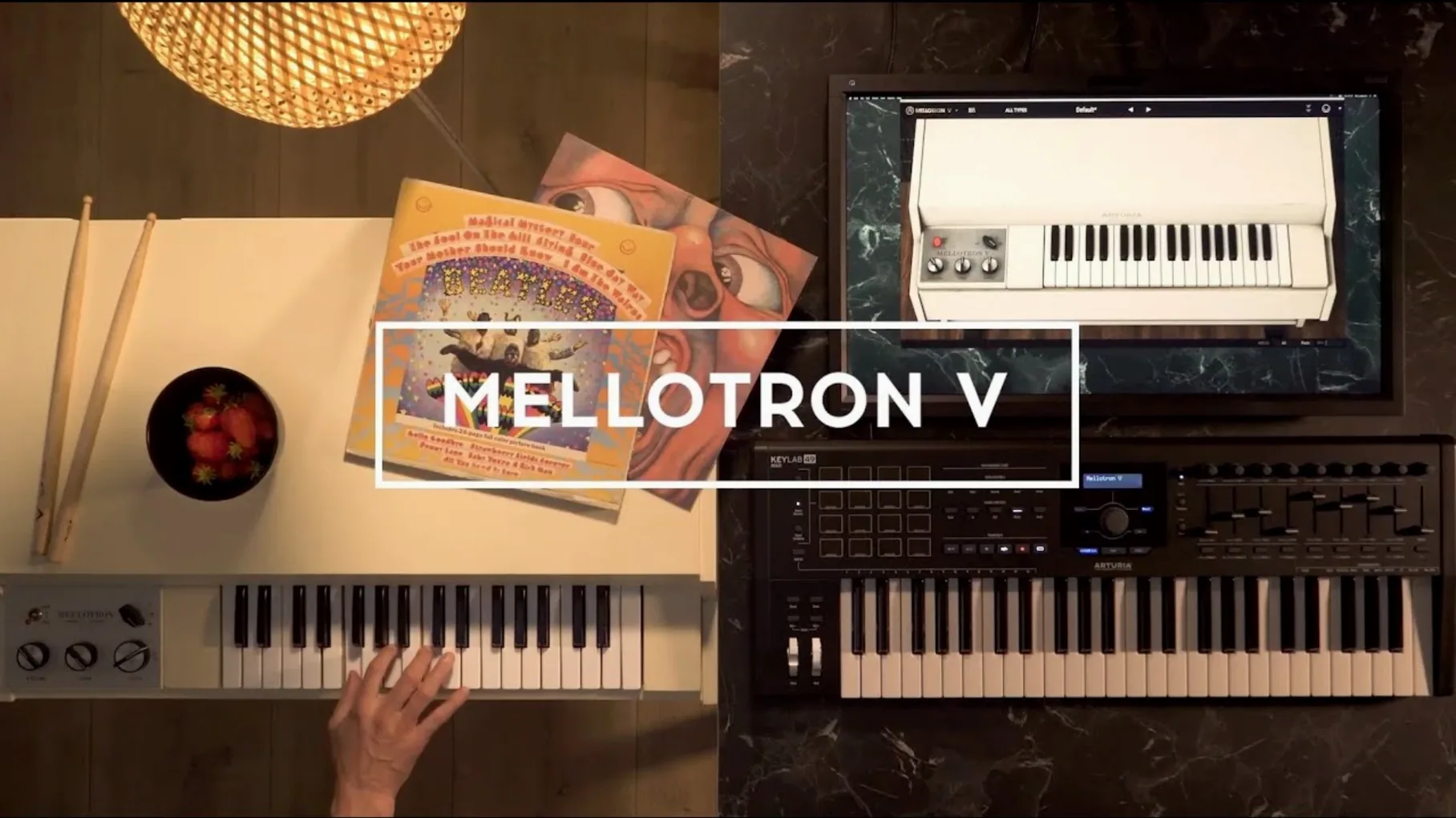
A sampled string pad can sound polite, even static. The Mellotron keyboard was never polite: its notes drift, flutter, and cut out with an almost vocal fragility. The problem this plug-in solves is how to get that organic, unstable texture inside a modern session without maintaining an ageing electromechanical instrument.
Foreground texture: breathy tape attack as the main hook
I often place it on an instrument track carrying the main melodic hook. The flute and string banks sit beautifully in the centre of a sparse arrangement, where their breathy attack and tape noise become the focal point rather than something to hide.
Role on buses: widening a bed
Sending the Mellotron V to a stereo bus with a touch of chorus and a high-pass filter can spread a pad across the entire soundstage. The 65 tape banks offer enough variety to double a digital synth part with something far more unstable underneath.
Quick inspiration: warping user samples through its tape model
It anchors classic rock ballads with the three-violin setting, supplies grainy background wash for ambient pieces, and works as a quick inspiration tool when a project feels too clean: loading a user sample through its tape model instantly warps the source.
How it interacts with other plug-ins
I follow it with a gentle compressor to tame the uneven tape output, then a small-room reverb. The ADSR envelope lets you shape the character before the signal ever hits the channel strip.
First habit to avoid: playing it like a conventional polyphonic sampler
A new user often treats the Mellotron V like a conventional polyphonic sampler and then wonders why the result feels stiff. The instrument's charm lives in its limitations, and working against them flattens the sound.
The first mistake is playing block chords across four octaves and holding them. A real Mellotron keyboard gave you about eight seconds of sustain before the tape ran out. Letting notes die naturally, or riding the release control, keeps the phrasing believable. The second is ignoring the mechanical noise section entirely. The motor rumble, key clatter and tape hiss are not defects to silence: they are part of the texture that glues a track together. The third mistake is loading pristine 24-bit samples and expecting the same character. The tape model and its wow-and-flutter engine do the heavy lifting, but feeding it audio that is already a little dusty, perhaps from an old field recording or a cassette transfer, pushes the illusion much further.
A film composer's afternoon: tension cue in three layers
Picture a composer working on a psychological thriller. The director wants a cue for a slow tracking shot through an empty house, and the brief calls for something that feels unstable without being obvious. The composer opens the Mellotron V on an instrument track and pulls up a cello bank, plays a two-note figure in the lower register, and pushes the tape age control until the pitch wavers slightly. On a second track, the same plug-in loads a vibraphone bank with the attack softened and the motor noise raised just enough to suggest something mechanical stirring in the background. A third instance runs a user sample: a short phrase of bowed metal, stretched across the keyboard and blended with a touch of the built-in delay. The three layers sit under a high-passed reverb bus, and the scene breathes. No orchestral library would have delivered the same unease.
Comparisons: how it sits alongside similar instruments
Three other Mac instruments cover related ground, each with a different emphasis. Knowing where the Mellotron V fits saves time when you are choosing a tool for a specific texture.
GForce M-Tron Pro focuses squarely on tape-based keyboard sounds and includes a large library drawn from the Streetly Electronics archive. Its interface stays closer to the original hardware layout, which some players prefer, but it offers fewer ways to warp the source material. The Arturia plug-in pulls ahead when you want to blend factory tapes with your own samples and then degrade them through the tape-modelling chain.
Toontrack EZkeys Mellotoon is a phrase-based instrument rather than a full keyboard emulation. It suits songwriters who want ready-made Mellotron performances they can drag into a timeline and tweak by chord, but it does not give you sample-level editing or the ability to load your own audio. The Mellotron V is the more flexible choice for sound design and detailed arrangement work.
Logic Pro's Vintage Mellotron instrument, included with Logic, covers the core tape banks competently and integrates neatly in a Logic session. Its simplicity is both a strength and a ceiling: you get the flute, the strings and the choir, but you do not get the mechanical noise controls, the full ADSR envelope or the user-sample architecture. For a quick sketch, the built-in instrument works. For a production that needs to lean heavily on that decaying, dirty tape character, the Arturia model gives you more parameters to push against.





Correspondence 0
Take a chair or join the table to send a letter.
No correspondence on this note yet. Letters are read before they appear.