 LeCoqRoti
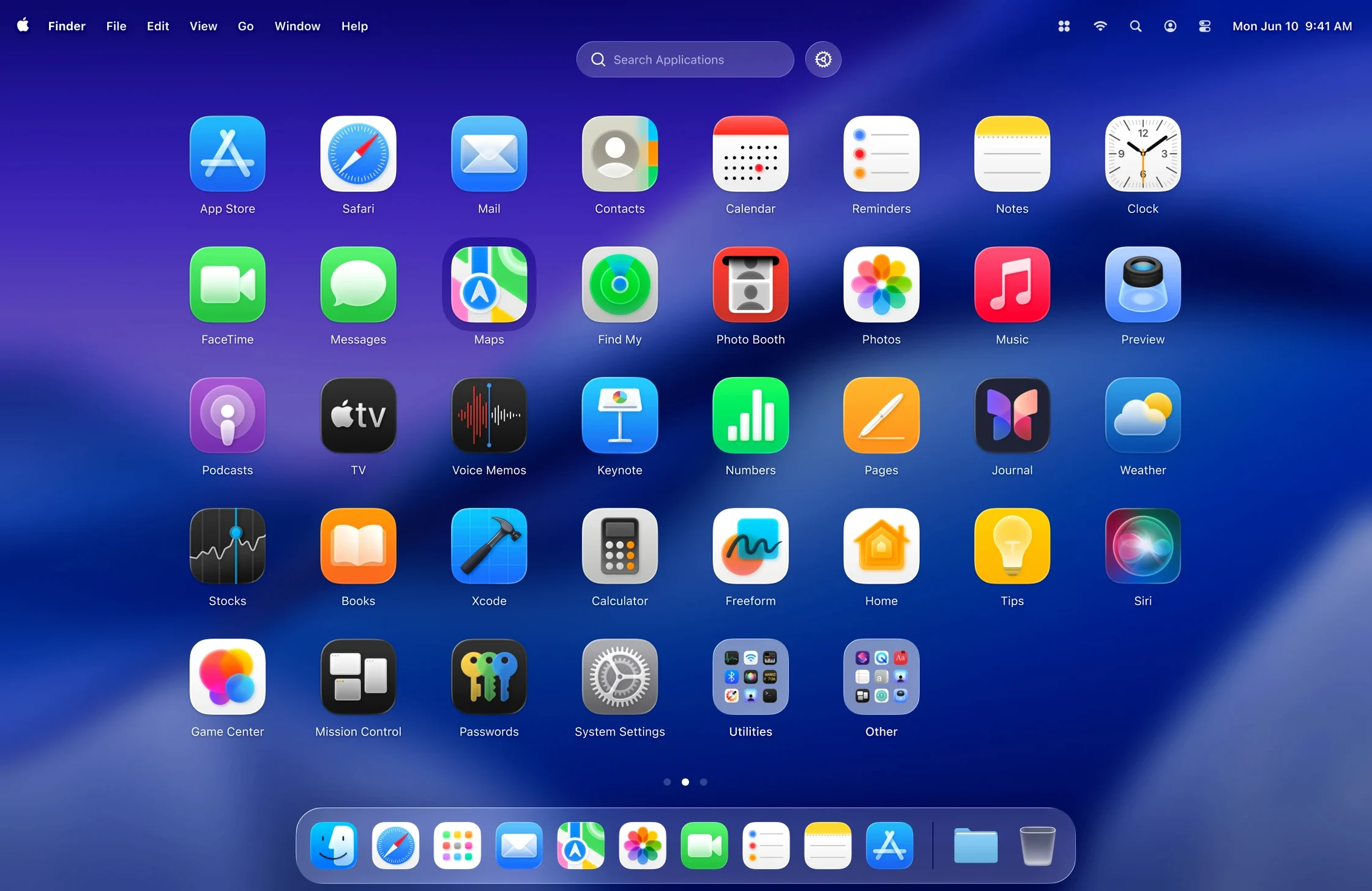
By default, LaunchOS shows a grid of 5 icons across and 4 rows down. That density is a starting point, not a fixed rule: the first thing to do is open settings and pick a layout that matches your screen. From there, a handful of concrete moves turn it from a simple launcher into something quicker to use every day.
- Resize the grid. Drag the column and row sliders to fit more apps on screen at once, or fewer if you prefer larger, easier-to-click targets.
- Launch with a gesture. Assign a trackpad or Magic Mouse gesture — a three-finger pinch, for instance — so the grid appears without reaching for the dock.
- Memorise a keyboard shortcut. Set a global hotkey to open LaunchOS; it is faster than any gesture once muscle memory takes hold.
- Uninstall an app in place. Long-press any icon or right-click it and choose the removal option. Version 2.1.0 added this, and it saves a trip to Finder or the Applications folder.
- Try the Liquid Glass look. On macOS 26, LaunchOS picks up the system’s translucent depth effect automatically — no toggle needed.
These five steps take under two minutes to set up. After that, LaunchOS works the way the original Launchpad used to: a clean, distraction-free grid that responds to the habits you already have.
Small conveniences: details easy to overlook
LaunchOS does not advertise its subtler touches, but they accumulate. A single right-click on any icon reveals a context menu with Restart — added in version 2.1.0 — alongside the uninstall command. If an app has frozen or begun misbehaving, that menu saves the ritual of force-quitting and reopening from the dock. The status bar icon holds the same Restart command, reachable without opening the grid at all.
Typing the first letter of an app name jumps the selection directly to that icon, a behaviour borrowed from Finder but missing from the built-in Launchpad for years. No search field appears; you simply type. On a grid of forty or more applications, this alone halves the time spent scanning.
The grid also respects the order you leave it in. Drag an icon to a new position, close the overlay, and it stays there across restarts. LaunchOS does not alphabetise by force, which matters more than it sounds when muscle memory relies on a fixed spatial layout. For anyone maintaining a launchos workflow on macOS 26, that stability is the whole point.
- Right-click Restart: available in the overlay and the status bar menu, no extra steps.
- Single-letter navigation: type a letter to jump to the first app starting with it; works in any grid size.
- Persistent icon order: manual arrangement survives relaunches and system updates.
- Hidden apps stay hidden: once you mark an app as hidden in settings, it disappears from the grid entirely — no greyed-out placeholder.
Hide never-used icons in ten minutes
Immediately after dragging LaunchOS into Applications, spend ten minutes on a small decluttering pass. Open the grid and hide everything you never launch by icon: updaters, uninstallers, bundled utilities that came with a printer driver you used once. The settings panel lists every app on the system with a simple checkbox to toggle visibility. The result is a grid of perhaps twenty icons instead of eighty, and every one of them is something you actually open.
Next, assign a gesture. A four-finger swipe down works well because it mirrors the downward glance toward the dock, and it rarely conflicts with other trackpad shortcuts. If you prefer the keyboard, set the global hotkey to something you can hit with one hand — Control-Space or Option-Z — and resist the urge to make it too clever. The goal is a reflex, not a chord you have to think about.
In the first few days, you will probably catch yourself opening the old Launchpad by habit. That fades quickly once the gesture or hotkey settles in. A useful trick: remove the Launchpad icon from the dock entirely during this transition. Without the visual cue, the old path dissolves faster.
Seven by five grid on a 14-inch screen
The default grid of five by four is a sensible baseline, but three adjustments make LaunchOS feel tailored.
Grid density. On a 14-inch MacBook Pro, a grid of seven columns by five rows fits most app collections without crowding. On a 27-inch display, nine by six still leaves generous spacing. The sliders respond in real time, so you can watch the layout breathe as you drag.
Launch behaviour. By default, clicking an app opens it and dismisses the overlay. There is a setting to keep the grid open after launching, which is useful when you are setting up a workspace and need to open several apps in sequence. Turn it on for the first week, then switch it back once your habits are formed.
Hidden apps list. The visibility settings panel is the fastest route to a clean grid. Access it from the status bar menu or the preferences window, uncheck the noise, and the grid becomes a true launcher rather than an inventory of every .app bundle on the disk. You can always re-enable an app later without reinstalling anything.
Workflow: uninstalling an app from start to finish
Suppose a trial application has expired and you want it gone — no leftover files, no trip to the Applications folder. In LaunchOS version 2.1.0, the entire process happens inside the overlay.
Begin with the gesture or hotkey you assigned; the grid appears. If the app sits on a second page, swipe horizontally with two fingers to reach it — the pagination works exactly as expected. Long-press the icon until a subtle jiggle begins, or right-click it immediately and choose the uninstall command from the context menu. A confirmation dialogue appears, listing the app name and asking for approval.
Confirm, and LaunchOS removes the application entirely. The icon vanishes from the grid at once. There is no need to open Finder, no need to empty the Trash manually, and no lingering .plist files left in the Library — the uninstall is a clean removal. For anyone maintaining a lean system, this single feature justifies the switch from the default launcher. Those who explore a LaunchOS cracked version torrent often find the same graceful removal behaviour intact, provided the build is complete.
The same long-press gesture works for rearrangement: once the icons jiggle, drag any app to a new position or a new page, then press Escape or click outside the grid to lock the layout. What took three Finder windows and a right-click in the Trash now takes four seconds.







Correspondence 0
Take a chair or join the table to send a letter.
No correspondence on this note yet. Letters are read before they appear.