 LeCoqRoti
Version 4.1.4 arrives as a maintenance release with a welcome fix for macOS 15 users: Quick Look previewing of .clip files now works as expected, and a force-close tied to the Running color mixing mode has been resolved. PSD exports also appear correctly in the Finder again.
What changed for animators?
A persistent bug where stray cels or keyframes survived after resizing clips or altering the timeline frame rate has been fixed. The timeline remains the centre of animation timing control, letting you sequence drawings and export them as sequential images, GIFs or movie files.
How does the light table aid traditional workflows?
The light table function lets you see a dimmed version of another layer through the one you are drawing on, much like the physical animator’s tool. It pairs naturally with onion skin display, which shows adjacent frames as translucent overlays for precise in-betweening.
What sets the EX edition apart?
Beyond the standard drawing tools, EX introduces professional story creation tools: multiple-page story layouts for comics and manga, along with a deeper feature set aimed at publishing workflows. You choose between EX or PRO on first launch.
First days: tablet pressure and cursor feel
Clip Studio Paint ships with a set of defaults that reward a few minutes of adjustment. The first is tablet pressure. Open the Preferences panel and select Tablet: switch the input mode to your tablet’s native driver (Wintab or Tablet PC, depending on the model). This alone often eliminates the slight lag or stiff stroke that can appear with the default setting. Then draw a few quick lines on a test canvas; if the pressure curve feels off, the small graph in the same panel lets you pull the curve into a gentler or steeper response.
The second is colour space. By default, the application works in an sRGB-ish preview, but for print-bound work you can switch the canvas to CMYK in the View menu: Color profile → Preview settings. The change does not convert the file—it alters only the on-screen simulation—but it prevents surprises when a page is later exported for offset printing. If your workflow involves frequent PSD exchanges, enable File → Preferences → File → PSD compatibility early; the layered PSD import/export is solid, but a mismatched colour profile setting can flatten text layers without warning.
The third is a quiet time-saver: the Quick Access palette. It lives on the right edge of the default workspace. Dragging your five or six most-used tools into it—pen, eraser, lasso fill, move layer, a favourite decoration brush—cuts down the time spent hunting through the main tool palette. The palette remembers its contents per workspace, so you can build one Quick Access set for line art and another for flat colouring.
Brush lag: fix the canvas rendering engine
A frequent complaint after installing is sluggish brush response on a perfectly capable Mac. The culprit is often the canvas view rendering engine. In Preferences, under Performance, try allocating more memory and switching the rendering mode from the default to one that better matches your GPU. On Apple Silicon machines, the native ARM build is already selected; on Intel Macs with a discrete GPU, forcing the application to use the high-performance graphics card (via macOS System Settings → Battery/Power → Optimize for Performance) can smooth out zoom and rotate operations on large canvases.
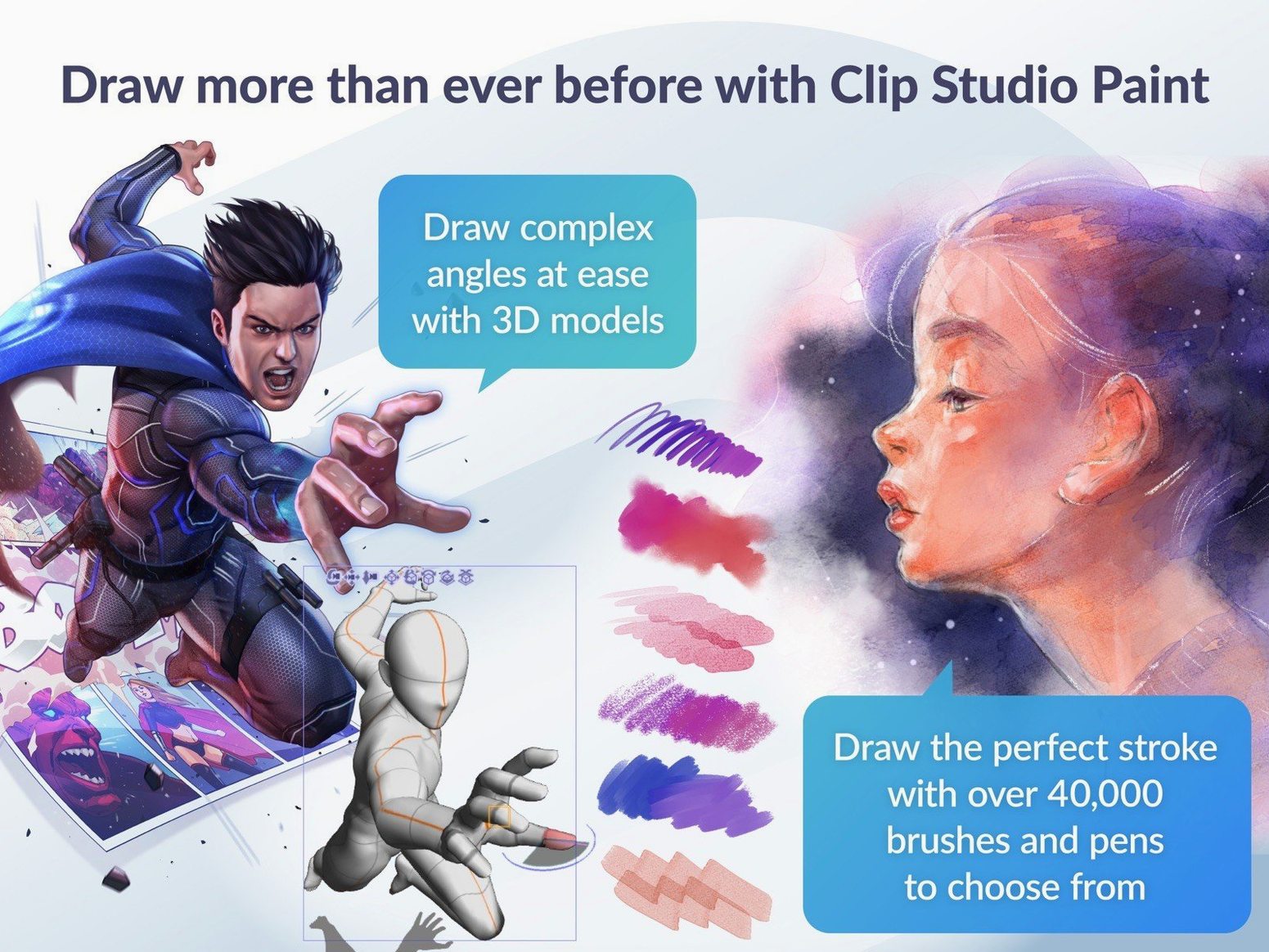
Another snag appears when a 3D model refuses to drop onto the canvas. Version 4.1.4 refined the drag-and-drop behaviour for 3D materials when a 3D layer is already selected outside a frame folder. If you still see an empty drop, check the Layer panel: a 3D object requires a dedicated 3D layer, and dragging material onto a raster or vector layer will do nothing. Right-click in the layer stack, choose New Layer → 3D Layer, then drag the figure or primitive again.
PSD export producing blank thumbnails or garbled previews in Finder on macOS 15 was a known issue; the 4.1.4 update fixed exports of certain sizes. If you encounter a stubborn file, re-export with File → Export (Single Layer) → .psd and ensure the canvas dimensions are even numbers—odd-pixel dimensions can still confuse the macOS thumbnail generator even after the fix.
Timeline problems after version updates tend to trace back to a single cause: leftover keyframes on hidden layers. The 4.1.4 patch addressed cels and keyframes that survived deleting resized clips or changing the timeline frame rate. As a preventive habit, expand all layer tracks in the timeline before deleting a clip and manually clear keyframes on any muted or hidden layers. It adds twenty seconds per cleanup but avoids ghost frames appearing mid-export.
A colourist’s morning
Consider someone who spends their working hours flatting and shading comic pages for three different artists. They receive a batch of layered PSD files in the morning, each page already inked and ready for colour. The clipboard history alone would slow them down if they switched between Photoshop and another tool, so they work entirely inside Clip Studio Paint EX, using its PSD import to preserve the artists’ folder structures and clipping masks.
They open the first page. The reference palette sits on a floating window dragged to a second display—a pure convenience, since the colour set was saved as a Clip Studio material the week before. They fill large areas with the paint bucket’s Close gap setting nudged to tolerate the inker’s slightly open lines, then switch to a flat brush for edges the bucket misses. The 3D figure tool gets pulled in once: a hand pose they cannot quite visualise, dragged from the Materials library onto a temporary 3D layer, rotated with the camera controls, and traced on a new vector layer above it. The vector layer’s eraser, set to erase up to intersection, cleans the sketch lines without nicking the filled colour beneath.
By lunch they have three pages done. The EX edition’s multiple-page story layout holds the entire chapter in one file, so they can toggle between pages without closing and reopening documents. They export the morning’s work as a single flat PSD proof for the lead artist, the Finder thumbnails now showing the actual page previews as they should, and carry on.
In short: the 4.1.4 release is not a feature drop but a tidying of edges—macOS 15 compatibility, animation cleanup, and PSD export behaviour—that makes the tool feel settled rather than showy. It rewards small customisations early and a little vigilance around layers and keyframes later.






Correspondence 0
Take a chair or join the table to send a letter.
No correspondence on this note yet. Letters are read before they appear.