 LeCoqRoti
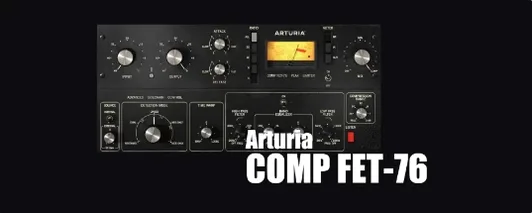
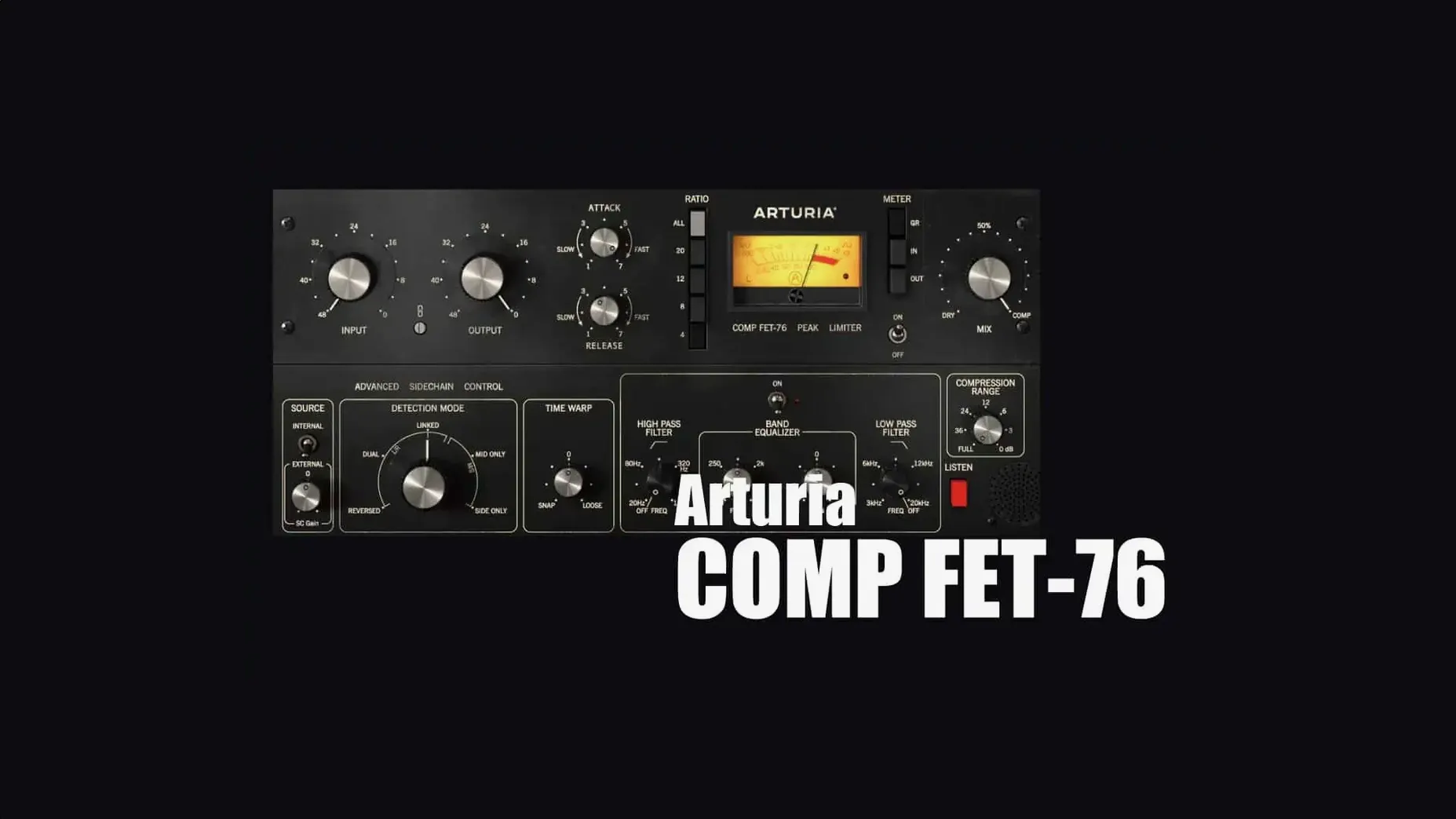
Anyone who has spent time with an 1176 knows its reputation for near-instantaneous attack and a forward, energetic grab. Arturia’s Comp FET-76 brings that same circuit personality into a plugin — FET gain reduction, a tight handful of controls, and the kind of tonal imprint that sits somewhere between control and attitude. In a session, it makes sense on individual tracks that need to push through a mix, on drum buses where snap matters, and on vocals that benefit from a little assertive levelling before they ever reach a fader.
- Lead vocals and close mics: the fast attack catches transients early, keeping words present without dulling the top end.
- Drum room and overheads: the 1176’s high-gain structure can add weight and sustain, and the Comp FET-76 follows that behaviour closely.
- Bass guitar and DI signals: input-driven compression evens out picking dynamics while the output stage adds a subtle thickness.
- Parallel drum crush: the Link mode couples input and output level, so driving the unit harder keeps the return level balanced in the blend.
- Mix bus glue: used gently, a pair of instances with matched settings can impart a cohesive, slightly forward midrange without obvious pumping.
The control set will feel familiar to anyone who understands the hardware: input and output knobs, attack and release, and a ratio section that covers the classic positions. What the plugin adds is recall, stereo linking, and the ability to insert it across as many channels as your system allows. It runs in AU, VST2, VST3, and AAX formats and requires macOS 11.0 or later on Intel or Apple Silicon machines. In short: a practical vintage-style compressor that slots naturally into the roles the original design was built for.
Overlooked details: a handful of useful shortcuts
Some of the Comp FET-76’s most efficient moves are tucked just out of sight. Right-clicking any knob resets it to a sensible default — useful after a series of impulsive adjustments, when you want to return to a clean starting point without reloading the preset. The side-chain high-pass filter, accessible from the advanced panel, is equally easy to miss: engaging it at around 80 Hz prevents kick drums and bass-heavy material from dictating the compression on a full mix or a drum bus. The result is tighter gain reduction that responds to the midrange rather than to low-end weight alone.
Another quiet convenience: dragging the ratio buttons horizontally while holding Shift allows fine-tuning between the fixed positions — a behaviour the original hardware never offered. It turns the classic stepped ratios into a continuous blend, giving you a degree of control that sits somewhere between the 1176’s immediacy and a modern vari-mu’s subtlety. The All button also deserves more attention than it typically receives. Engaging it on a parallel return, with a fast release and moderate input drive, produces a distorted, overdriven texture that blends beautifully under a clean drum submix without overwhelming the transients.
A short scenario: vocal editor in a tight turnaround
Consider a vocal editor preparing spoken-word stems for a documentary mix — dozens of short clips, varying proximity, some recorded in less-than-ideal rooms. The brief demands consistent presence and a natural tone, with no audible pumping. Inserting the Comp FET-76 across the dialogue bus, attack set to 1 for the fastest possible grab and release around 5, catches plosives before they leap out while letting room tone breathe between phrases. The ratio sits at 4:1, enough to level discrepancies without flattening the performance. Input is driven gently, just until the needle starts moving, and output gain compensates by a few decibels. The side-chain filter rolls off below 100 Hz, so ventilation hum and distant traffic stay out of the detector circuit. The result is a uniform, broadcast-ready vocal bed that required almost no automation — exactly the kind of work the 1176 circuit was prized for, translated cleanly into a plugin that opens in seconds and recalls perfectly across sessions.




Correspondence 0
Take a chair or join the table to send a letter.
No correspondence on this note yet. Letters are read before they appear.