 LeCoqRoti
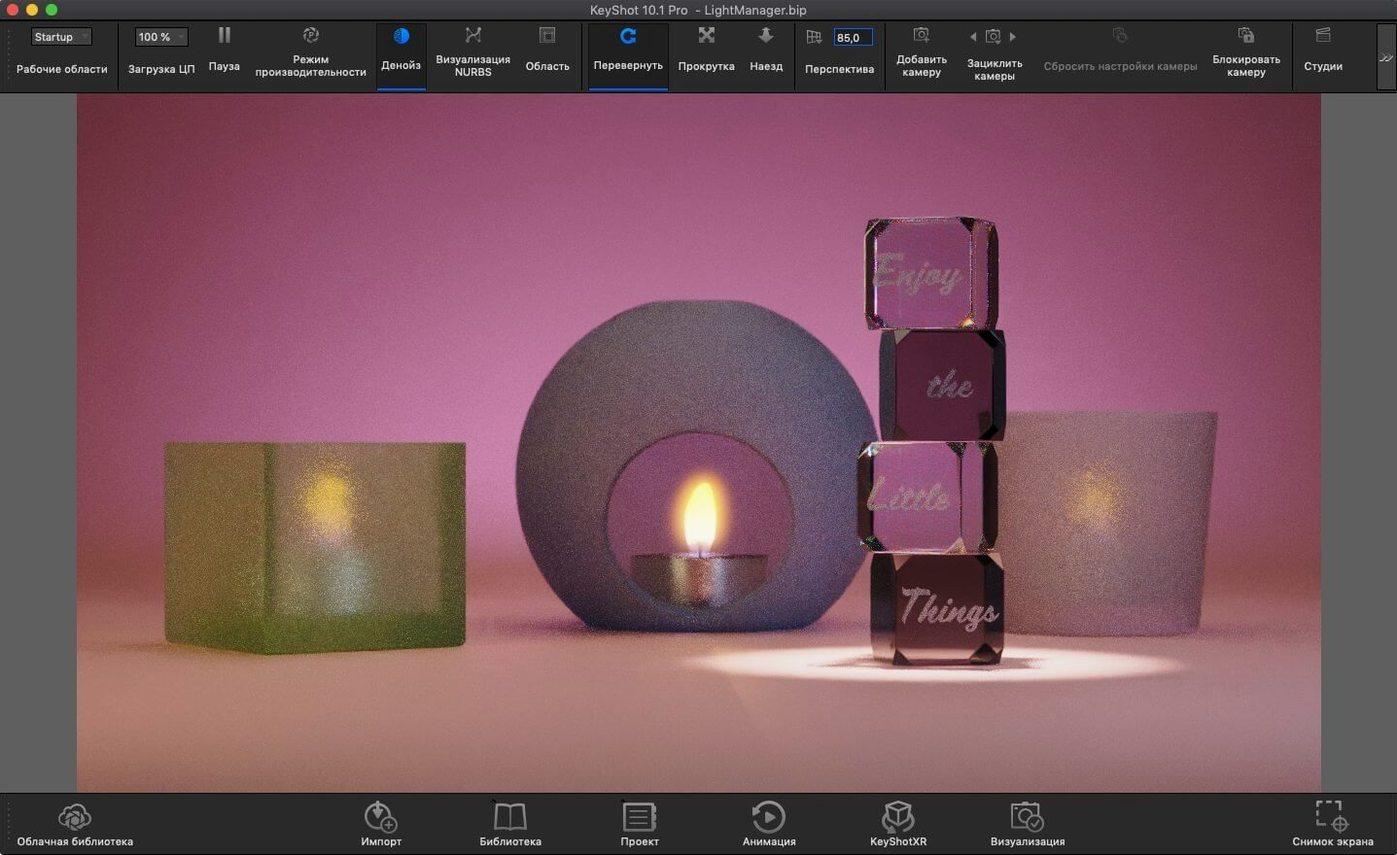
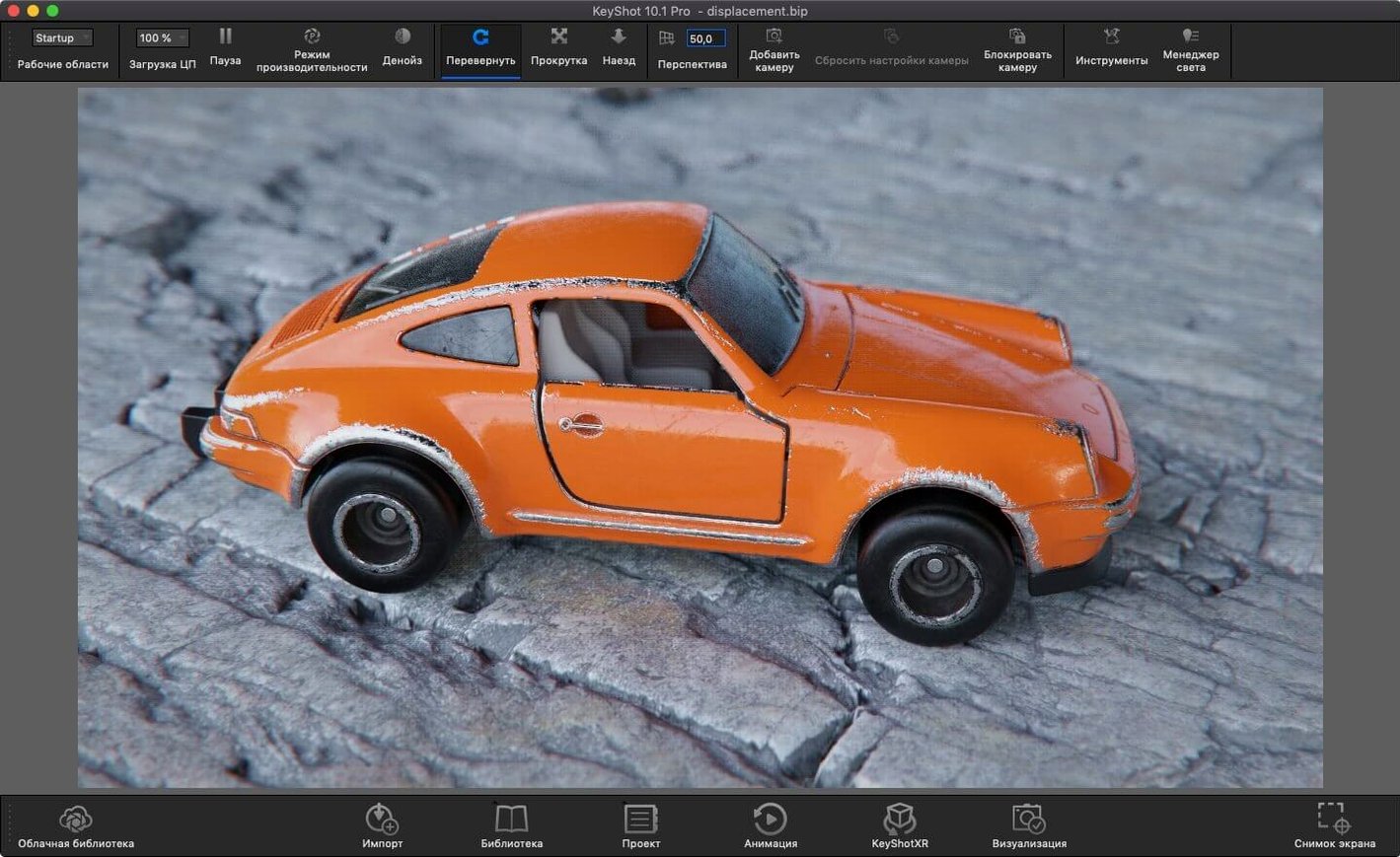
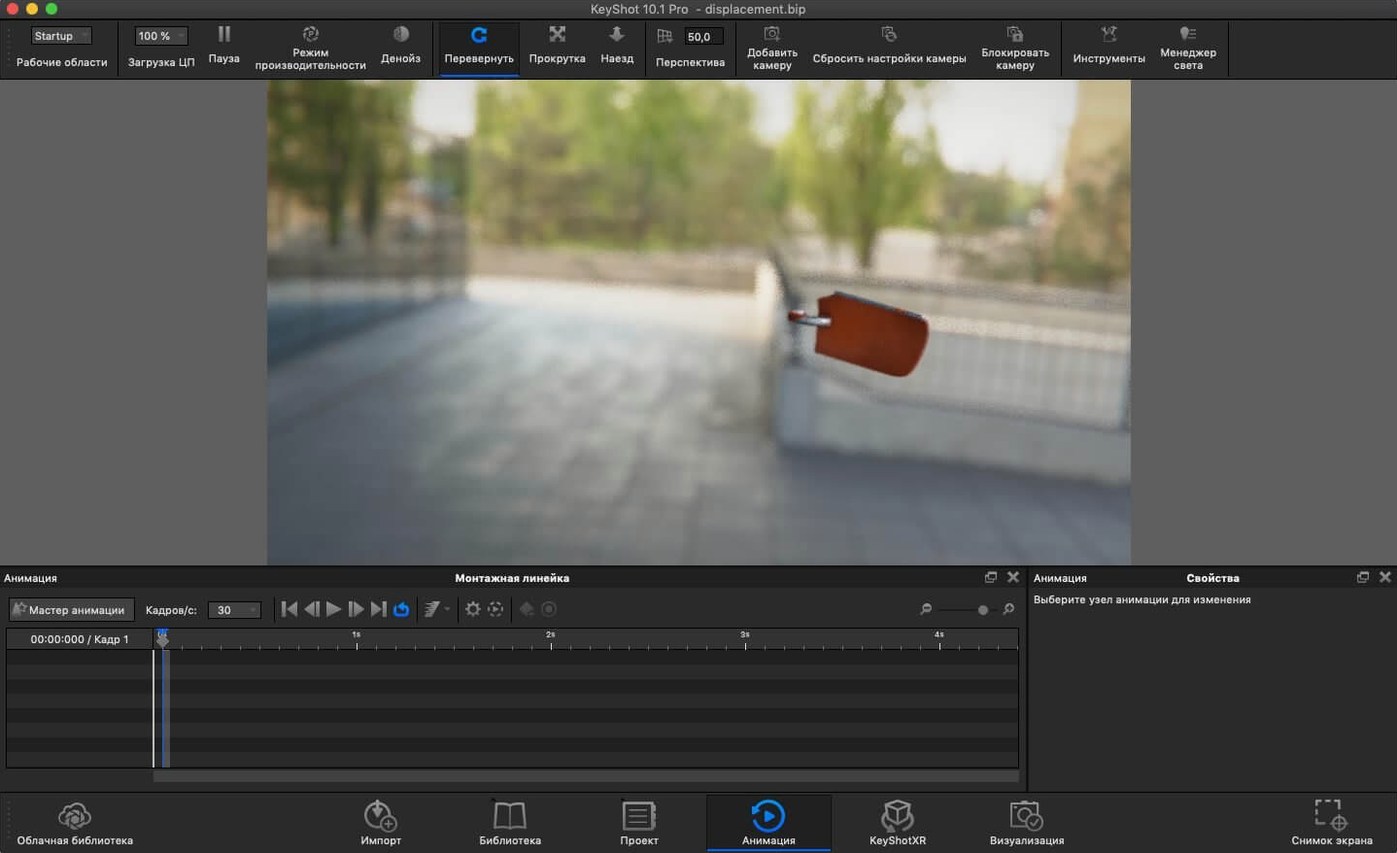
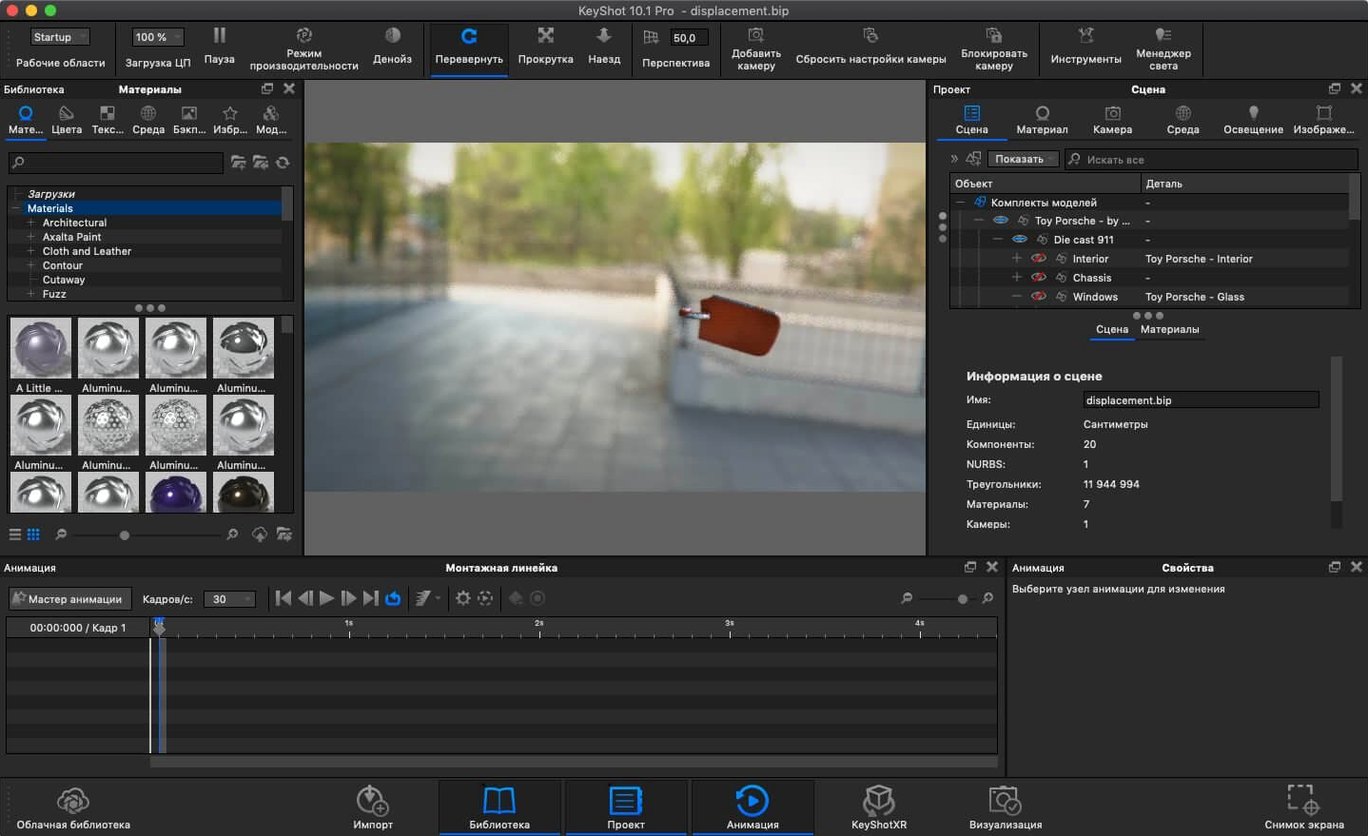
KeyShot Studio runs on any Mac with macOS 12 Monterey or newer, on both Intel processors and Apple Silicon. The 2025.1 release is a native Universal binary, so there is no translation layer to worry about on M-series machines. If your system meets that single requirement, the application will launch and render. What you get is a physically based 3D visualisation tool built around global illumination: materials, lighting and cameras behave in ways that mirror the physical world, without you needing to tune endless settings.
- Opens CAD and 3D formats directly: OBJ, FBX, STEP, IGES, Parasolid, JT, Collada and many more.
- Works as a standalone renderer or as a plug-in alongside Maya, Rhinoceros, SketchUp, SolidWorks, Creo and other modelling applications.
- Physically based material system, including the new Planar Light material type added in 2025.1, which turns any geometry into a light source with directional control.
- Interactive real-time viewport: adjust cameras, materials and lighting and see the result update immediately.
- AR export in USDz and GLB formats, useful for reviewing designs at scale on a mobile device.
A fresh installation of KeyShot Studio 2025.1 also brings a quicker way to place physical lights with the new Light Tool and a handy hotkey for the Add Studio command. The interface ships in Chinese, Czech, English, French, German, Italian, Japanese, Korean, Polish, Russian and Spanish. For anyone modelling on a Mac and needing a renderer that reads their native files without conversion, it fits neatly into an existing pipeline.
Scenario: a furniture designer’s morning review
A designer working on a lounge chair range opens the morning with a SolidWorks assembly pulled straight into KeyShot Studio. The geometry lands intact — no missing fillets, no broken surface normals. Within a few minutes she has applied a walnut veneer from the material library to the armrests, swapped the upholstery to a textured wool, and placed two area lights using the new Light Tool. The real-time viewport shows fabric grain responding to light angle as she drags. A quick AR export in USDz lets a colleague in the workshop walk around the design on an iPad before lunch. The entire session, from CAD import to a client-ready still, fits inside a single morning. That kind of turnaround is what KeyShot on a Mac does well: it removes the friction between modelling and showing.
Import scale chaos: fixing mismatched units from CAD
A few issues crop up regularly enough to be worth naming. The first is import scale. STEP and IGES files sometimes arrive a thousand times too large or too small because the originating CAD application used millimetres while KeyShot expects metres, or vice versa. The fix lives under Edit > Set Scene Units: pick the unit the file was authored in before importing, and the model lands at the correct size. If the geometry already sits in the scene at the wrong scale, the Move Tool with percentage scaling can correct it, though re-importing with proper units is cleaner.
Another common sticking point is the real-time viewport turning noisy and staying noisy. The usual culprit is an environment with a tiny bright spot — an HDRI with a single visible sun, or a physical light with a minuscule radius. The render engine samples that bright source endlessly to resolve soft shadows. Switch to the Lighting tab and increase the light radius slightly, or swap the environment for one with a broader highlight. The viewport settles almost instantly.
Users moving between an Intel Mac and an Apple Silicon machine sometimes notice that custom HDRI environments look different in the real-time viewport. The lighting math is identical, but the denoiser behaves more aggressively on Apple Silicon by default. Dropping the denoiser strength a notch in Preferences > Real-time View brings the two screens closer in look. For final frames, the offline renderer produces identical output on both architectures — the discrepancy is a viewport-only artefact.
Empty startup: skip the demo scene every time
Out of the box, KeyShot Studio works, but a few adjustments make it feel more your own. Head to Preferences > General and set the default startup scene to an empty environment rather than the demo model: you will save the seconds spent closing a sample file every single launch. Next, in Preferences > Interface, switch the colour theme to the dark variant if you spend long hours in front of the viewport — the lighter interface can feel bright against a dimmed 3D scene.
Under Preferences > Real-time View, lower the maximum real-time resolution to something sensible for your display. The default often exceeds what a laptop screen can show and simply wastes GPU cycles generating pixels you will never see. For a MacBook Pro, capping at the native panel resolution keeps the fans quieter during material tweaks.
In the Project > Settings panel, enable Ground Shadows and set the ground plane to a neutral grey early in a project. Many new users leave the ground plane invisible and wonder why their models float in black space. A visible ground plane also gives the new Physical Lights something to bounce off, which makes lighting adjustments read more accurately in the viewport.
LiveLink on Mac: modelling on one desktop, rendering on another
KeyShot Studio does not demand to be the centre of a pipeline; it slots in alongside whatever else you use. A typical setup on macOS has the modelling application open on one desktop and KeyShot on another. With the Live Linking plugin for Rhinoceros or SketchUp, updating geometry is a single click: tweak a fillet in the modeller, hit update in KeyShot, and the scene rebuilds around the same materials and cameras. That link works over a local network too, so a model on one Mac can drive a render on another.
For post-production, many designers route stills into Affinity Photo or Pixelmator Pro directly from KeyShot Studio’s Render dialog, using the layered PSD output option. Each pass — diffuse, specular, shadow, ambient occlusion — arrives on its own layer, ready for compositing without re-rendering. Animators often export image sequences as EXR files and pull them into DaVinci Resolve for grading. The new glTF and USD export options also mean a scene set up for stills can be reused in a WebGL viewer or sent to a motion-graphics colleague working in a different tool, with materials and lighting travelling alongside the geometry.
On the macOS side, Quick Look integration is worth a mention. KeyShot Studio registers its bundle and scene formats with Finder, so tapping the spacebar on a .ksp file shows a preview thumbnail and basic metadata. It is a small thing, but when you are hunting through a folder of fifty scene variants, a quick glance beats opening each one. The application also writes render history to a local folder that Spotlight indexes, so searching for a render filename brings up the image instantly without launching the app. These macOS touches make the software feel less like a port and more like something that was paying attention to the platform it runs on.







Correspondence 0
Take a chair or join the table to send a letter.
No correspondence on this note yet. Letters are read before they appear.